Iran Foreign Minister China meeting dramatically reconfigures the diplomatic landscape ahead of the anticipated Trump summit, marking a critical juncture in international relations. The unannounced visit by Iran’s top diplomat to Beijing, confirmed on Thursday, May 7, 2026, has sent ripples across global capitals, with analysts scrambling to assess its profound implications for the Middle East and beyond. This high-stakes encounter between Tehran and Beijing is widely regarded as the most important diplomatic engagement preceding the upcoming summit with former President Donald Trump, a meeting that itself is shrouded in speculation and high expectations.
The Diplomatic Chessboard: Who, What, and Where
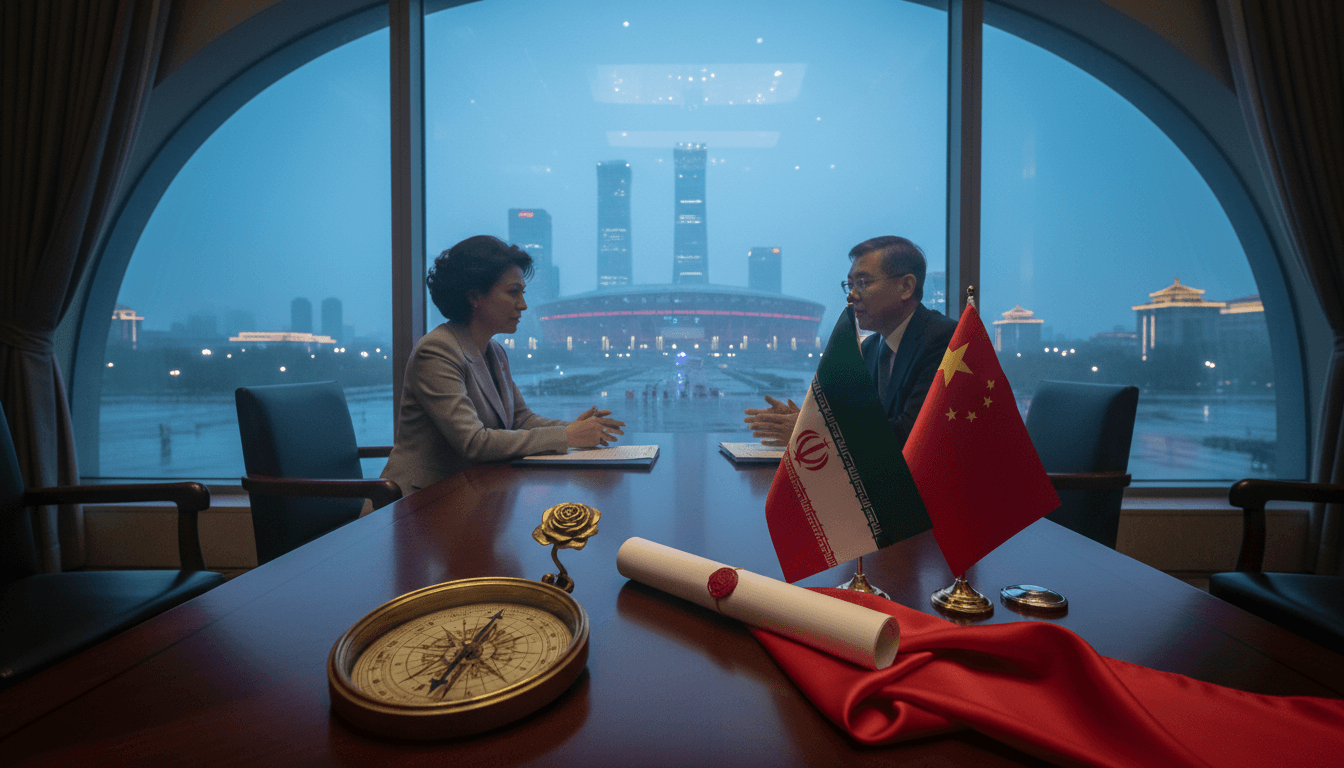
The core of this significant development lies in the direct engagement between Iran’s Foreign Minister and Chinese officials in Beijing. While the specific details of the discussions remain under wraps, the timing and participants underscore the strategic depth of the meeting. China, a permanent member of the UN Security Council and a major global power, holds considerable sway, particularly in economic and energy sectors, which are vital for Iran. The very act of the Iranian Foreign Minister flying to Beijing signals a concerted effort by Tehran to solidify its strategic alliances and potentially leverage newfound support in its dealings with Western powers, particularly the United States.
This diplomatic maneuver is not merely a bilateral discussion; it is a calculated move on a much larger geopolitical chessboard. The meeting’s immediate objective appears to be the coordination of strategies and potentially the securing of commitments that could bolster Iran’s position in any future negotiations. Beijing’s role as a neutral, yet influential, third party makes its engagement with Iran particularly potent, offering Tehran a platform to project strength and seek assurances in a turbulent international environment.
Impact Analysis: Shifting Global Power Dynamics
The implications of the Iran Foreign Minister China meeting are far-reaching, fundamentally altering the calculus for all major players. For the United States, particularly in the context of a potential Trump summit, this meeting complicates the diplomatic path significantly. Any hopes of isolating Iran or dictating terms unilaterally may now be tempered by the visible strengthening of Tehran’s ties with Beijing. China’s potential backing could provide Iran with economic lifelines and diplomatic leverage, making any negotiation with Trump a more balanced, rather than one-sided, affair.
For regional actors in the Middle East, the meeting introduces a new layer of complexity. Nations that have historically aligned with the U.S. in opposing Iran may now find themselves reassessing their strategies in light of China’s growing influence. The prospect of a more empowered Iran, supported by a global economic powerhouse, could necessitate a recalibration of regional security architectures and alliances. This development could also accelerate the trend of multipolarity in international relations, where power is diffused among multiple centers, rather than concentrated in one or two.
“This engagement in Beijing is a clear signal that Iran is not entering future negotiations from a position of weakness. It’s a strategic pre-emptive strike to secure its flank and broaden its diplomatic options.”
Context and Background: A History of Strategic Alignments
The relationship between Iran and China has deep historical roots, often driven by shared strategic interests and a mutual desire to counterbalance Western influence. In recent years, this relationship has intensified, particularly as Iran faced stringent international sanctions. China has remained a significant trading partner and an investor in Iran’s energy infrastructure, providing crucial economic support when other nations retreated. This long-standing strategic alignment provides the necessary context for understanding the current diplomatic encounter. The meeting is not an isolated event but rather a continuation of a pattern of deepening cooperation that has evolved over decades.
The anticipation of a Trump summit adds another critical layer to this context. Former President Trump’s previous dealings with Iran, including the withdrawal from the Joint Comprehensive Plan of Action (JCPOA), have left a legacy of mistrust and heightened tensions. The current diplomatic flurry, therefore, can be seen as Iran’s proactive measure to fortify its position before engaging with a potentially unpredictable U.S. administration. The memory of past confrontations and the desire to avoid a repeat scenario undoubtedly inform Iran’s current diplomatic offensive.
What’s Next: Future Implications and Decisions
The immediate aftermath of the Iran Foreign Minister China meeting will likely involve intense diplomatic activity behind the scenes. The world will be watching for any official statements or leaks that shed more light on the specifics of the agreements reached. The most significant short-term implication will be its effect on the upcoming Trump summit. Iran will likely enter these discussions with a renewed sense of confidence, potentially demanding more concessions or a more equitable negotiation framework. For China, the meeting reinforces its image as a significant global mediator and a power capable of influencing outcomes in complex geopolitical situations.
Looking further ahead, this development could lead to a more formalized and robust strategic partnership between China and Iran, potentially extending beyond economic ties to include security cooperation or enhanced diplomatic coordination on international issues. The ripple effects could also be felt in global energy markets, as China’s continued engagement with Iran could stabilize or increase Iranian oil exports, impacting global prices and supply dynamics. The broader implication is a further fragmentation of global power structures, with non-Western alliances gaining more prominence.
Key Takeaway: A Redefined Diplomatic Landscape
The Iran Foreign Minister China meeting is more than just a bilateral discussion; it is a pivotal moment that redefines the diplomatic landscape. It underscores the growing importance of non-Western alliances in shaping global events and highlights Iran’s strategic efforts to secure its future in a volatile world. This meeting undeniably changes everything, setting the stage for a more complex, multi-faceted negotiation environment where traditional power dynamics are being challenged and redefined. The world must now grapple with the implications of a more assertive and strategically aligned Iran, backed by one of the world’s most influential powers, as it prepares for future engagements on the global stage.