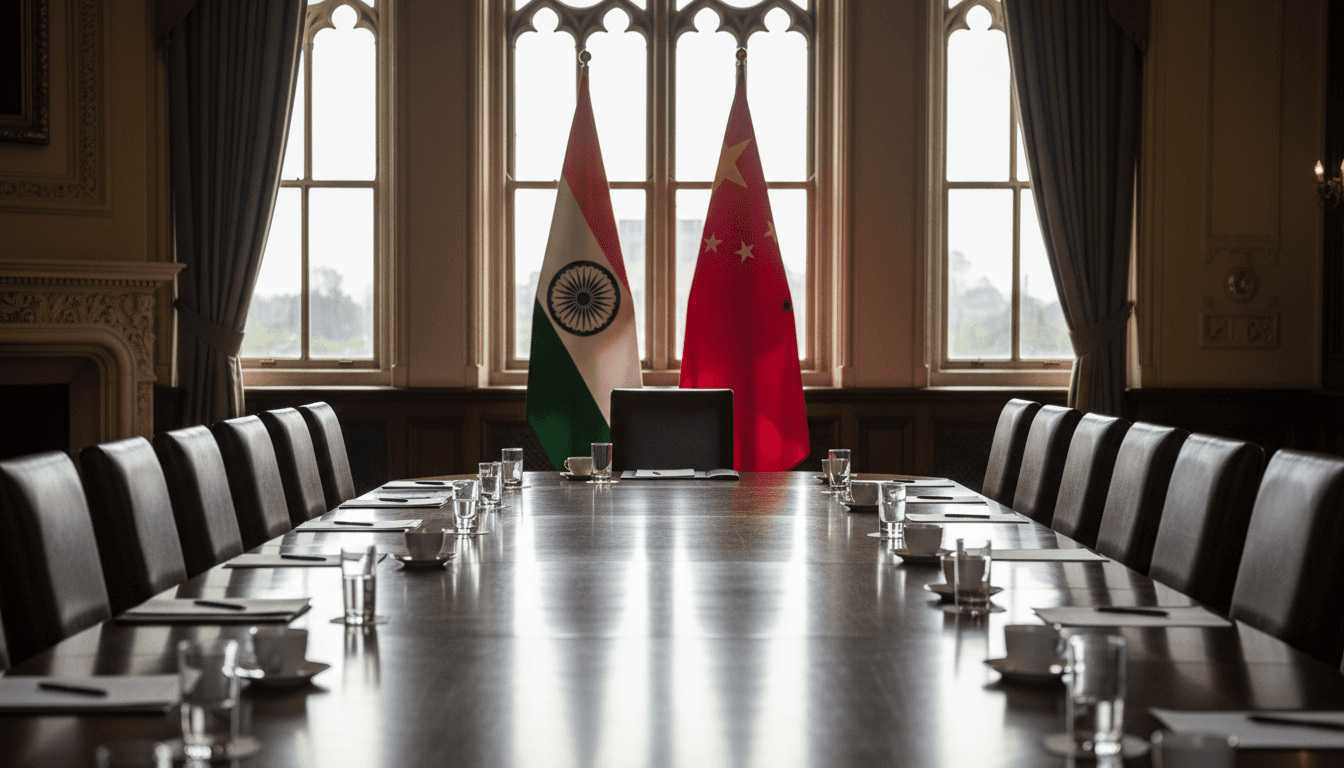
India China discuss LAC peace and the unfolding West Asia crisis, a critical development emerging from a high-level meeting between Indian Defence Minister Rajnath Singh and his Chinese counterpart on Thursday, April 30, 2026. The discussions, held amidst persistent border tensions and escalating geopolitical complexities, underscore the intricate diplomatic tightrope both Asian giants walk.
The meeting saw both defence ministers engaging in extensive deliberations on various facets of their bilateral relationship, with a particular emphasis on de-escalating military standoffs along the Line of Actual Control (LAC). While specific outcomes regarding immediate troop disengagement were not publicly detailed, the very act of high-level dialogue signals a continued, albeit fragile, commitment to managing one of the world’s most volatile borders. The discussions also branched into the broader ramifications of the West Asia crisis, a region where both India and China have significant strategic and economic interests. This dual focus highlights the increasing interconnectedness of regional security challenges with global stability.
Impact Analysis
The convergence of talks on the LAC and the West Asia crisis during the India China discuss LAC peace meeting holds profound implications for global geopolitics. For the Indo-Pacific region, any progress, however incremental, on border de-escalation between India and China can reduce the risk of a wider conflict, thus promoting regional stability. Conversely, continued friction could empower other regional actors and complicate existing security alliances. The inclusion of the West Asia crisis in the agenda signifies both nations’ acknowledgment of its potential to disrupt global energy markets, trade routes, and international security frameworks. India, a major energy importer, and China, with its Belt and Road Initiative spanning the region, are deeply invested in regional stability. Their shared concern, despite divergent approaches, could lead to parallel diplomatic efforts or, at the very least, a better understanding of each other’s red lines and strategic objectives in the volatile Middle East.
The diplomatic engagement also sends a signal to other global powers about the evolving dynamics of Asian leadership. While competition remains fierce, the necessity of dialogue on shared threats like regional conflicts demonstrates a pragmatic approach to international relations. This could influence how other nations engage with both India and China on issues ranging from climate change to global economic governance. The Financial Standard has extensively covered related world news articles on the broader implications of Asian power dynamics.
Context & Background
The relationship between India and China has been strained since the Galwan Valley clashes in June 2020, which resulted in casualties on both sides. Since then, multiple rounds of military and diplomatic talks have been held, achieving limited but crucial disengagement in certain areas of the LAC. However, complete de-escalation and a return to pre-2020 status quo remain elusive. The ongoing build-up of infrastructure and military presence by both nations in disputed territories underscores the deep-seated mistrust and strategic competition. Simultaneously, the West Asia crisis has been a persistent global flashpoint, with varying actors and interests creating a complex web of conflict and humanitarian challenges. Both India and China have maintained diplomatic ties with multiple parties in the region, seeking to protect their economic interests and influence without being drawn into direct conflict. This meeting, therefore, represents a continuation of efforts to manage complex bilateral and international challenges.
“The simultaneous discussion of border peace and the West Asia crisis underscores the multifaceted and increasingly interconnected nature of global security challenges that major powers like India and China must navigate.”
The decision by Rajnath Singh and his Chinese counterpart to engage in such a broad discussion on April 30, 2026, reflects a recognition of the intertwined nature of their national security interests with broader regional and global stability. The ability of India China discuss LAC peace and the West Asia crisis in a single sitting speaks volumes about the maturity of their diplomatic channels, even amid profound disagreements.
What’s Next
The immediate aftermath of this meeting will likely involve internal assessments by both New Delhi and Beijing regarding the tenor and substance of the discussions. Observers will be keen to see if any tangible steps towards further disengagement along the LAC emerge in the coming weeks. Furthermore, the degree to which India and China align, or diverge, on their diplomatic approaches to the West Asia crisis will be closely monitored. While a joint initiative is unlikely given their differing strategic alignments, a shared understanding of the problem could prevent unintended escalations or competitive interventions in the region. Future high-level engagements, potentially at the ministerial or even leadership level, could build upon the foundations laid in this meeting. The ongoing military talks at the corps commander level are expected to continue, providing a more granular platform for addressing border issues. The evolving situation in West Asia will also dictate the urgency and nature of future discussions between these two influential powers. The global community will be watching closely for any signs of sustained dialogue or renewed tensions, particularly as the India China discuss LAC peace efforts continue.
Key Takeaway
This meeting between India and China’s defence ministers on April 30, 2026, is a significant indicator of the complex and evolving nature of their bilateral relationship. It demonstrates a pragmatic necessity to engage on critical security issues, from their contentious border to the volatile West Asia crisis, despite deep-seated mistrust. While immediate breakthroughs may be elusive, the very act of dialogue on such sensitive topics reaffirms the importance of diplomacy in managing great power competition and preventing regional conflicts from spiraling into broader global instability. The ability of these two nations to find common ground, however limited, on issues of global import will have lasting implications for the future of international relations and the balance of power in the 21st century.