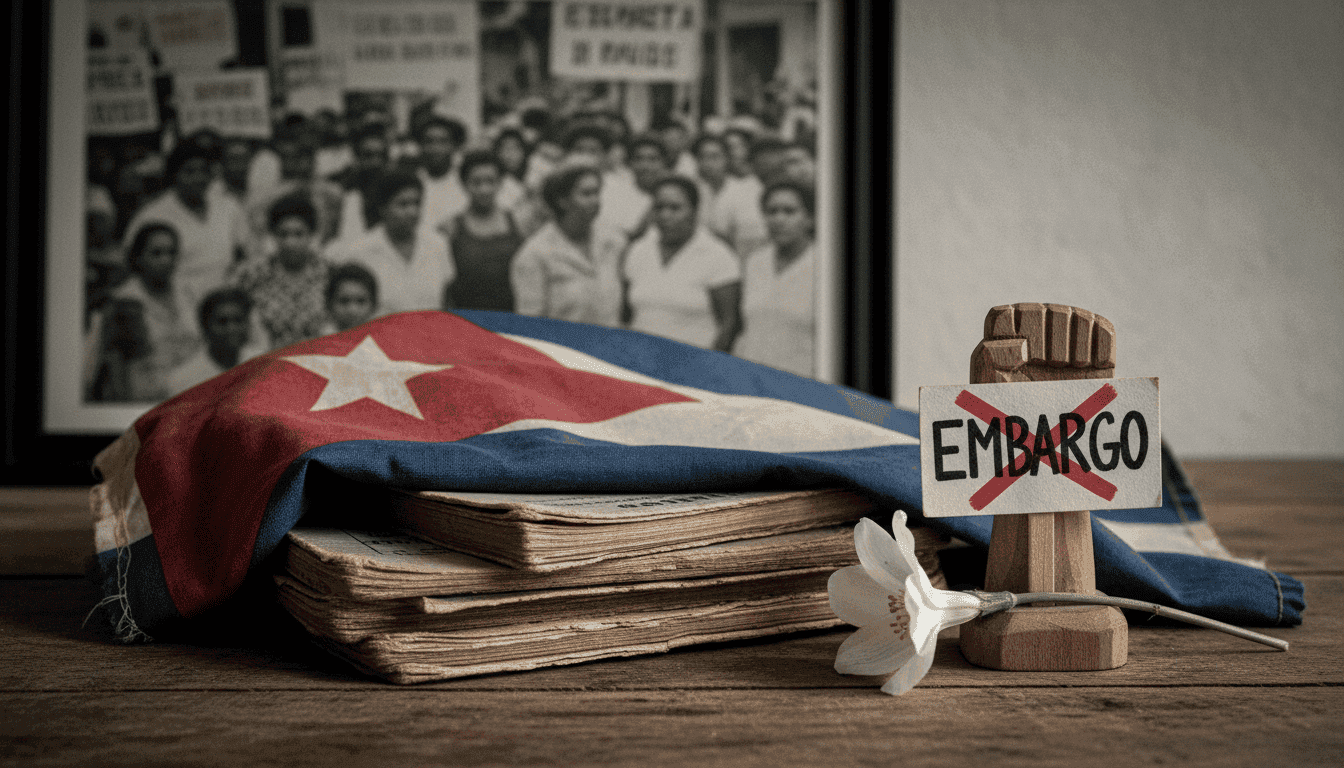
Hundreds of thousands protest against US embargo in Cuba, marking a significant outpouring of public sentiment against long-standing American sanctions. On Saturday, May 2, 2026, the streets of Cuba witnessed massive demonstrations, with an estimated hundreds of thousands of citizens participating in organized protests across the island. These large-scale gatherings underscore the persistent economic and social strain attributed by many Cubans to the decades-old U.S. embargo, bringing renewed international attention to the contentious policy.
The Story: A Unified Voice Against Sanctions
The protests on May 2, 2026, were notable for their sheer scale and widespread participation. While specific cities were not detailed, the nationwide coordination suggests a significant organizational effort to mobilize such large numbers. The central message emanating from the demonstrations was a unified rejection of the US embargo, which has been in place for over six decades. Participants voiced their frustration over the policy’s impact on daily life, including shortages of essential goods, limited access to international markets, and impediments to economic development. The sheer volume of people involved sends a clear signal of the deep-seated public discontent with the continued sanctions.
“The protests represent a powerful, unified expression of the Cuban people’s long-standing grievances against the economic blockade, demanding a re-evaluation of international policy.”
These demonstrations are not isolated incidents but rather a continuation of a historical pattern of Cuban calls for an end to the embargo. However, the magnitude of the May 2, 2026, events suggests a heightened urgency and perhaps a new level of coordination in these appeals. The protests serve as a potent visual reminder to the international community of the human element behind geopolitical tensions.
Impact Analysis: Shifting Geopolitical Narratives
The sight of hundreds of thousands protest against US embargo in Cuba has immediate implications for the broader world news landscape. Such a massive public display could exert pressure on the Biden administration, or any future U.S. government, to reconsider its stance on Cuba. Historically, the embargo has been a point of contention in international forums, with many nations, including close U.S. allies, advocating for its repeal or significant modification. The protests provide fresh ammunition for these arguments, potentially invigorating diplomatic efforts to challenge the sanctions.
Furthermore, the demonstrations could influence public opinion in the United States, particularly among Cuban-American communities, which are often divided on the efficacy and morality of the embargo. A visible and widespread expression of suffering and dissatisfaction from the island could shift narratives and spark renewed debate within American political discourse. For Cuba, the protests reinforce its government’s long-held position that the embargo is the primary obstacle to its economic prosperity and development, potentially strengthening its negotiating leverage on the international stage. Related world news articles often highlight how internal pressures can significantly alter a nation’s foreign policy trajectory.
Context & Background: A Decades-Old Standoff
The US embargo against Cuba, formally known as the Cuban Assets Control Regulations, was first imposed in 1960 and expanded significantly in 1962. Its stated purpose was to isolate the communist government of Fidel Castro and pressure it towards democratic reforms. Over the decades, the embargo has been tightened and eased at various points, notably during the Obama administration’s efforts to normalize relations, which saw the reopening of embassies and increased travel. However, many of these relaxations were reversed under the subsequent Trump administration, which reimposed stringent restrictions, citing concerns over human rights and Cuba’s support for Venezuela.
The economic impact of the embargo on Cuba has been profound and widely documented. It restricts Cuba’s access to U.S. markets, financial institutions, and technologies, making it difficult to import essential goods, attract foreign investment, and conduct international trade. The Cuban government consistently attributes many of the country’s economic woes, including food shortages, power outages, and limited access to medicines, directly to the embargo. The protests on May 2, 2026, are a direct manifestation of these ongoing hardships and the deep-seated belief among the populace that the sanctions are punitive and unjust. The consistent calls for the end of the US embargo are a central theme in Cuba’s foreign policy.
What’s Next: Diplomatic Crossroads and Economic Pressures
The immediate aftermath of such large-scale protests will likely see increased diplomatic activity. Cuba will undoubtedly leverage the international attention to renew its calls for the embargo’s lifting at the United Nations and other multilateral forums. The U.S. administration will face pressure to respond, either by defending the existing policy, proposing minor adjustments, or signaling a willingness for more substantial engagement. The future of US-Cuba relations hinges on a complex interplay of domestic politics in both countries, regional stability, and broader geopolitical considerations.
Economic conditions in Cuba will remain a critical factor. Should the embargo persist, the likelihood of further public unrest remains high. Conversely, any significant easing of sanctions could provide a much-needed boost to the Cuban economy, potentially stabilizing the social landscape. International organizations and humanitarian groups may also intensify their advocacy for humanitarian exemptions or a complete repeal of the embargo, citing the direct impact on the Cuban people. Investors and businesses, particularly those in tourism and agriculture, will be closely watching for any signs of a thaw in relations, as Cuba represents a potentially lucrative, albeit challenging, market. Global trade policy often shifts in response to such significant public movements.
Key Takeaway: The Enduring Weight of Sanctions
The protests on May 2, 2026, where hundreds of thousands protest against US embargo, serve as a stark reminder of the enduring and often devastating human cost of protracted international sanctions. They highlight the persistent geopolitical fault lines between the United States and Cuba, demonstrating that despite decades of policy, the core issues remain unresolved and continue to fuel widespread public discontent. The sheer scale of the demonstrations underscores the urgent need for a re-evaluation of the embargo, not just for its economic implications but for its profound impact on the lives of ordinary Cubans. The international community will be closely watching to see if this unified voice from Cuba can finally tip the scales towards a new era of engagement and resolution.