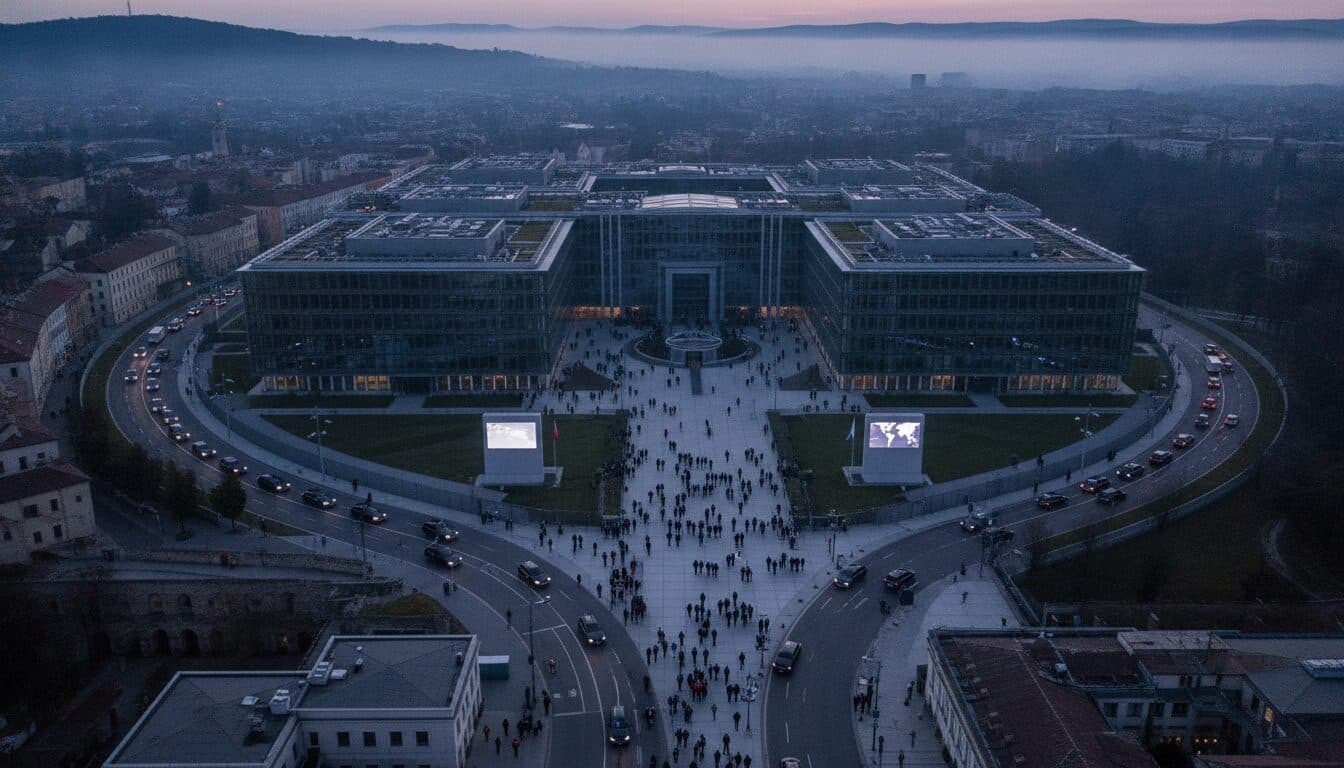
European refugee call for action is intensifying, with Euractiv reporting on Tuesday, April 7, 2026, that a renewed impetus is sweeping across the continent to address the ongoing humanitarian crisis. The urgency stems from a confluence of persistent challenges, including sustained migratory pressures, the strain on national resources, and the imperative to uphold human rights.
The Mounting Pressure and European Refugee Call for Action
The call for action highlights a critical juncture for Europe, as member states grapple with the complex realities of large-scale displacement. While specific numbers and origins of refugees were not detailed in the Euractiv report, the overarching message points to a system under duress, necessitating a coordinated and robust response from Brussels and individual capitals. This is not merely a humanitarian plea but an acknowledgment of the geopolitical and economic ramifications of unchecked or poorly managed refugee flows. The report underscores a collective realization that fragmented national approaches are insufficient to address a challenge of this magnitude, demanding a truly pan-European strategy.
The current situation reflects a long-standing tension between national sovereignty and shared responsibility within the European Union. Member states, particularly those on the front lines of migratory routes, have consistently called for greater solidarity and burden-sharing. The renewed European refugee call for action indicates a potential shift towards more unified policy frameworks, possibly encompassing revised asylum procedures, enhanced border management, and more equitable distribution mechanisms for asylum seekers. The discussions are likely to be fraught, given the diverse political landscapes and economic capacities across the EU, but the consensus on the need for action appears to be solidifying.
“The persistent refugee crisis demands not just a response, but a fundamental rethinking of Europe’s approach to migration, balancing humanitarian obligations with pragmatic security and integration concerns.”
Impact Analysis: Shifting Geopolitical Dynamics
This intensifying European refugee call for action has significant implications for the broader world news landscape. Firstly, it signals a potential re-prioritization of migration policy within the EU’s foreign relations agenda. Europe’s ability to manage its internal refugee situation directly impacts its credibility and influence on the international stage, particularly in negotiations with transit countries and regions of origin. A more unified and effective European response could empower the EU to forge stronger partnerships, offering aid and development support in exchange for cooperation on migration management.
Secondly, the crisis continues to fuel populist and nationalist narratives across the continent, shaping electoral outcomes and domestic policy debates. A successful, humane, and efficient resolution to the refugee crisis could help mitigate some of these political pressures, fostering greater social cohesion and stability within member states. Conversely, continued disarray risks further polarizing societies and undermining the foundational principles of European integration. The economic impact, while not explicitly detailed in the report, is also substantial, affecting labor markets, public services, and national budgets. Effective integration strategies for refugees could turn a challenge into an economic opportunity, but this requires significant investment and political will.
Context & Background: A Decades-Long Challenge
The current refugee crisis is not an isolated event but rather the latest iteration of a decades-long challenge for Europe. Major influxes of refugees and migrants have occurred periodically, often triggered by geopolitical conflicts, economic instability, or humanitarian disasters in neighboring regions. The Syrian civil war, starting in 2011, led to an unprecedented surge in arrivals in the mid-2010s, exposing significant cracks in Europe’s asylum system and triggering widespread political turmoil. Subsequent years have seen a steady, albeit fluctuating, stream of arrivals from various African and Middle Eastern nations, often via perilous Mediterranean routes.
Previous attempts at comprehensive reform, such as the New Pact on Migration and Asylum, have faced considerable hurdles, largely due to disagreements among member states on the principles of solidarity and responsibility. The current European refugee call for action suggests a renewed impetus, perhaps driven by the cumulative pressures and the realization that a long-term, sustainable solution is imperative. The report on April 7, 2026, underscores that Europe cannot afford to simply react to crises but must proactively build resilient systems.
What’s Next: Towards a Unified Strategy?
Looking ahead, the European refugee call for action will likely translate into intense diplomatic negotiations and legislative efforts within the EU. Key decisions will revolve around the details of burden-sharing mechanisms, the standardization of asylum procedures, and strategies for external border control. There will be a strong focus on enhancing cooperation with non-EU countries to address the root causes of migration and to facilitate returns of those not granted asylum. Expect further discussions on increased funding for humanitarian efforts, both within Europe and in refugee-hosting countries outside the EU.
The coming months will be critical in determining whether this renewed call for action translates into concrete, impactful policies or becomes another chapter in a long history of stalled reforms. The political will demonstrated by EU leaders in the wake of the Euractiv report on April 7, 2026, will be paramount. Success will hinge on finding common ground that respects both national interests and shared European values.
Key Takeaway: The Imperative for Cohesion
The intensifying European refugee call for action highlighted by Euractiv on April 7, 2026, underscores a fundamental truth: the refugee crisis is a defining challenge for Europe that demands a cohesive, principled, and pragmatic response. Its resolution is crucial not only for the humanitarian well-being of those seeking refuge but also for the political stability, economic prosperity, and moral standing of the European Union on the global stage. The ability of European nations to unite and implement effective, sustainable solutions will be a testament to their collective strength and their commitment to shared values in an increasingly complex world.