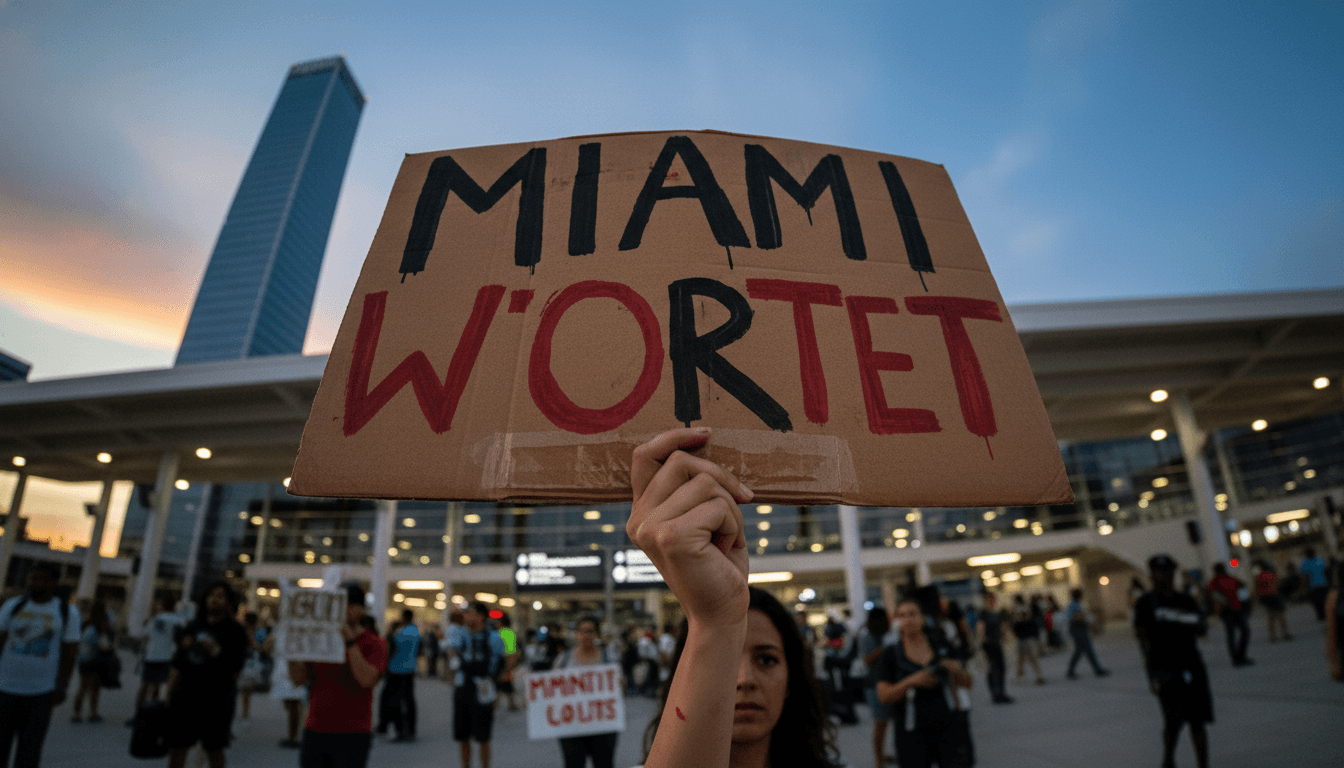
Cuba sanctions protests escalated at Miami International Airport (MIA) on Monday, June 1, 2026, as two opposing groups clashed over U.S. policy toward the island nation. The demonstrations highlighted the deep divisions within the Cuban diaspora and broader American society regarding the decades-old embargo, with one faction demanding an end to sanctions and the other staunchly advocating for continued pressure on the Cuban government. The presence of Miami-Dade Sheriff’s Office deputies was necessary to maintain peace between the fervent groups.
The weekend’s events at MIA saw members of the Miami Coalition Against U.S. Blockade on Cuba gather to call for an immediate cessation of the oil embargo and all U.S. sanctions. Rachele Fruit, a prominent voice within the coalition, articulated their concerns, stating,
“The United States is threatening more and more to take military action against Cuba; we are completely opposed to that. Cuba has the right to its sovereignty, Cuba is no threat to the United States.”
This sentiment underscores a growing concern among some activists that the U.S. posture could lead to military intervention, a prospect they vehemently reject.
Dueling Demonstrations at MIA
Concurrently, another group of demonstrators, largely composed of Cuban exiles and their descendants, confronted the anti-embargo protesters. This counter-protest voiced strong support for current U.S. policies, particularly those enacted by President Donald Trump’s administration, which they believe are instrumental in pressuring the Cuban regime. Ramiro Collazo, a Cuban demonstrator, expressed the prevailing sentiment of this group: “Cubans, we want our freedom back, we want to make Cuba great again, so we are supporting President [Donald] Trump, all the measures he’s taking against the tyranny in Cuba.” Their demands for freedom and a ‘great again’ Cuba reflect a long-standing desire for regime change on the island.
The timing of these Cuba sanctions protests is particularly sensitive, coming just over a week after the U.S. Department of Justice announced a criminal case and indictment for murder against former Cuban leader Raúl Castro. This development has undoubtedly intensified the political climate surrounding U.S.-Cuba relations, fueling both calls for increased pressure and arguments against any actions perceived as aggressive or destabilizing. The indictment adds a significant layer of complexity to the ongoing debate, providing fresh ammunition for those advocating for a harder line against Havana.
The Broader Geopolitical Context
The persistent debate over U.S. policy towards Cuba is not new, but the recent demonstrations at MIA underscore its enduring relevance and volatility. The U.S. embargo, in place for over six decades, has been a cornerstone of American foreign policy aimed at isolating the communist government and fostering democratic change. However, its effectiveness and ethical implications have been continually questioned by international bodies, humanitarian organizations, and a segment of the American public. The ongoing international discourse often revolves around whether sanctions truly harm the regime or disproportionately impact the Cuban populace.
The possibility of military intervention, though currently a rhetorical threat, adds a grave dimension to the discussion. Any such action would represent a dramatic escalation, with significant regional and international ramifications. The historical memory of past U.S. interventions in Latin America looms large, making any suggestion of military action a highly contentious issue globally.
What’s Next for U.S.-Cuba Relations
Looking ahead, the future of U.S.-Cuba relations remains uncertain. The indictment of Raúl Castro, coupled with the fervent demonstrations, suggests that the current administration is unlikely to soften its stance on sanctions. Conversely, the anti-blockade movement is gaining traction, particularly among younger generations and those concerned about humanitarian impacts. The dueling protests at MIA are a microcosm of the larger ideological battle that will continue to shape policy discussions in Washington and public sentiment in communities like Miami, which have strong ties to Cuba.
The sustained Cuba sanctions protests serve as a potent reminder of the deeply entrenched political and emotional stakes involved in U.S. policy toward Cuba. The international community will be closely watching how these domestic pressures, combined with geopolitical events like the Castro indictment, influence the trajectory of relations between Havana and Washington, especially given the potential for further escalation or the continuation of the long-standing stalemate.