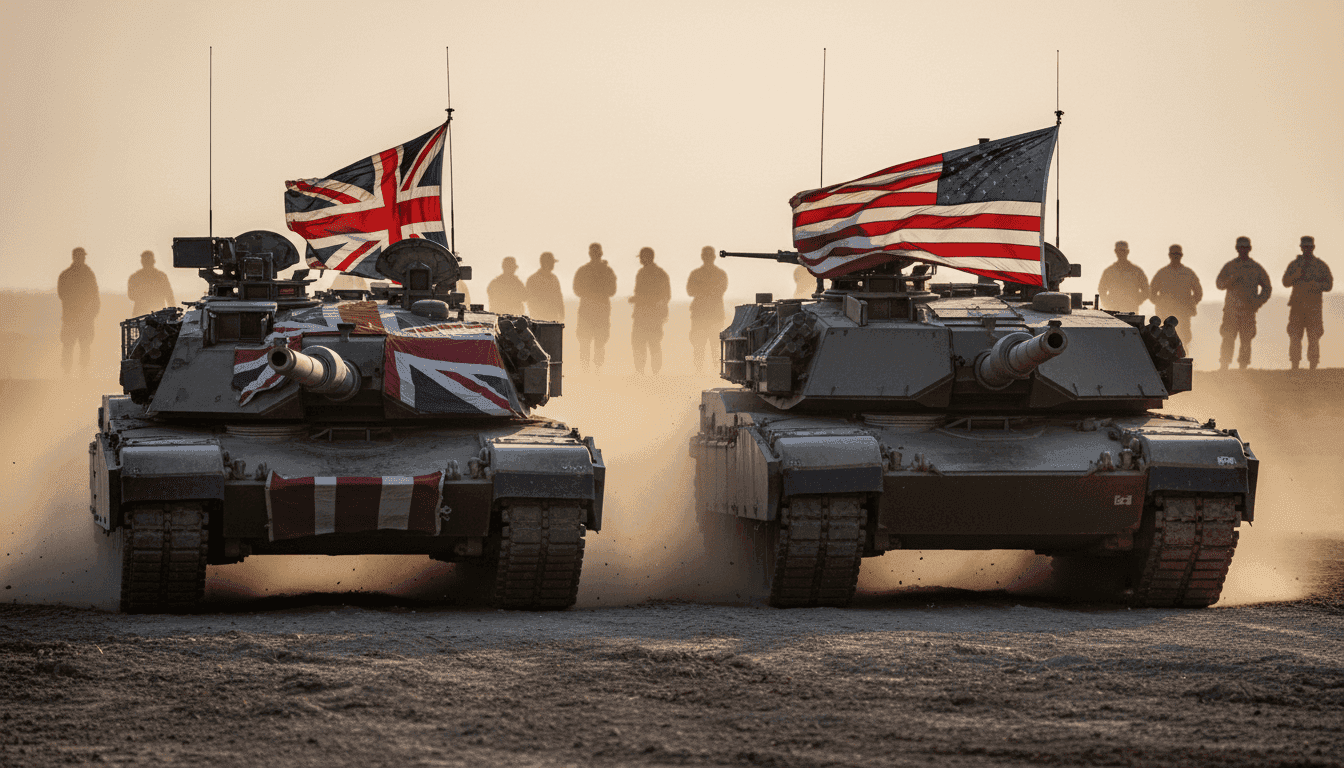
Britain’s military dependence on US is ‘no longer tenable’, according to a former NATO chief, a stark assessment delivered on Wednesday, April 22, 2026. This pronouncement signals a potential recalibration of the UK’s defense posture and its long-standing strategic alliance with Washington, echoing growing concerns within European security circles about self-sufficiency.
The Story: A Call for Strategic Re-evaluation
The former NATO chief, whose identity was not specified in the Guardian report, articulated a critical need for Britain to reassess its defense capabilities and reduce its reliance on the United States. This declaration, made public via The Guardian, comes amidst an evolving global security landscape where traditional alliances are being scrutinized and nations are increasingly pressured to shoulder more of their own defense burdens. The statement highlights a perceived over-reliance that could compromise the UK’s operational autonomy and strategic flexibility in future conflicts or crises.
The underlying sentiment suggests that while the US-UK ‘special relationship’ remains foundational, its military dimension has become disproportionately skewed, with Britain often playing a supporting role rather than an equal partner in certain critical areas. The former NATO chief’s remarks are not merely an observation but a direct challenge, implying that the current arrangement is unsustainable in the face of contemporary geopolitical realities.
Impact Analysis
This pronouncement from a former NATO chief has significant ramifications for global security and defense planning. Firstly, it could catalyze a substantial shift in British defense policy, potentially leading to increased defense spending, greater investment in indigenous military industrial capabilities, and a renewed focus on European defense cooperation. Such a move would resonate across NATO, where calls for burden-sharing have intensified, particularly from the United States. If Britain, a key NATO member, actively pursues greater military self-reliance, it could set a precedent for other European nations to follow suit, leading to a more robust, albeit potentially fragmented, European defense architecture.
Secondly, it introduces a new dynamic into the US-UK relationship. While not a rejection of the alliance, it signals a desire for a more balanced partnership where the UK can operate with greater independence. This could lead to complex negotiations over shared intelligence, joint exercises, and strategic planning, potentially altering the traditional power dynamics between the two nations. For the broader world news landscape, it underscores a growing trend among US allies to diversify their security relationships and enhance their own capabilities, reflecting a global environment of increasing uncertainty and diffused power.
Related world news articles frequently discuss the shifting alliances and defense strategies in the post-Cold War era.
Context & Background: A Long-Standing Dependency
Britain’s military dependence on US has deep roots, tracing back to the post-World War II era when the UK’s global power waned and the US emerged as the dominant Western military force. Over decades, this dependence manifested in various forms, including reliance on American technology, intelligence sharing, logistical support, and strategic planning. The UK’s defense budget, while substantial, has often been geared towards maintaining niche capabilities or contributing to coalition efforts led by the US, rather than developing a comprehensive, standalone defense apparatus capable of independent large-scale operations across all domains.
Previous events, such as the Iraq and Afghanistan wars, further highlighted the operational and logistical reliance on the US. More recently, geopolitical shifts, including Russia’s aggression in Eastern Europe and China’s growing military might, have underscored the urgency for European nations to strengthen their own defenses. Industry trends also point towards a renewed emphasis on national defense industrial bases and strategic autonomy, making the former NATO chief’s statement particularly timely.
“The idea that a major power like the UK can outsource critical aspects of its defense indefinitely is an illusion. Geopolitical realities demand a more robust, independent capability.”
What’s Next: A Path Towards Greater Autonomy
The former NATO chief’s remarks are likely to ignite a vigorous debate within the UK government and defense establishment. Future implications could include a comprehensive defense review, a re-evaluation of procurement strategies, and potentially a significant increase in defense spending. Decisions will need to be made on whether to invest in developing new capabilities, such as advanced air power, naval assets, or cyber warfare units, or to enhance existing ones to reduce reliance on US support. Collaboration with European partners, such as France and Germany, on joint defense projects could also gain traction, moving beyond existing initiatives.
Predictions suggest that any shift will be gradual, given the immense cost and complexity involved in disentangling decades of integrated defense planning. However, the impetus for change appears strong, driven by both internal strategic considerations and external pressures. The upcoming years will likely see the UK grappling with how to define its military role in a multipolar world while balancing its traditional alliances with a renewed push for strategic independence. International affairs analysts will be watching closely for concrete policy shifts.
Key Takeaway: Redefining UK Military Independence
The assertion that Britain’s military dependence on US is ‘no longer tenable’ marks a significant inflection point in the UK’s defense narrative. It underscores a growing awareness that while alliances are crucial, national sovereignty and strategic flexibility require a robust, independent defense capability. This perspective from a former NATO chief challenges the status quo and sets the stage for a potentially transformative period for British defense policy, with far-reaching implications for the transatlantic alliance and the broader architecture of global security.