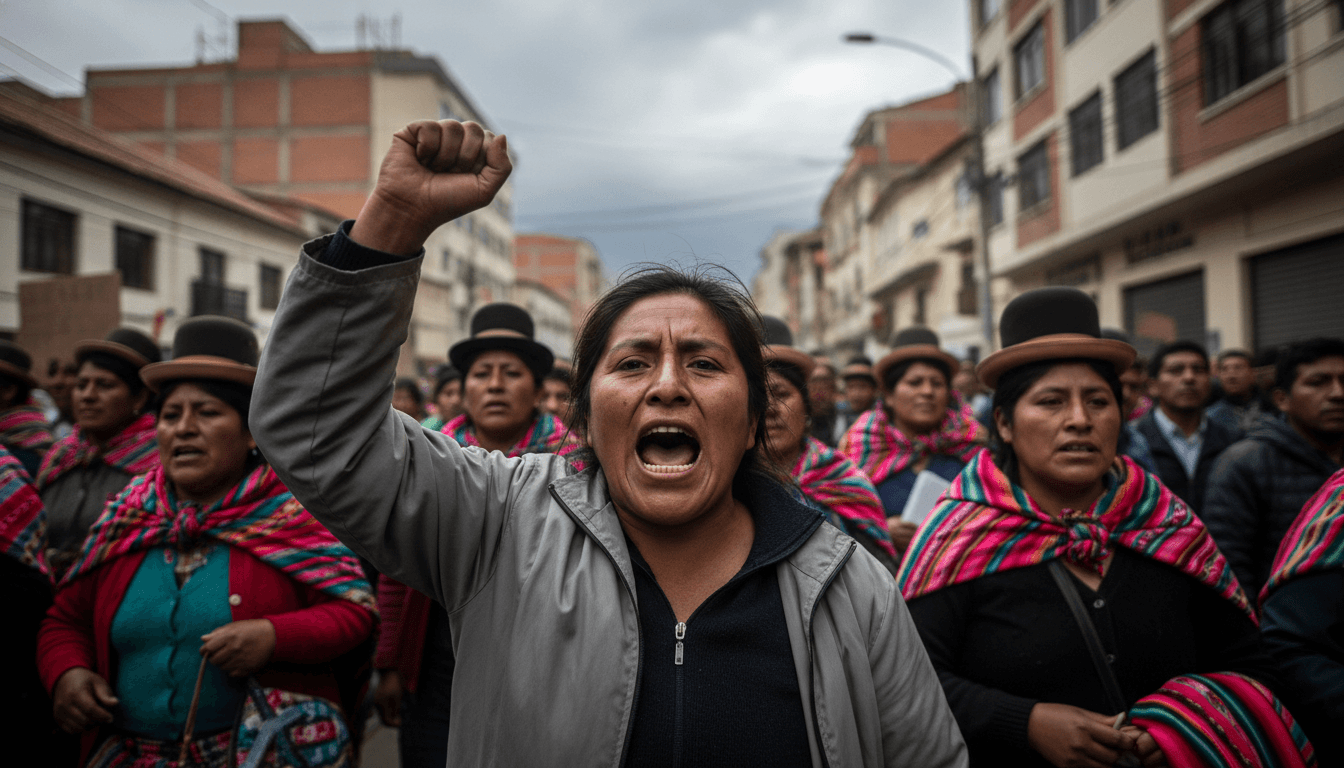
Bolivian Congress approves troop deployment to quell protests, a significant escalation in the month-long unrest that has gripped the nation. On Thursday, May 28, 2026, the legislative body passed a bill empowering President Rodrigo Paz to declare a state of emergency and deploy military forces more readily, signaling a hardening stance against the widespread demonstrations by miners, farmers, and indigenous groups demanding his resignation.
The move comes amidst an increasingly volatile environment, with nearly a month of road blockades and protests causing severe shortages of water, fuel, and medicines in affected areas. President Paz, a centre-right leader, had previously stated his preference for dialogue over “armed confrontation,” but the sustained pressure appears to have shifted his government’s strategy. The decision to repeal a 2020 law, which limited military intervention to situations where police were overwhelmed, passed the Chamber of Deputies with a two-thirds majority. Proponents argued the 2020 law unduly restricted presidential powers, asserting that “violent” groups should not dictate to an elected government.
Bolivian Congress Approves Troop Deployment
However, the legislative shift has not been without strong opposition. Sonia Siñani, a lawmaker who voted against the measure, warned that it could dangerously escalate social tensions, likening it to “throwing fuel onto the flames.” This sentiment reflects deep divisions within Bolivian society regarding the appropriate response to the ongoing unrest, which began in late April over a now-scrapped land reform proposal. The initial trigger, a land reform bill that concerned small-scale farmers about large landowners acquiring their properties, quickly broadened to include grievances from other sectors.
Drivers and transport workers joined the protests, expressing anger over the deteriorated quality of petrol following the government’s removal of long-standing fuel subsidies. This policy change led to shortages and the sale of adulterated fuel, damaging vehicles and exacerbating public frustration. The resultant road blockades have created a vicious cycle, intensifying the very shortages that fueled the initial protests. In a counter-demonstration, residents of La Paz organized a ‘march in defence of democracy’ last week, protesting the crippling impact of the blockades on their city.
Beyond immediate economic grievances, the protests also reflect deeper ideological conflicts. Proposed changes to the 2009 constitution, enacted under former left-wing President Evo Morales, have drawn significant backlash. Paz’s centre-right administration campaigned on promises to open key economic sectors to private investment, a move followers of Morales fear could undermine state control over vital industries. Morales, who governed from 2006 to 2019, remains a powerful and influential figure, particularly among indigenous communities. Related world news articles often highlight the enduring legacy of populist leaders in Latin America.
The Paz government has explicitly accused Morales of orchestrating the current unrest, suggesting he is using the protests to divert attention from an arrest warrant issued against him on May 11. The warrant stems from allegations of statutory rape and human trafficking, with prosecutors accusing Morales of impregnating a 15-year-old girl in 2015 and taking her on international trips. Morales vehemently denies these accusations, portraying them as a politically motivated “right-wing vendetta.” His supporters have, in turn, threatened to paralyze the country should he face arrest.
“The repeal of the 2020 law marks a perilous turning point, risking further polarization and potential violence in a nation already on edge.”
In attempts to de-escalate the situation, President Paz has undertaken a cabinet reshuffle, halved his and his ministers’ salaries, and announced the formation of a council to engage with disaffected societal sectors. However, these conciliatory gestures have, to date, failed to quell the widespread unrest. The decision by the Bolivian Congress to allow for easier troop deployment signals a shift towards a more forceful approach, potentially setting the stage for direct confrontations between state forces and protesters.
The coming days will be critical as Bolivia navigates this heightened tension. The government’s reliance on military deployment carries significant risks, potentially alienating more segments of the population and drawing international scrutiny. The interplay between economic grievances, political rivalries, and constitutional debates underscores the complex challenges facing President Paz as he seeks to restore order and stability. The world watches closely as Bolivia stands at a crossroads, where the path chosen could determine its democratic trajectory for years to come.