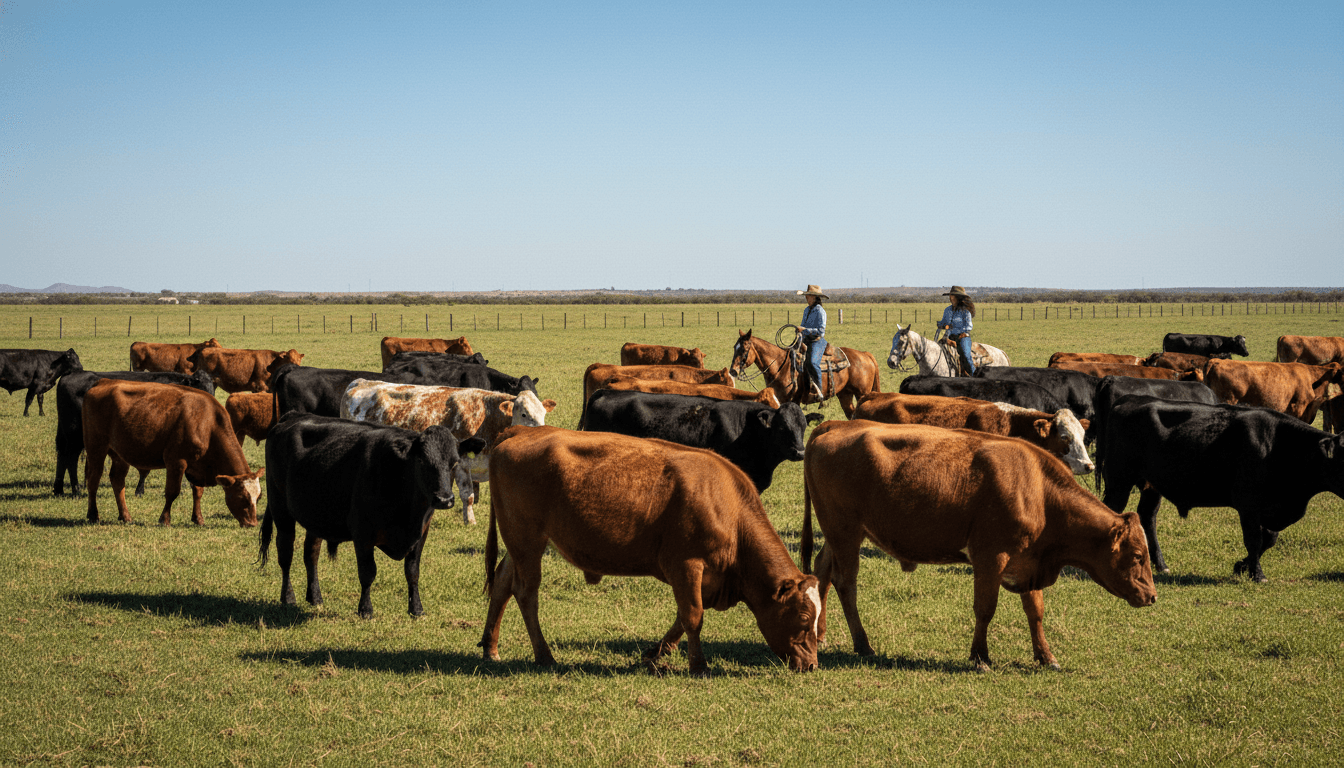
A critical screwworm parasite threatens US cattle, posing a significant and immediate danger to the nation’s livestock herds and the broader agricultural economy. The New World screwworm (*Cochliomyia hominivorax*), a flesh-eating parasite once eradicated from the U.S. in 1966, has resurfaced in Mexico and is alarmingly close to the U.S. border, prompting urgent action and heightened vigilance from federal agencies and livestock producers.
The re-emergence of this deadly parasite is the top trending news story today, not merely for its biological threat, but for its profound economic implications across the continent. With detections in Sabinas Hidalgo, Nuevo León, Mexico, just 70 miles from the U.S.-Mexico border, and a suspected infestation undergoing federal laboratory testing in South Texas, the threat is no longer theoretical but imminent. This situation harkens back to an era when screwworms caused hundreds of millions of dollars in annual financial losses, a specter the U.S. agricultural sector is desperate to avoid.
The Resurgent Threat: What’s Happening
The New World screwworm is a parasitic fly whose larvae infest open wounds in warm-blooded animals, including cattle, pets, wildlife, and, on rare occasions, humans. These larvae burrow into living tissue, causing severe pain, tissue destruction, secondary infections, and often death if left untreated. The U.S. successfully eradicated screwworms in 1966 using the Sterile Insect Technique (SIT), a highly effective method involving the release of millions of radiation-sterilized male flies. This program was so successful it created a biological barrier in Panama by the early 2000s.
However, the situation has dramatically shifted. Outbreaks began spreading northward through Central America and into southern Mexico in 2023. Since then, over 144,000 cases in animals and more than 1,100 in humans have been reported in the region. The detection in Sabinas Hidalgo in late 2025 marks the northernmost point in decades, pushing the parasite to the doorstep of U.S. livestock. The U.S. confirmed its first human screwworm case in decades in August 2025, involving a Maryland resident who had traveled to El Salvador, underscoring the broader regional challenge.
Economic Fallout and Industry Vulnerability
The potential economic fallout from a reintroduction of the screwworm parasite threatens US cattle and the wider agricultural sector. Before its eradication, the parasite caused staggering financial losses. Experts from the U.S. Department of Agriculture (USDA) and university extension services warn that an outbreak in Texas alone could cost livestock producers $732 million annually and result in up to $1.8 billion in losses for the state’s economy. The U.S. cattle herd sizes are currently near historic lows due to prolonged drought and rising operational costs, making the industry particularly vulnerable to an animal health crisis.
“The re-establishment of screwworm in the U.S. would not just be an animal health crisis; it would be a devastating economic blow to an already strained livestock industry, impacting everything from producer profitability to consumer beef prices.”
The USDA temporarily suspended imports of live cattle, bison, and horses from Mexico in 2025 as a preventative measure. This disruption has already contributed to higher beef prices, a trend that could intensify if the screwworm threat escalates. American consumers, who average 60 pounds of beef annually, would directly feel the impact of prolonged trade disruptions and price volatility. The dairy industry also faces severe risks, as even minor disruptions could lead to major financial losses from quarantined farms or spoiled milk due to plant shutdowns.
The Coordinated Response and Future Outlook
In response to this escalating threat, the USDA and its Animal and Plant Health Inspection Service (APHIS) have launched a comprehensive five-pronged eradication plan. A cornerstone of this strategy is the Sterile Insect Technique (SIT). The USDA is investing $21 million to renovate a facility in Metapa, Mexico, aiming to produce 60-100 million sterile flies per week. This production supplements the 100 million sterile flies already produced at the Panama-United States Commission for the Eradication and Prevention of Screwworm (COPEG) facility. A new $8.5 million sterile fly dispersal facility is also nearing completion at Moore Air Base in Mission, Texas, by the end of 2025. The ambitious goal is to reach a production capacity of 500 million sterile flies per week, matching the scale of the initial eradication effort.
Beyond SIT, the plan includes strengthening border security and enhancing surveillance systems across Texas, Arizona, and New Mexico. Public outreach campaigns are vital, urging producers to monitor herds closely for signs of infestation and report suspected cases immediately. International collaboration remains critical, building on the historical success of government cooperation across borders with Mexico and Central American countries. While SIT is the primary method, emerging tools, such as a conditionally approved topical antiparasitic drug for cattle, offer additional layers of prevention and treatment.
Key Takeaways
The potential re-establishment of the deadly screwworm parasite threatens US cattle, representing a significant challenge to the nation’s agricultural resilience. The proximity of detected cases in Mexico to the U.S. border, coupled with the industry’s current vulnerabilities, underscores the urgency of the situation. The coordinated efforts by the USDA, leveraging proven eradication techniques and international partnerships, are crucial in mitigating this threat. The coming months will be critical in determining whether these measures can successfully prevent a widespread reintroduction of the screwworm, safeguarding America’s livestock and agricultural economy from a costly resurgence.