Keir Starmer, Prime Minister of the United Kingdom, announced his resignation on Monday, June 22, 2026, marking the seventh premature departure of a UK premier in a decade and plunging British politics into renewed uncertainty. The decision follows a period of intense pressure within the Labour Party, catalyzed by devastating losses in nationwide local elections held in May.
Starmer’s exit comes less than two years after he led the Labour Party to a resounding victory in the July 2024 general election, ending fourteen years of Conservative rule. His premiership, which began on July 5, 2024, was envisioned as a beacon of stability after years of political turbulence. However, it quickly became mired in declining popularity, a struggling economy, and a series of controversies that ultimately eroded public and party confidence.
The immediate catalyst for Starmer’s resignation was the Labour Party’s “crushing losses” in the May 2026 local and regional elections. Of approximately 5,000 seats contested across 136 council elections, Labour secured just over 1,000, shedding more than 1,100 previously held seats. In a significant realignment of the political landscape, the right-wing populist Reform UK party, led by Nigel Farage, gained over 1,400 seats, firmly establishing itself as a dominant force. The Green Party also saw notable gains, securing over 300 seats. These results were widely interpreted as a “scathing verdict” on Starmer’s 22 months in office.
Discontent within the Labour Party had been simmering for months. Starmer’s approval ratings had plummeted to an average of -46% by November 2025, positioning him among the least popular prime ministers since 1977. His government struggled to deliver on promises of economic growth and improved public services, while the cost-of-living crisis continued to bite. Credibility was further damaged by controversies, notably the controversial appointment of Peter Mandelson, who had ties to Jeffrey Epstein, as the U.S. Ambassador. Such issues fueled the mounting internal pressure that ultimately forced Starmer’s hand.
Despite initially vowing to resist any leadership challenge after the May local election losses, Starmer ultimately bowed to overwhelming pressure. More than half a dozen cabinet ministers privately informed him that his tenure was unsustainable, and by mid-May, over 95 Labour MPs had publicly or privately called for his resignation or a clear timetable for his departure. Several junior ministers, including Safeguarding Minister Jess Phillips and Health Secretary Wes Streeting, resigned in protest, signaling the depth of the rebellion within the party.
“The speed with which Starmer’s mandate evaporated highlights the extreme fragility of modern British political leadership. Voters and parties alike are demonstrating an unprecedented intolerance for perceived underperformance, accelerating the cycle of leadership change.”
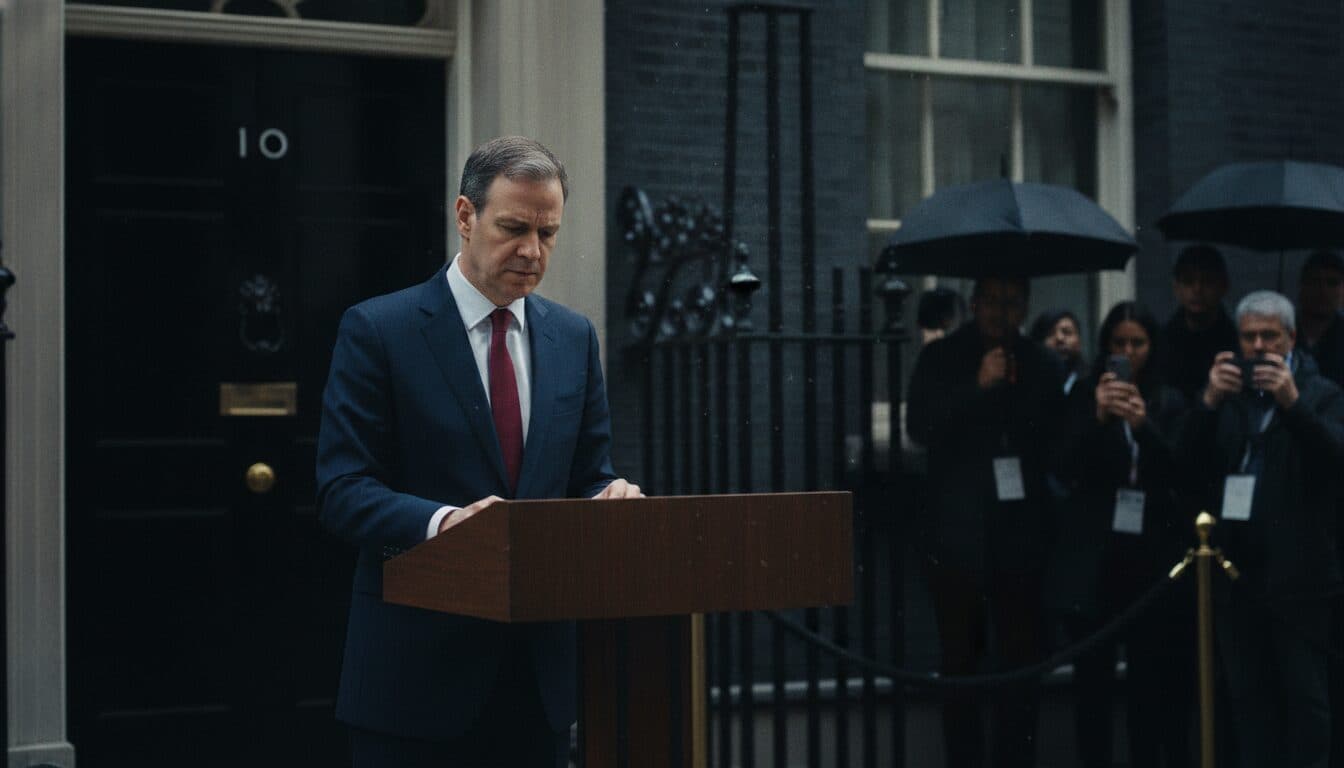
Starmer’s decision was finalized after a weekend of reflection at Chequers, the Prime Minister’s country residence, and discussions with his wife, Victoria. He informed King Charles III of his decision on Monday morning, June 22, 2026. In an emotional resignation speech outside 10 Downing Street, Starmer acknowledged that his parliamentary party had answered the question of whether he was best placed to lead them into the next general election, and he accepted their answer “with good grace.” He also claimed credit for revitalizing the Labour Party, stating he inherited a party that was “politically, financially and morally bankrupt” and brought it back from the brink.
Starmer will remain as a caretaker Prime Minister until a new Labour leader is selected. The leadership election is slated to begin in July, with nominations expected to open on July 9 and conclude by the summer recess. Andy Burnham, the highly visible Mayor of Greater Manchester, has swiftly emerged as a strong favorite to succeed Starmer, particularly following his recent victory in the Makerfield by-election. Burnham has confirmed his intention to run for the Labour leadership, and significantly, potential contender Wes Streeting has already thrown his support behind Burnham, making a “coronation highly likely.” The new leader is anticipated to be in office by the time Parliament returns in September, or potentially as early as July 16 or 17 if the contest is uncontested.
The resignation of Keir Starmer marks a continuation of profound political instability in the UK, making him the seventh Prime Minister to leave office prematurely in the last decade. This period has been characterized by rapid leadership changes, with prime ministers changing almost every 18 months on average—a trend unprecedented in modern British political history outside of wartime. The ongoing volatility poses significant questions for investors and businesses operating in the UK, raising concerns about policy consistency and long-term economic strategy. For a deeper dive into the broader economic implications, explore our related trending articles on UK market reactions.
This rapid succession of leaders underscores a deeper malaise within the British political system, where the electorate’s patience appears to have worn thin with traditional political offerings. The rise of Reform UK and the Green Party in the recent local elections signals a significant fragmentation of the vote and a growing appetite for alternatives outside the established two-party dominance. The next Labour leader faces the daunting task of reunifying a fractured party and presenting a compelling vision to a disillusioned electorate, all while navigating a volatile economic landscape and heightened geopolitical tensions. The implications for the UK’s standing on the global stage and its economic trajectory remain profoundly uncertain.