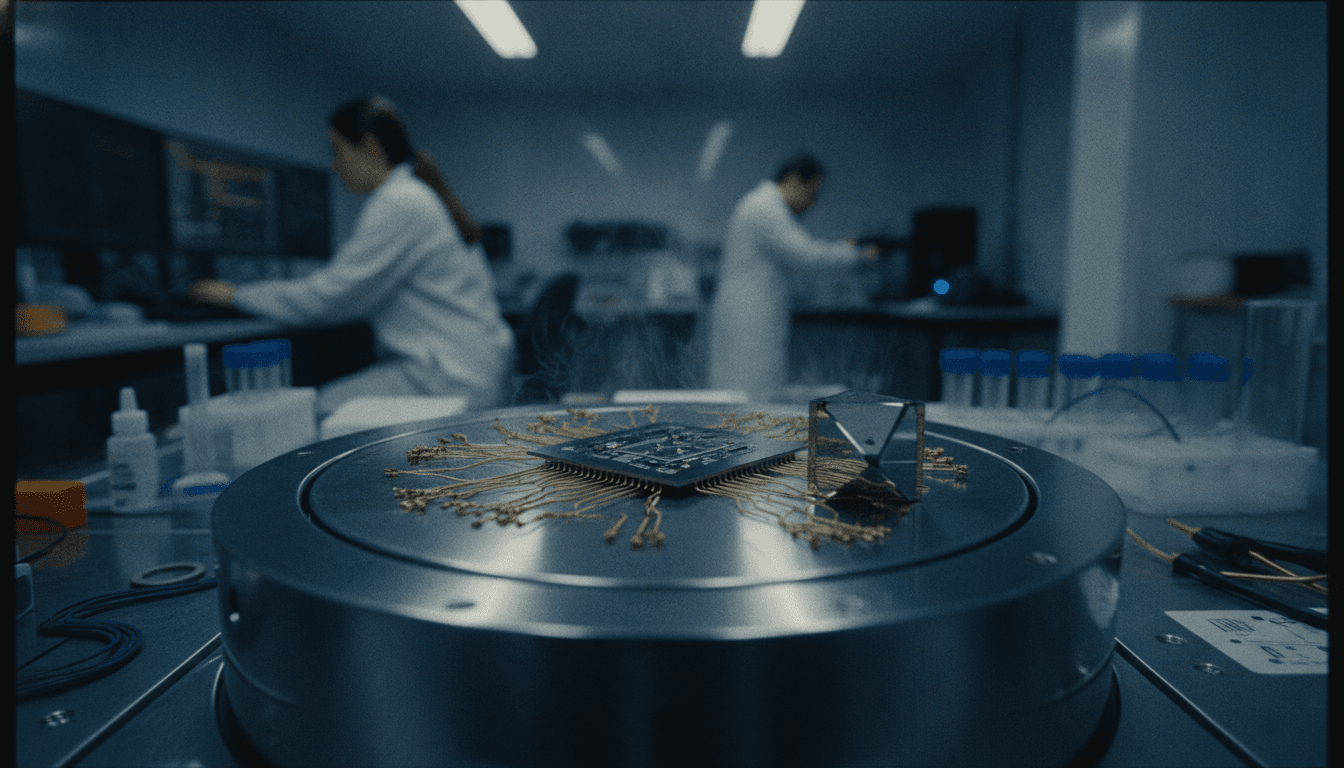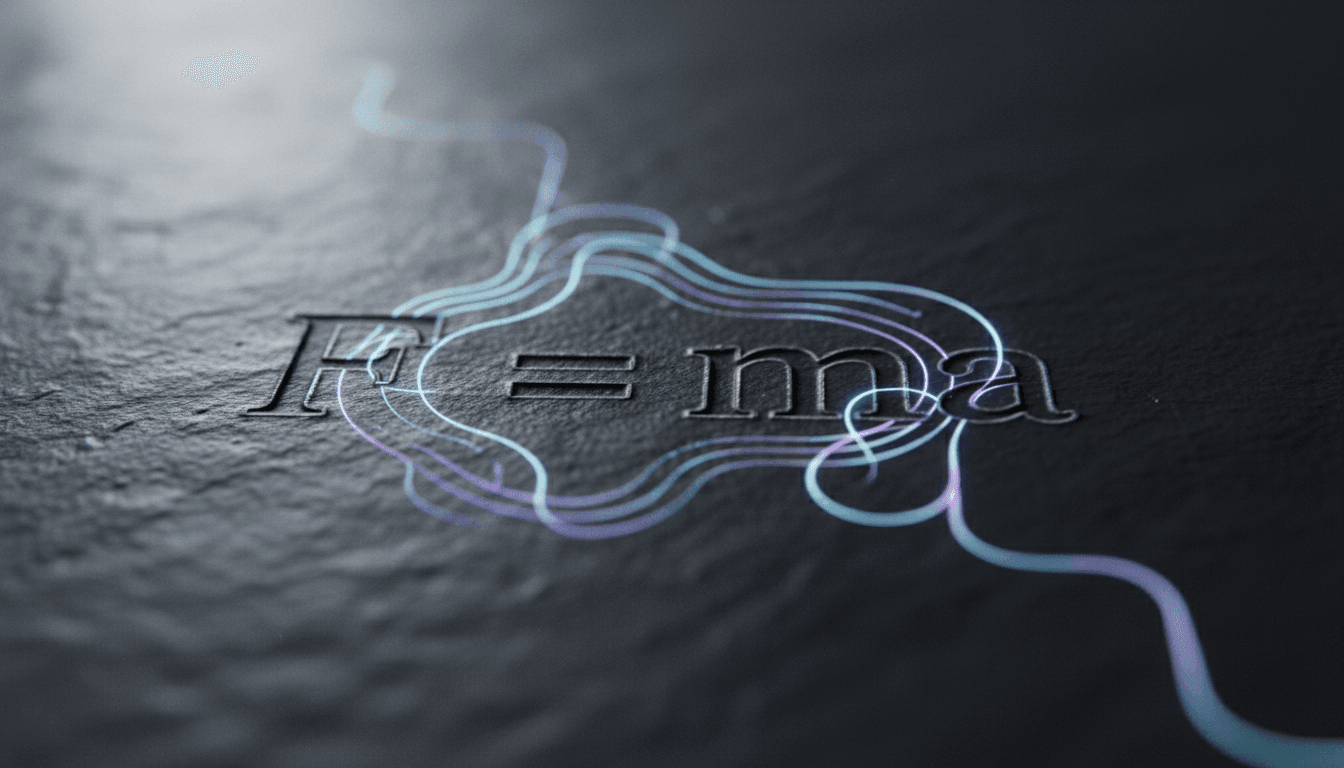
Research unites classical, quantum physics realms, marking a significant advancement reported on Wednesday, April 22, 2026. This breakthrough promises to bridge the long-standing divide between two fundamental pillars of modern physics, potentially unlocking new avenues for understanding the universe at both macroscopic and subatomic scales. The implications extend across theoretical frameworks and practical applications, from advanced materials science to quantum computing.
The Story: Bridging the Divide
The recent findings, detailed on April 22, 2026, represent a pivotal moment in theoretical physics. While specific individuals or institutions involved were not named in the initial report, the nature of such research typically involves collaborative efforts between leading universities and research laboratories globally. The core achievement lies in developing a framework or experimental evidence that demonstrates a tangible connection or underlying unity between classical mechanics, which governs the observable world, and quantum mechanics, which describes the behavior of matter and energy at the atomic and subatomic levels.
For decades, physicists have grappled with the seemingly irreconcilable differences between these two theories. Classical physics, championed by Isaac Newton, provides highly accurate predictions for large-scale phenomena, from planetary orbits to projectile motion. Quantum physics, on the other hand, introduced concepts like wave-particle duality, superposition, and entanglement, which defy classical intuition but are essential for explaining phenomena like atomic structure and laser operation. The challenge has always been to find a single, coherent theory that can encompass both, or at least to demonstrate how one emerges from the other under certain conditions. This latest research suggests a significant step towards that grand unification.
Impact Analysis
The unification of classical and quantum physics realms would have profound implications across the scientific landscape. In fundamental physics, it could lead to a ‘theory of everything’ – a single, comprehensive theoretical framework that explains all physical aspects of the universe. This would not only resolve long-standing paradoxes but also provide new insights into the nature of gravity, dark matter, and dark energy. For cosmologists, a unified theory could offer a clearer picture of the universe’s origin and evolution, particularly during its earliest moments when quantum effects were dominant on a cosmic scale.
Beyond pure theory, the practical applications could be revolutionary. In materials science, a deeper understanding of the interplay between classical and quantum behaviors could enable the design of novel materials with unprecedented properties, such as superconductors operating at room temperature or highly efficient quantum sensors. For computing, this research could accelerate the development of robust quantum computers, which rely on quantum phenomena to perform calculations far beyond the capabilities of classical machines. Furthermore, it could open pathways for new forms of energy generation and more precise medical diagnostic tools. Related science & space articles often highlight the slow but steady progress in these frontier areas, making this development particularly noteworthy.
“The ability to seamlessly transition between classical and quantum descriptions fundamentally changes our approach to understanding reality, offering a unified lens through which to view the cosmos.”
Context & Background
The quest to unite classical and quantum physics realms is not new. Albert Einstein famously spent much of his later life attempting to develop a unified field theory. Subsequent efforts, such as string theory and loop quantum gravity, have sought to reconcile general relativity (a classical theory of gravity) with quantum mechanics, but a complete, experimentally verified solution has remained elusive. The difficulty stems from the fact that quantum effects typically become negligible at macroscopic scales, while classical descriptions break down at the atomic level.
Recent advancements in experimental techniques, particularly in quantum optics and ultracold atom physics, have allowed scientists to observe quantum phenomena in increasingly larger and more complex systems, blurring the line between the two realms. This experimental progress, coupled with innovative theoretical models, has created fertile ground for breakthroughs like the one reported. The scientific community has been keenly following research into quantum decoherence, entanglement across macroscopic distances, and the quantum-to-classical transition, all of which contribute to this broader goal.
What’s Next
The immediate next steps following this announcement will undoubtedly involve rigorous peer review and attempts by other research groups to replicate and expand upon the findings. The scientific community will be eager for more detailed publications outlining the methodologies, experimental setups (if applicable), and theoretical frameworks employed. Future research will likely focus on exploring the boundaries of this unified description, testing its applicability in various physical systems, and probing for any limitations or discrepancies.
If validated, this research could significantly influence funding priorities in physics, directing resources towards further exploration of the classical-quantum interface. It may also lead to the development of new educational curricula that present physics in a more integrated manner. The long-term implications could include a re-evaluation of fundamental constants, a refinement of our understanding of spacetime, and potentially, entirely new technological paradigms that leverage this deeper comprehension of physical reality. We anticipate further announcements in the coming months detailing the specific mechanisms behind this unification.
Key Takeaway
This reported breakthrough, uniting classical, quantum physics realms, underscores a monumental step towards a more complete understanding of the universe. By bridging the chasm between the macro and micro scales, it not only resolves long-standing theoretical inconsistencies but also paves the way for a new era of scientific discovery and technological innovation. The ability to perceive the universe through a single, coherent theoretical framework promises to redefine our place within it and unlock capabilities previously confined to the realm of science fiction. The ongoing pursuit of such fundamental knowledge continues to drive human progress and expand the frontiers of what is possible, profoundly impacting areas from space exploration to advanced computing.