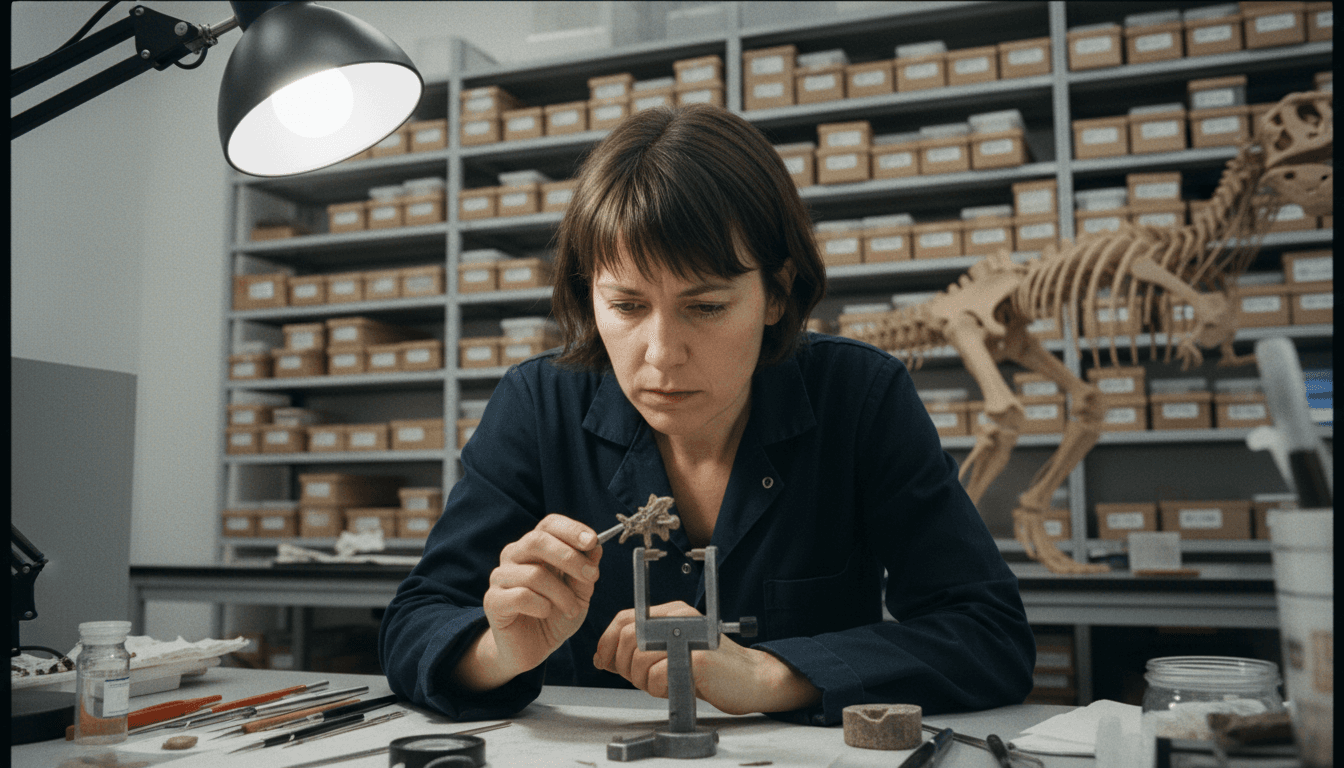
Tiny dinosaur fossils fooled scientists for 20 years, a revelation announced on Wednesday, April 22, 2026, by ScienceDaily, that has sent ripples through the paleontological community. For two decades, what were believed to be juvenile specimens of known dinosaur species have now been reclassified, underscoring the persistent challenges in interpreting fragmented fossil records and the importance of continuous re-evaluation in scientific inquiry.
The story unfolds with a re-examination of fossilized remains that, since their initial discovery and classification, were considered unambiguous evidence of young dinosaurs. The ScienceDaily report, published on Wednesday, April 22, 2026, details how advanced analytical techniques and a fresh perspective led researchers to conclude that these seemingly juvenile bones actually belonged to entirely different, previously unrecognized species. The specific individuals and institutions involved in the initial misidentification and the subsequent correction were not detailed in the report, but the implication is a broad, community-wide reassessment of existing collections. The key details revolve around the diminutive size of the fossils, which naturally led to the conclusion of immaturity, rather than distinct species.
Impact Analysis: Reclassifying Tiny Dinosaur Fossils
The reclassification of these tiny dinosaur fossils carries significant implications for the broader science and space landscape, particularly in paleontology. Firstly, it highlights a potential systemic bias in interpreting small fossil remains, often defaulting to juvenile forms of larger, known species. This incident will undoubtedly spur a critical review of other collections, potentially leading to a cascade of reclassifications and the identification of numerous new species that were previously overlooked. This paradigm shift could dramatically alter our understanding of ancient ecosystems, biodiversity, and the evolutionary pathways of dinosaurs. Furthermore, it reinforces the crucial role of innovative technologies and interdisciplinary collaboration in challenging long-held assumptions. The meticulous re-analysis, likely involving advanced imaging, comparative anatomy, and perhaps even molecular paleontology techniques, demonstrates how scientific progress often hinges on revisiting established data with new tools and insights. The field of astrobiology, too, might draw parallels, understanding that initial interpretations of extraterrestrial samples could be similarly prone to human-centric biases or limited technological capabilities. This discovery serves as a critical reminder of scientific humility and the iterative nature of knowledge acquisition.
“This reclassification is a stark reminder that even well-established scientific interpretations are provisional, subject to revision as new evidence and techniques emerge,”
Context & Background
The misidentification of these tiny dinosaur fossils is not an isolated incident in the history of paleontology. The field has a rich history of reclassification, from the initial confusion surrounding ichthyosaurs and plesiosaurs to the ongoing debates about dinosaur genera like Brontosaurus. Early paleontological interpretations often relied on limited comparative material and less sophisticated analytical methods. For instance, the discovery of early bird fossils, like Archaeopteryx, initially sparked intense debate about their avian or reptilian affinities. More recently, advancements in 3D imaging, micro-CT scanning, and phylogenetic analysis have revolutionized our ability to discern subtle anatomical differences and reconstruct evolutionary relationships with greater precision. This trend of re-evaluating historical finds with modern techniques has been a consistent theme in paleontology, driven by both technological progress and the discovery of new, more complete specimens that provide critical context. The challenge of distinguishing between juvenile forms, sexual dimorphism, and distinct species remains a persistent hurdle, particularly for rare or fragmented fossil records.
What’s Next
The immediate future following the revelation about these tiny dinosaur fossils will likely see a surge in research focused on re-evaluating existing collections. Museums and research institutions worldwide will undoubtedly initiate projects to apply the same rigorous analytical techniques that led to this reclassification to their own “juvenile” dinosaur specimens. This could lead to a significant expansion of the known dinosaur species, particularly among smaller forms, and a more nuanced understanding of their ecological niches. Furthermore, the findings may influence how new fossil discoveries are initially categorized, with greater emphasis placed on ruling out distinct species before assuming immaturity. Funding bodies may prioritize research proposals that focus on re-analysis of historical finds, recognizing the untapped potential within existing fossil repositories. The scientific community will also likely engage in robust discussions about best practices for fossil classification, particularly for fragmentary remains, potentially leading to updated guidelines or methodologies. This ongoing process of refinement and discovery underscores the dynamic nature of paleontological research.
Key Takeaway
The reclassification of these tiny dinosaur fossils for 20 years highlights a fundamental principle of scientific inquiry: knowledge is provisional and constantly refined. It serves as a powerful testament to the iterative nature of discovery, where even long-held assumptions can be overturned by new evidence and advanced analytical techniques. This incident will not only reshape our understanding of dinosaur diversity and evolution but also reinforce the importance of critical re-evaluation across all scientific disciplines, urging researchers to perpetually question, investigate, and refine their interpretations of the natural world. The ongoing quest to understand Earth’s ancient past remains as vibrant and full of surprises as ever, promising further revelations from the fossil record. Further research into these newly identified species will undoubtedly uncover more about their lives and ecosystems.