Scientists connect time crystal to real device in a significant quantum breakthrough announced on Wednesday, May 6, 2026. This development marks a crucial step forward in quantum computing and fundamental physics, bridging a theoretical concept with practical application and potentially paving the way for a new generation of stable, robust quantum technologies.
The Quantum Leap: What Happened
The announcement from ScienceDaily on May 6, 2026, detailed how researchers successfully linked a “time crystal” to a tangible quantum device. While the specifics of the device and the institutions involved were not explicitly detailed in the initial report, the core achievement lies in the successful integration of this exotic state of matter into a functional system. Time crystals are a phase of matter that exhibit periodic motion in time, even in their lowest energy state, much like a regular crystal exhibits periodic structure in space. Unlike conventional crystals, which break continuous translational symmetry in space, time crystals break continuous translational symmetry in time. This means they oscillate perpetually without external energy input, defying typical thermodynamic decay.
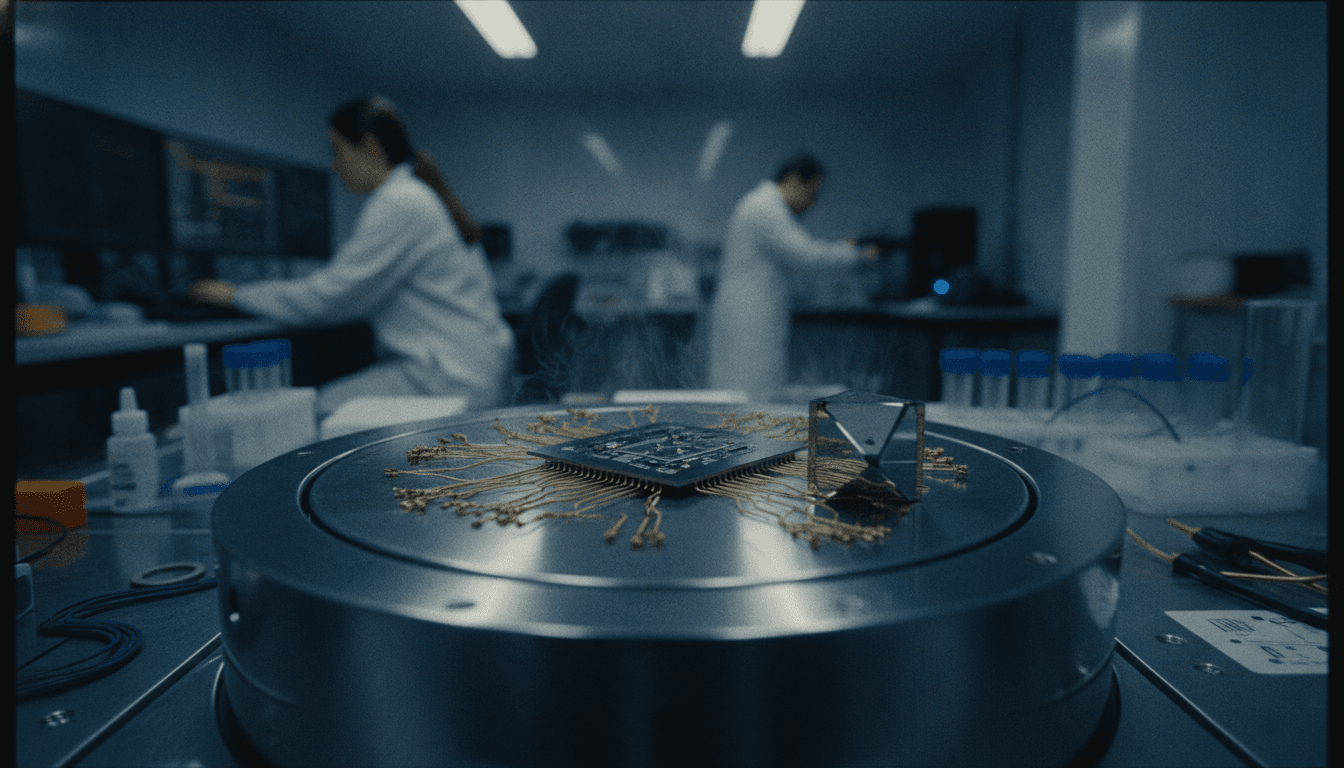
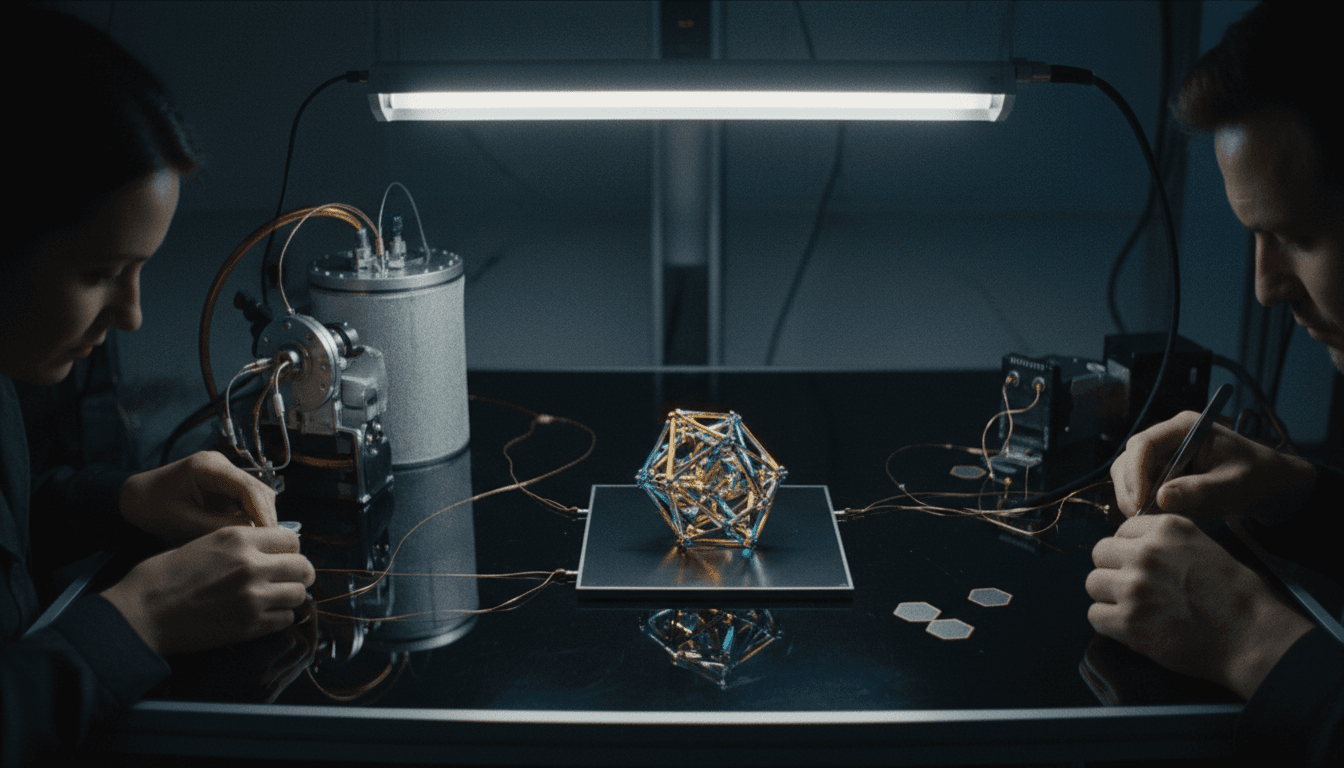
For years, time crystals have existed largely in the realm of theoretical physics and highly controlled, isolated experimental setups. The challenge has always been to translate these delicate quantum phenomena into stable, usable components within a larger system. This recent breakthrough suggests a significant advancement in controlling and maintaining the coherence of these temporal structures, allowing them to interact meaningfully with a ‘real device.’ The implications are profound, hinting at a future where quantum systems could harness this inherent stability for enhanced performance.
Impact Analysis
This connection of a time crystal to a real device has far-reaching implications for the broader science and space landscape. In quantum computing, the primary obstacle to building scalable and error-free machines is decoherence – the loss of quantum information due to interaction with the environment. Time crystals, with their inherent stability and self-sustaining oscillations, offer a tantalizing prospect for creating more resilient quantum bits (qubits) or novel forms of quantum memory. If the perpetual motion of time crystals can be harnessed to protect quantum information, it could dramatically reduce error rates and extend the coherence times of quantum processors, pushing us closer to practical, fault-tolerant quantum computers.
Beyond computing, this breakthrough could influence fields like quantum sensing and metrology. Devices utilizing time crystals might achieve unprecedented levels of precision and stability, leading to more accurate atomic clocks, improved navigation systems, and ultra-sensitive detectors for fundamental physics experiments. The ability to maintain a stable, oscillating quantum state could also open new avenues for understanding exotic materials and developing novel energy solutions. Related science & space articles frequently highlight the ongoing quest for stable quantum states, making this development particularly noteworthy.
Time Crystal: Context & Background
The concept of a time crystal was first proposed by Nobel laureate Frank Wilczek in 2012, drawing parallels between spatial crystals and a hypothetical phase of matter that breaks time translation symmetry. Initial theoretical models suggested that such a state might violate fundamental laws of physics, leading to skepticism. However, subsequent refinements and theoretical advancements, particularly in non-equilibrium quantum systems, showed that time crystals could indeed exist under specific conditions. Experimental realizations followed, with several independent research groups reporting observations of discrete time crystals in systems like trapped ions and nitrogen-vacancy centers in diamonds around 2016-2017.
These early experimental demonstrations were crucial, confirming the existence of this exotic phase of matter. However, these setups were typically highly specialized and isolated, far removed from integration into practical devices. The challenge has been to transition from observing a time crystal to actively utilizing its properties within a functional system. This latest announcement on May 6, 2026, signifies that researchers have overcome a significant hurdle in this journey, moving time crystals from a laboratory curiosity to a potential component in advanced quantum technology.
“The ability to connect a time crystal to a real device fundamentally shifts our perspective on what’s possible in quantum engineering, offering a new paradigm for stability in highly dynamic quantum systems.”
The journey from theoretical concept to experimental realization and now to practical integration underscores the rapid pace of innovation in quantum physics. Industry trends indicate a growing investment in quantum research, driven by the immense potential for technological disruption across various sectors, from finance to pharmaceuticals and national security. This breakthrough aligns perfectly with the global push to develop more robust and scalable quantum technologies.
What’s Next
The immediate next steps following this quantum breakthrough will likely involve rigorous verification and characterization of the integrated system. Researchers will focus on understanding the precise mechanisms by which the time crystal interacts with the device, and crucially, how its unique properties enhance the device’s functionality. This will involve detailed studies of coherence times, error rates, and scalability.
Further research will undoubtedly explore different types of quantum devices that could benefit from time crystal integration. We might see efforts to incorporate time crystals into superconducting qubits, topological qubits, or photon-based quantum systems. The long-term implications include the development of entirely new architectures for quantum computers that leverage the intrinsic stability of time crystals to bypass some of the current limitations of quantum hardware. International collaborations and increased funding for quantum research are also anticipated, as the race for quantum supremacy intensifies. Upcoming decisions in national science policy will likely prioritize funding for projects exploring these novel quantum material integrations.
Key Takeaway
This development, where scientists connect time crystal to a real device, matters profoundly because it represents a tangible step towards harnessing one of the most exotic states of matter for practical technological applications. It moves time crystals beyond the realm of pure theoretical physics and into the engineering domain, offering a potential solution to the persistent challenge of quantum decoherence. This breakthrough could accelerate the development of stable, fault-tolerant quantum computers, revolutionize precision sensing, and deepen our understanding of fundamental physics, ultimately shaping the future of high-technology industries and our capabilities in space exploration.