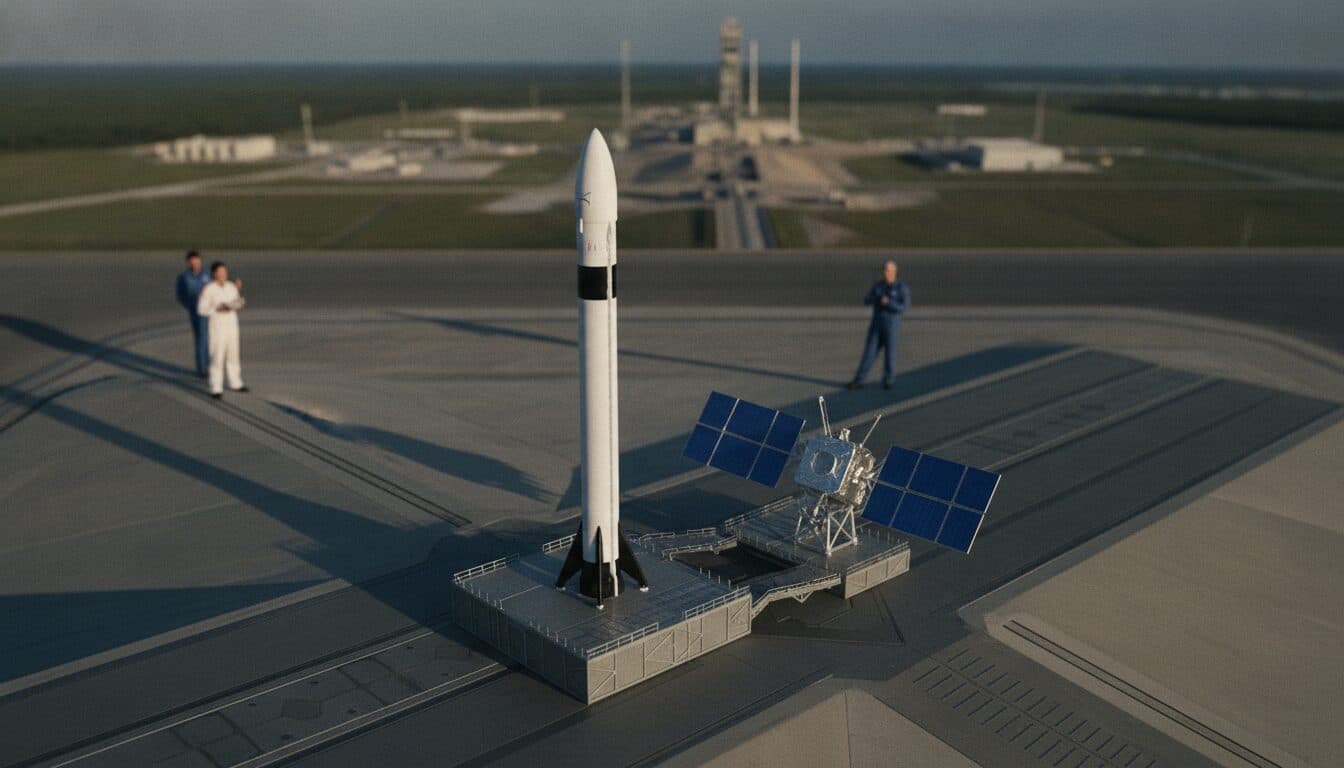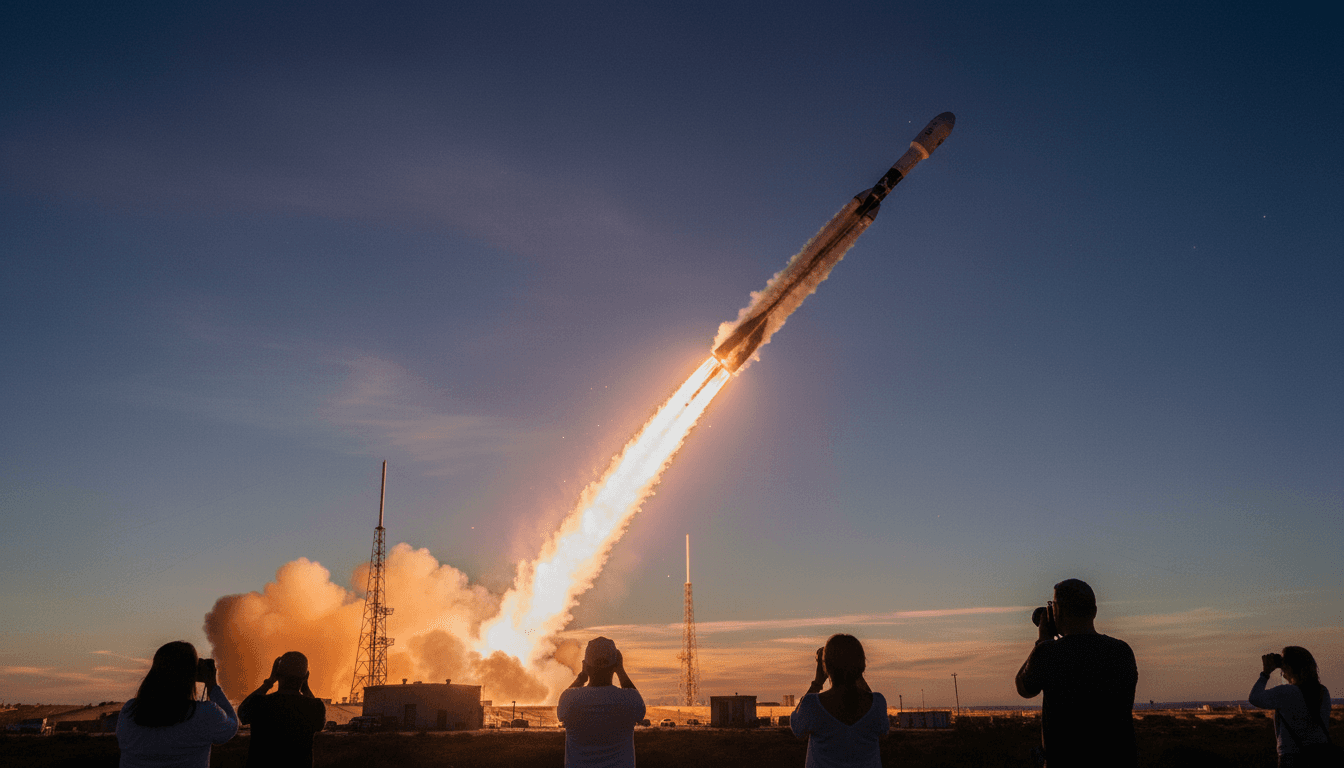
A landmark Starlink satellite launch from SpaceX’s Falcon 9 rocket successfully deployed 27 new Starlink satellites into low Earth orbit on Monday, April 6, 2026. This latest mission, originating from Vandenberg Space Force Base in California, significantly advances the company’s ambitious goal of providing high-speed, global internet coverage.
The successful deployment, executed just after sunset, underscores SpaceX’s relentless pace in building out its massive satellite constellation. Originally slated for Sunday evening, the launch proceeded on Monday at 7:49 p.m. PT, adding crucial capacity to the burgeoning Starlink network. These satellites are designed to enhance broadband internet capabilities, supporting demanding applications such as streaming, online gaming, and video calls across the globe.
Impact Analysis
This latest Starlink satellite launch represents a critical step in expanding the reach and resilience of SpaceX’s satellite internet service. By consistently deploying new batches of satellites, Starlink is progressively closing the digital divide, offering connectivity to underserved and remote areas where traditional terrestrial internet infrastructure is either non-existent or prohibitively expensive. The incremental addition of 27 satellites, following previous missions, contributes to a denser constellation, which in turn improves network latency, bandwidth, and overall service reliability for subscribers worldwide.
The mission also highlights the operational efficiency and reliability of SpaceX’s Falcon 9 rocket. This particular flight marked the 10th for the first-stage booster, which, true to SpaceX’s innovative reusability ethos, successfully landed on the ‘Of Course I Still Love You’ drone ship stationed in the Pacific Ocean after stage separation. This repeated reuse of boosters is a cornerstone of SpaceX’s strategy to dramatically reduce the cost of space access, making frequent deployments like this Starlink satellite launch economically viable. Reusability is transforming the economics of space, allowing for rapid mission turnovers and a sustained pace of constellation deployment. For more insights into the evolving space economy, explore our related science & space articles.
“The consistent and reliable deployment of Starlink satellites is not just about increasing numbers; it’s about fundamentally reshaping global access to information and opportunity. Each successful mission brings us closer to a truly interconnected world.”
Context & Background
SpaceX’s Starlink project began with the vision of creating a vast interconnected network of satellites in low Earth orbit (LEO) to deliver high-speed, low-latency broadband internet. Unlike traditional geostationary satellites that orbit much higher and incur significant signal delay, Starlink’s LEO constellation dramatically reduces latency, making it competitive with ground-based fiber optic networks in many scenarios. The Falcon 9, described by SpaceX as the world’s first orbital-class reusable rocket, has been instrumental in making this vision a reality, enabling the rapid and cost-effective deployment of thousands of satellites. The company has consistently pushed the boundaries of rocket technology, establishing a new paradigm for space launches.
What’s Next for Starlink Satellite Launch
Looking ahead, the trajectory for Starlink is one of continued expansion and refinement. SpaceX is expected to maintain its aggressive launch schedule, sending more Starlink satellites into orbit to further enhance global coverage and capacity. Future developments will likely focus on optimizing the constellation’s architecture, improving ground station infrastructure, and potentially exploring new applications for the high-bandwidth network beyond consumer internet, such as enterprise solutions, maritime connectivity, and even governmental services. The ability to launch 27 satellites in a single mission from California underscores the scalability of their operations. The ongoing efforts also include addressing concerns regarding space debris and light pollution, with SpaceX continuously iterating on satellite designs to minimize their visual impact and ensure responsible space operations.
This latest Starlink satellite launch reaffirms SpaceX’s dominant position in the commercial space industry and its profound impact on global connectivity. The consistent deployment of these advanced internet satellites is not merely a technological feat but a strategic move that continues to democratize access to information, fostering economic growth and social development in regions previously left behind by the digital revolution. The financial implications for the telecom sector, as Starlink expands its market share, are substantial, signaling a shift in how internet services are delivered worldwide.