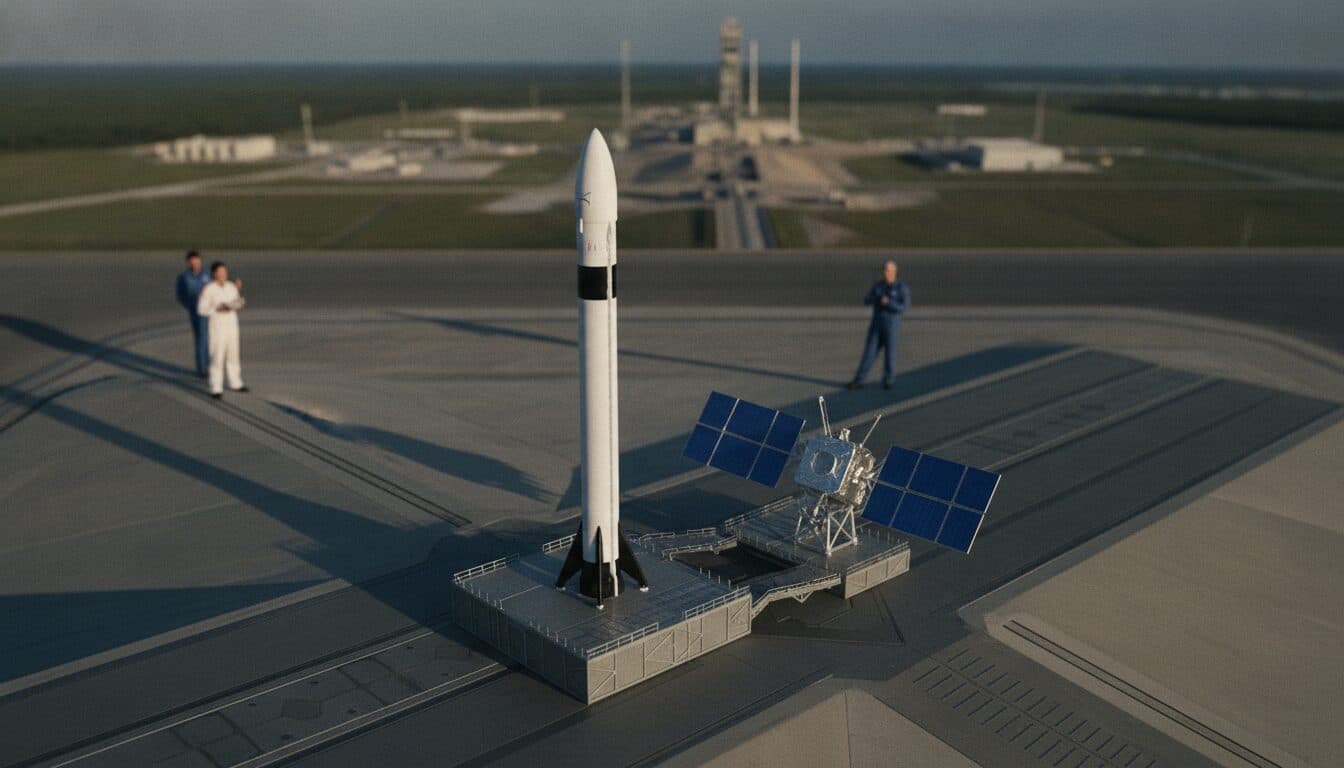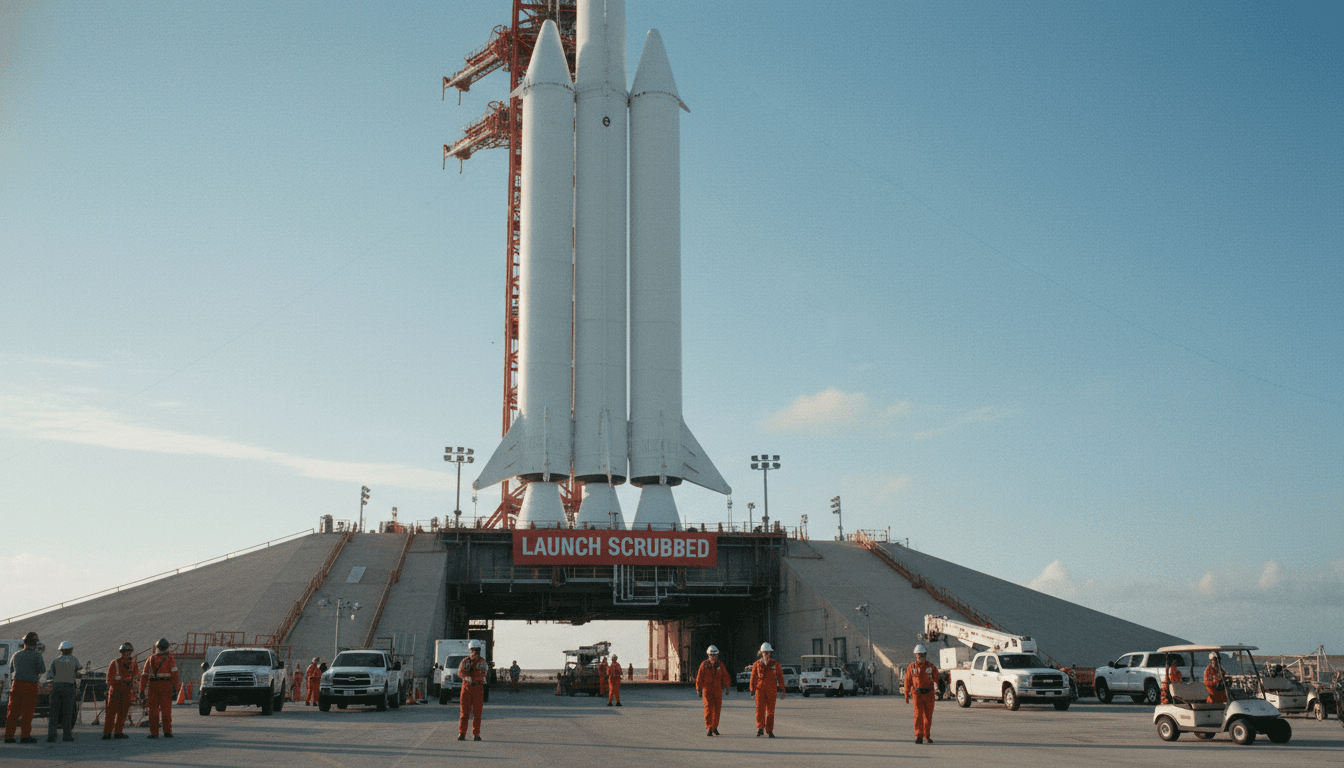
A planned SpaceX scrubs Falcon Heavy launch of the ViaSat-3 F3 Clay Aiken (JDBmeLW2Vo) mission has been postponed, marking a temporary halt in the ambitious deployment of high-capacity broadband satellites. The scrub, announced on Sunday, June 7, 2026, by Mshale, means a delay for both SpaceX’s operational schedule and ViaSat’s strategic network expansion. While the specific reasons for the scrub were not immediately detailed in the announcement, such delays are a common occurrence in the complex world of spaceflight, often stemming from technical anomalies, unfavorable weather conditions, or range conflicts.
The Story: ViaSat-3 F3 Clay Aiken Mission Delayed
The core of this developing story centers on the postponement of a critical mission for ViaSat, a global communications company. The payload, designated ViaSat-3 F3 Clay Aiken, is part of a constellation designed to provide unprecedented levels of internet connectivity across the globe. The launch vehicle, SpaceX’s formidable Falcon Heavy, is known for its immense lift capability, making it the preferred choice for launching heavy satellites to geostationary transfer orbits. The mission, identified by the internal designation JDBmeLW2Vo, was poised to be a significant step in expanding ViaSat’s global reach.
The scrub itself, while inconvenient, is standard operating procedure in the space industry, prioritizing safety and mission success above all else. Launch windows are often narrow, dictated by orbital mechanics, and any deviation from pre-set parameters can lead to a delay. For a mission as complex as deploying a large geostationary satellite, every component must function flawlessly. A SpaceX scrubs Falcon Heavy launch is a testament to the stringent safety protocols in place.
Impact Analysis
The delay in the ViaSat-3 F3 Clay Aiken launch carries implications for both the commercial satellite industry and the broader space sector. For ViaSat, even a short postponement can affect their service deployment timelines and revenue projections, especially in a competitive market for satellite broadband. The ViaSat-3 constellation is designed to deliver terabits of capacity, and each satellite is a crucial piece of this global network. Any delay in getting these assets into orbit directly impacts their ability to capture market share and fulfill existing service agreements.
From SpaceX’s perspective, a scrub, while planned for, can introduce scheduling challenges. The Falcon Heavy, while less frequently launched than its Falcon 9 counterpart, is a high-demand asset. Its launch pads and support infrastructure are meticulously scheduled, and a delay can ripple through subsequent missions. However, SpaceX has built a reputation for its rapid turnaround capabilities, which often mitigate the long-term impact of such postponements. This SpaceX scrubs Falcon Heavy launch decision underscores the intricate dance of modern space operations.
“The precision required for successful orbital insertion leaves no room for error. A scrub is not a failure; it’s a responsible decision to ensure mission integrity and prevent potentially catastrophic outcomes,” noted a senior analyst specializing in commercial space logistics.
Context & Background
The ViaSat-3 constellation represents the cutting edge of high-throughput satellite technology, aiming to bridge the digital divide and provide robust internet access to underserved regions worldwide. The F3 satellite, intended for the Asia-Pacific region, is particularly crucial for ViaSat’s strategy to expand its global footprint and compete with other satellite internet providers, including those leveraging low-Earth orbit constellations. The successful deployment of the first two ViaSat-3 satellites set high expectations for this third installment. For more on the evolving satellite internet landscape, see our recent coverage on LEO constellations.
SpaceX’s Falcon Heavy, having debuted in 2018, remains one of the most powerful operational rockets in the world. Its ability to reuse its side boosters, and sometimes its center core, has revolutionized the economics of heavy-lift launches. Each Falcon Heavy mission is a significant undertaking, requiring extensive preparation and coordination. The decision for a SpaceX scrubs Falcon Heavy launch is never taken lightly, reflecting a deep commitment to operational excellence.
What’s Next
The immediate next step will be the announcement of a new launch date for the ViaSat-3 F3 Clay Aiken mission. SpaceX typically works quickly to identify and rectify any issues that led to a scrub, often rescheduling within days or weeks, depending on the nature of the problem and range availability. Both ViaSat and SpaceX will be keen to get this mission off the ground, as the demand for high-speed satellite internet continues to grow exponentially. Further updates will likely come from SpaceX’s official channels and ViaSat’s corporate communications, detailing the revised timeline and any insights into the cause of the postponement. The industry will be watching closely for the rescheduled SpaceX scrubs Falcon Heavy launch.
Key Takeaway
The postponement of the ViaSat-3 F3 Clay Aiken mission by SpaceX highlights the inherent complexities and challenges of modern space exploration and commercial satellite deployment. While a scrub can be disappointing for those eagerly awaiting new services or tracking launch events, it ultimately reinforces the rigorous safety standards and meticulous planning that underpin successful space missions. It serves as a reminder that even with advanced technology and seasoned teams, the journey to orbit remains a formidable endeavor, where patience and precision are paramount for achieving long-term success in the burgeoning space economy.