SpaceX rocket firing has captured global attention, as the world’s biggest rocket was successfully fired up ahead of a crucial flight on Friday, April 17, 2026. This pivotal test marks a significant milestone for Elon Musk’s aerospace company, demonstrating the immense power and readiness of their next-generation launch vehicle for an eagerly anticipated mission. The successful engine ignition signals the final stages of preparation for a flight that could redefine humanity’s reach into space.
The Story: A Colossus Awakens
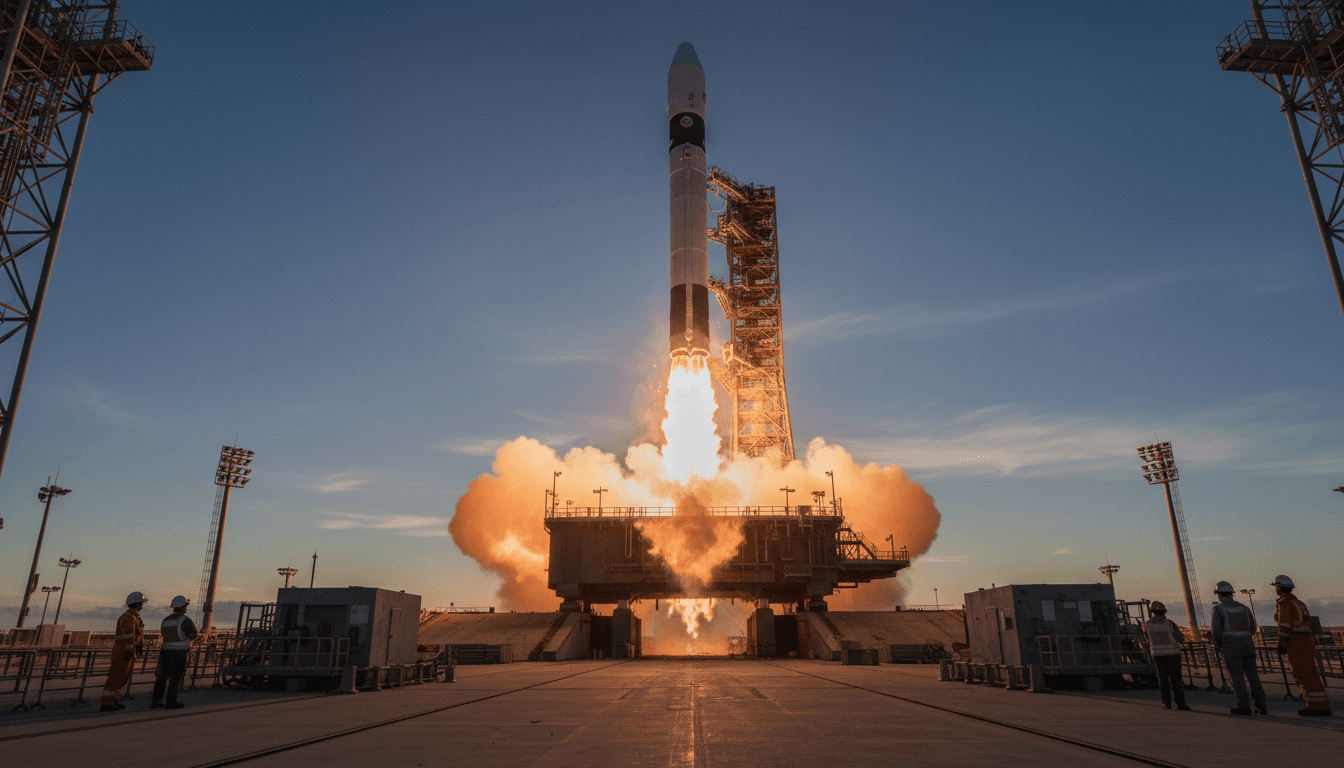
On Friday, April 17, 2026, SpaceX conducted a critical static fire test of its colossal rocket, confirming its operational readiness. While specific details regarding the exact number of engines fired or the duration of the test were not immediately released, the confirmation from AOL.com indicates a successful procedure. This pre-flight ritual is standard for large-scale rockets, ensuring all systems are go before committing to a full launch. The sheer scale of this vehicle, dubbed the ‘world’s biggest rocket,’ underscores the ambitious goals SpaceX has set for itself, particularly in the realm of deep space exploration and interplanetary travel.
The test involved activating the rocket’s powerful engines while it remained securely tethered to the launchpad. This allows engineers to gather vital data on engine performance, thrust output, and overall system integrity under flight-like conditions without the vehicle actually leaving the ground. The successful SpaceX rocket firing is a testament to the rigorous engineering and testing protocols employed by the company, pushing the boundaries of what is technically feasible in rocketry.
Impact Analysis
The successful SpaceX rocket firing carries profound implications for the broader science and space landscape. This rocket, designed for unprecedented payload capacity and reusability, is central to SpaceX’s long-term vision, including establishing a permanent human presence on Mars and enabling extensive lunar missions. Its capabilities could significantly reduce the cost of access to space, opening doors for more frequent scientific experiments, satellite deployments, and even space tourism.
“This successful test moves the needle significantly for human spaceflight and commercial deep space capabilities. It’s not just about a bigger rocket; it’s about a fundamentally different approach to space access,” says a leading industry analyst.
Furthermore, the development of such a powerful launch system could accelerate the timeline for various governmental and private space initiatives. Agencies like NASA, which often partner with private companies for launch services, could leverage this technology for their ambitious programs, including the Artemis missions to the Moon. This test reinforces SpaceX’s position as a dominant force in the global space industry, continuously challenging traditional aerospace paradigms.
Context & Background
SpaceX has a history of pushing boundaries, from pioneering reusable rocket technology with its Falcon 9 boosters to developing the Starship system, of which this ‘world’s biggest rocket’ is a key component. The company’s iterative development approach, characterized by rapid prototyping and frequent testing, has been instrumental in its rapid progress. Previous test flights of earlier Starship prototypes have provided invaluable data, sometimes through spectacular failures, but always leading to critical design improvements. This latest SpaceX rocket firing builds upon years of research and development, refining a complex system designed for future interplanetary travel. The industry has been keenly watching these developments, understanding that the success of this vehicle could usher in a new era of space exploration, reminiscent of the Apollo era but with commercial viability at its core. For more insights into the evolving landscape of private space ventures, readers can explore our related science & space articles.
What’s Next: The Crucial Flight Looms
With the successful static fire test complete, all eyes now turn to the imminent crucial flight. While the exact launch date was not specified in the initial report, such a successful test typically precedes a launch attempt within weeks, if not days, assuming all post-test data analysis confirms optimal performance. This upcoming flight will likely be a high-stakes endeavor, potentially involving further orbital test attempts or even initial payload deployments, depending on SpaceX’s phased development plan for this vehicle. The success of this crucial flight will be paramount for validating the rocket’s design and operational capabilities, paving the way for more ambitious missions. The world watches to see if this SpaceX rocket firing will lead to a new chapter in space exploration.
Key Takeaway: A New Era of Exploration
The successful firing of the world’s biggest rocket by SpaceX represents more than just a technical achievement; it symbolizes a significant leap forward in humanity’s quest to become a multi-planetary species. This event underscores the rapid pace of innovation in the private space sector and its growing influence on the future of exploration. The implications for science, commerce, and human ambition are profound, signaling a future where access to space is more routine, more affordable, and ultimately, more expansive.