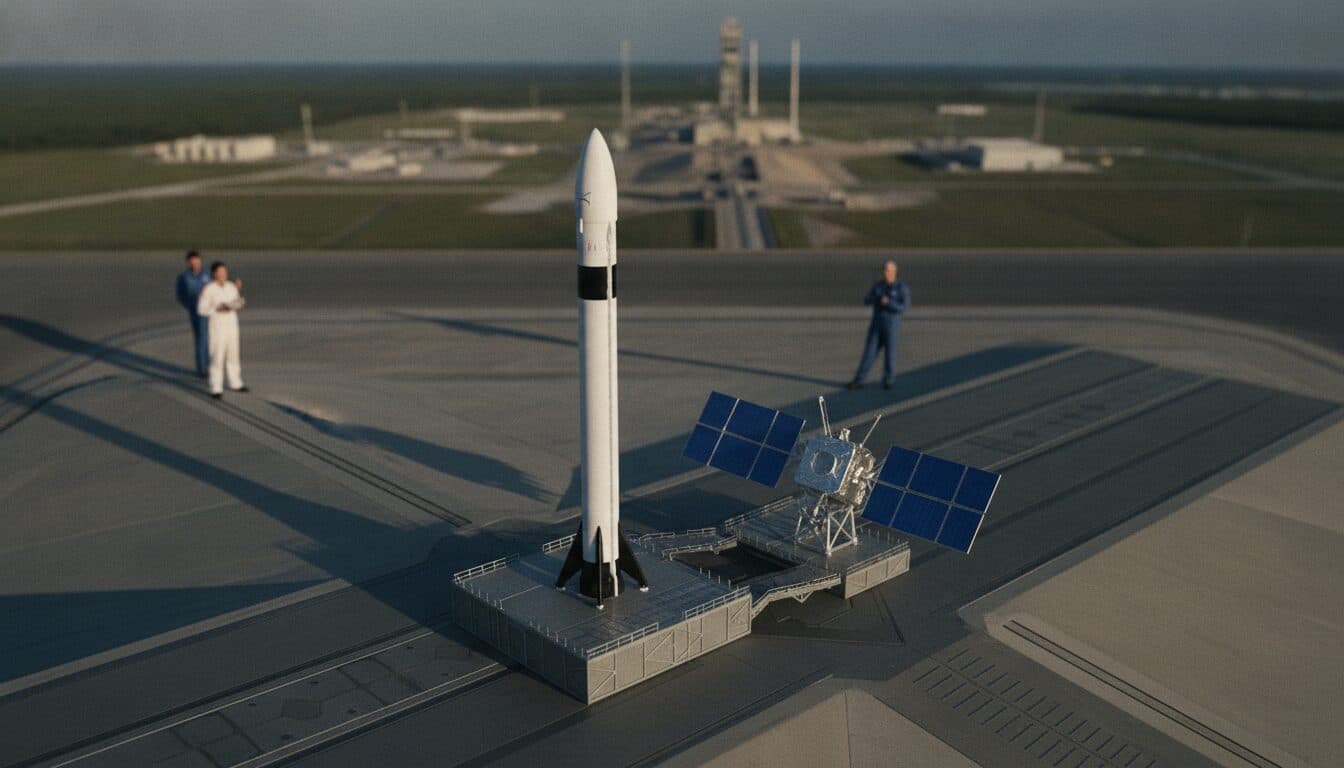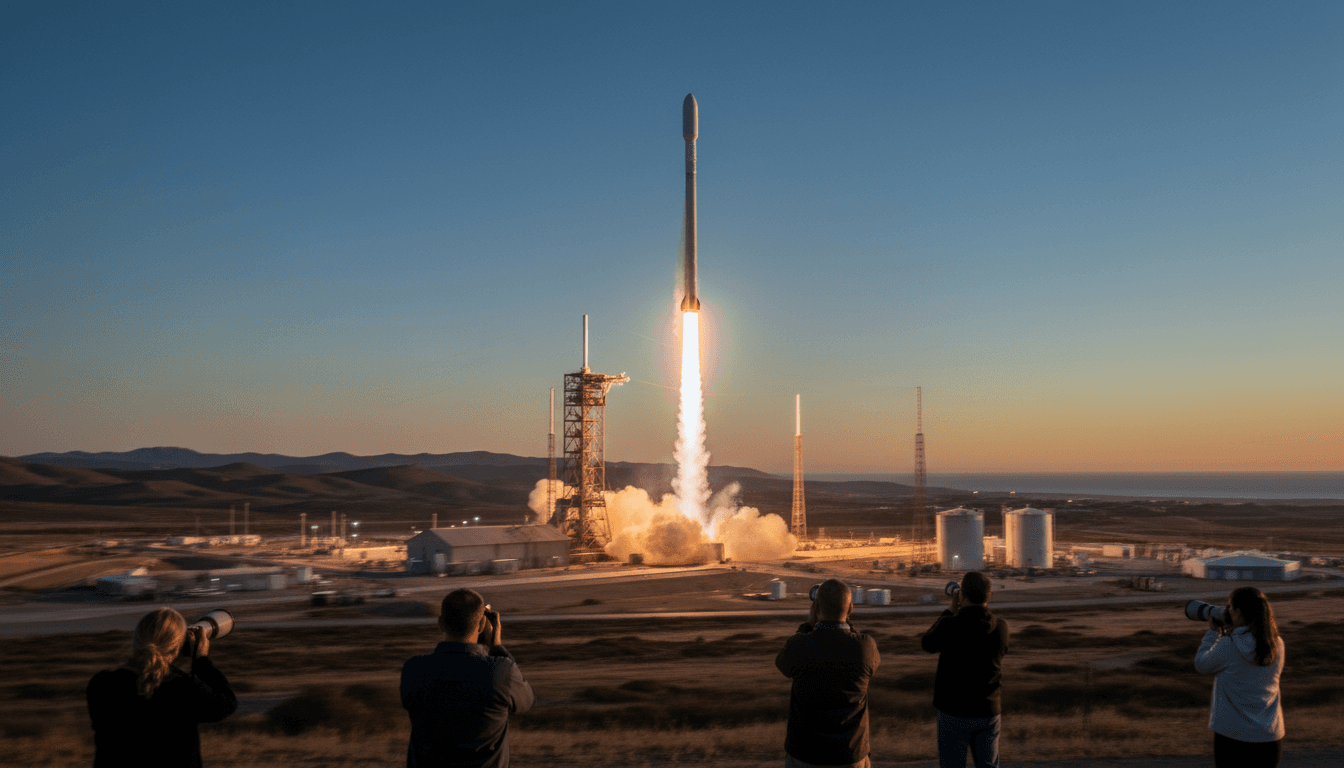
SpaceX launches 24 Starlink satellites, marking another significant expansion of its orbital internet constellation. On Friday, April 24, 2026, a Falcon 9 rocket successfully lifted off from Vandenberg Space Force Base (SFB), deploying the latest batch of communication spacecraft into low Earth orbit. This mission underscores SpaceX’s relentless pace in building out its global broadband network, further solidifying its position as a dominant force in the commercial space sector.
The Mission Details and Starlink Expansion
The launch, originating from Vandenberg SFB, saw a Falcon 9 rocket ascend into the clear California sky, carrying 24 Starlink satellites. While specific details on the booster’s landing or previous flight history were not provided in the immediate report, Falcon 9 first-stage reusability is a standard operational procedure for SpaceX, contributing significantly to the cost-effectiveness and rapid launch cadence of these missions. Each Starlink launch adds crucial capacity and coverage to the growing network, which aims to provide high-speed, low-latency internet access to underserved regions worldwide.
This deployment of 24 Starlink satellites is part of a much larger, ongoing campaign by SpaceX. The company has consistently launched dozens of these satellites at a time, rapidly populating various orbital shells. The sheer volume of these launches is transforming the landscape of satellite communications, challenging traditional geostationary satellite providers and expanding internet access to remote areas.
Impact Analysis: Broadening Global Connectivity
The continuous deployment of Starlink satellites has profound implications for global connectivity. By increasing the number of active satellites, SpaceX is enhancing the network’s resilience, speed, and geographical reach. This is particularly impactful for communities in rural or remote areas where terrestrial internet infrastructure is either nonexistent or prohibitively expensive. The ability to access reliable broadband internet can unlock significant economic and educational opportunities, bridging the digital divide on a global scale.
“Each successful Starlink deployment brings us closer to a truly interconnected world, demonstrating the transformative power of private space ventures in solving global challenges.”
Furthermore, the increased capacity from these new satellites improves service quality for existing Starlink users, reducing latency and increasing bandwidth. This constant upgrade cycle is critical for maintaining a competitive edge in the burgeoning satellite internet market, which is attracting other major players and significant investment.
Context & Background: A New Era of Satellite Internet
SpaceX’s Starlink initiative represents a paradigm shift in satellite internet technology. Unlike previous generations of satellites that operated in geostationary orbit (GEO) thousands of kilometers above Earth, Starlink satellites operate in low Earth orbit (LEO). This proximity to Earth dramatically reduces signal latency, making Starlink more responsive and suitable for applications that traditionally struggled with GEO satellite internet, such as online gaming and video conferencing.
The rapid evolution of Starlink has also spurred innovation across the space industry. Competitors are developing their own LEO constellations, recognizing the market potential. This competitive environment is driving down costs, accelerating technological advancements, and expanding the overall human presence in space. The repeated successful launches of 24 Starlink satellites also showcase the reliability and efficiency of the Falcon 9 rocket, which has become the workhorse of the commercial space industry.
What’s Next for Starlink Satellites
Looking ahead, SpaceX is expected to continue its aggressive launch schedule for Starlink satellites. The company has ambitious plans to expand the constellation to tens of thousands of satellites, enabling even more robust and ubiquitous global coverage. Future developments may include new generations of Starlink satellites with enhanced capabilities, further miniaturization, and potentially direct-to-cell phone connectivity, eliminating the need for ground-based terminals in some scenarios.
Regulators and international bodies will continue to monitor the growth of these mega-constellations, particularly concerning space debris and orbital traffic management. As more 24 Starlink satellites are launched, ensuring sustainable practices and coordinated operations will become increasingly vital for the long-term health of the orbital environment. The success of these missions will also influence future investment in space infrastructure and the development of new space-based services.
Key Takeaway: The Relentless March of Connectivity
The launch of 24 Starlink satellites from Vandenberg SFB is more than just another rocket launch; it is a critical step in the ongoing global effort to provide universal internet access. SpaceX’s ability to consistently deploy these satellites demonstrates both its technological prowess and its strategic vision for a connected planet. As the constellation grows, so too does its potential to reshape economies, empower communities, and redefine what is possible in the digital age, solidifying its role in the future of telecommunications.