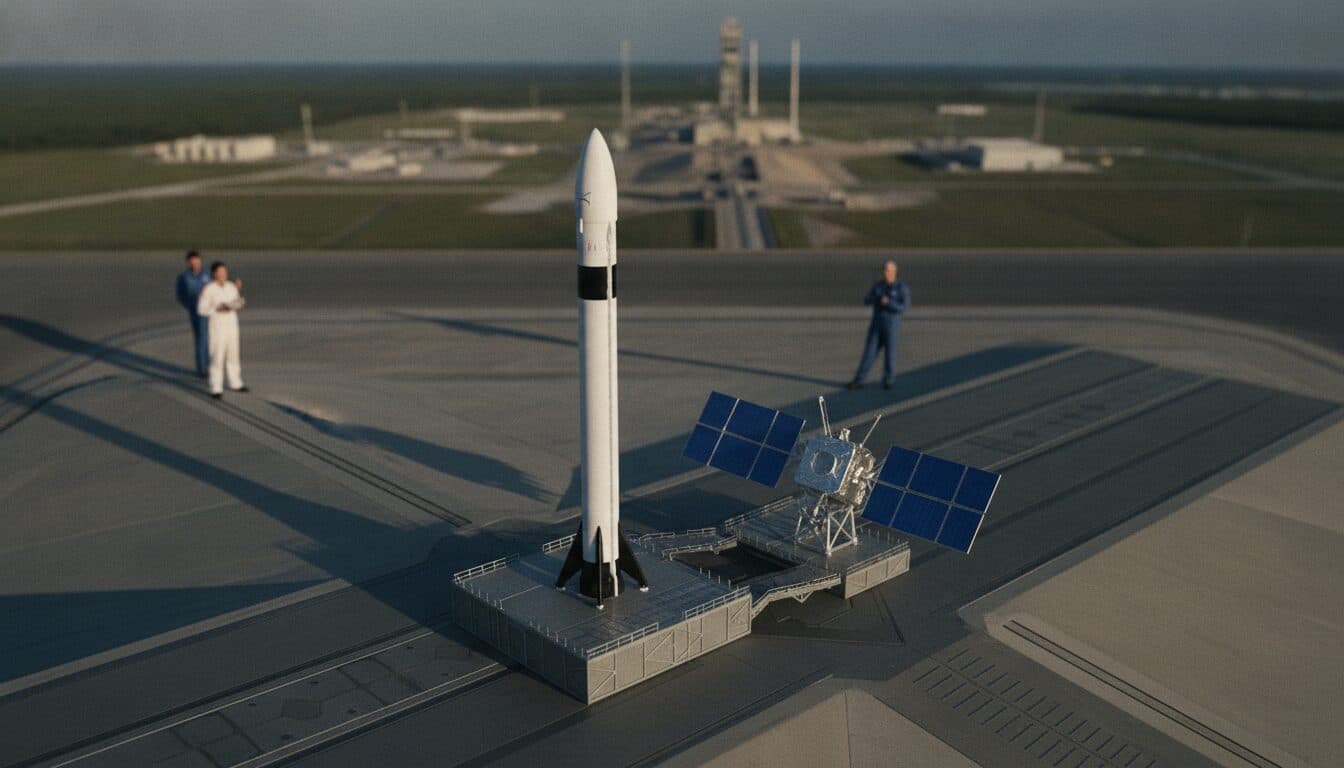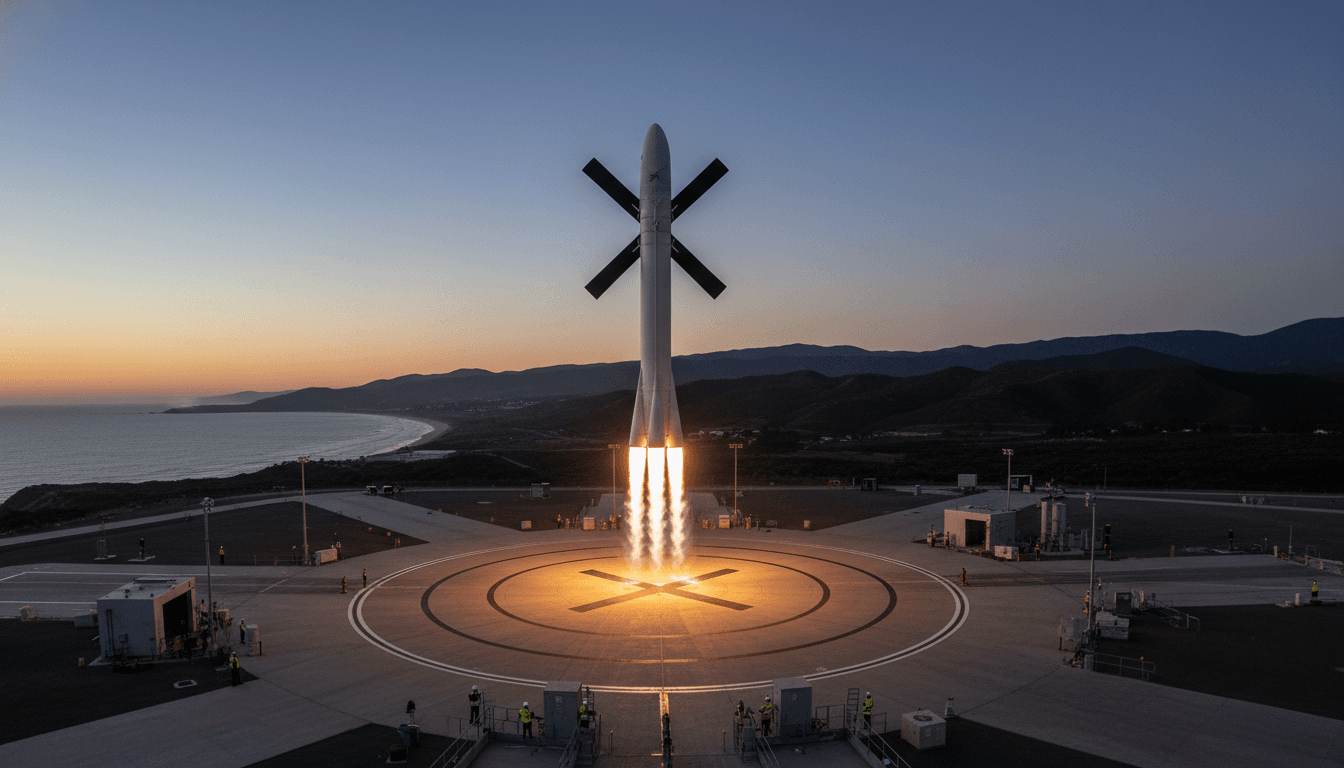
SpaceX to land Falcon 9 booster at Vandenberg after next launch, marking a significant operational shift for the private space company. Announced on Monday, May 11, 2026, this move signifies a further maturation of SpaceX’s reusable rocket technology and its expanding logistical capabilities on the West Coast.
The decision to bring the Falcon 9 first-stage booster back to Vandenberg Space Force Base, rather than its traditional offshore drone ship landings for West Coast launches, underscores a strategic refinement in SpaceX’s recovery operations. This onshore landing will occur immediately following an upcoming, though unspecified, launch from the California facility. Such an operation promises to streamline turnaround times and potentially reduce the costs associated with maritime recovery, which are considerable.
Operational Evolution and Cost Efficiency
The ability to execute an onshore landing for a Falcon 9 booster at Vandenberg represents a substantial logistical and engineering achievement. Historically, most West Coast launches have necessitated ocean-based recoveries due to flight trajectories and safety considerations. Bringing the booster back to terra firma directly at the launch site’s vicinity offers numerous advantages. It minimizes the need for costly and time-consuming barge operations, reduces exposure to adverse sea conditions, and allows for quicker access to the recovered hardware for inspection and refurbishment.
This development is a testament to SpaceX’s relentless pursuit of reusability as a cornerstone of affordable space access. Each successful booster recovery and subsequent re-flight dramatically lowers the per-launch cost, making space more accessible for various governmental and commercial payloads. The company’s iterative approach to perfecting these complex maneuvers has been a defining characteristic of its ascent in the aerospace industry.
“The onshore recovery at Vandenberg is a clear signal of SpaceX’s commitment to optimizing its reusable rocket architecture, pushing the boundaries of what’s considered routine in spaceflight,”
This operational shift is particularly relevant given the increasing cadence of launches from Vandenberg, which serves as a crucial launchpad for polar orbit missions, Earth observation satellites, and national security payloads. A more efficient recovery process could directly contribute to a higher launch frequency from the base.
The Broader Landscape of Reusable Rockets
SpaceX’s journey with reusable rockets began with ambitious, sometimes fiery, attempts to land its Falcon 9 boosters. From the early days of drone ship landings in the Atlantic and Pacific, the company has steadily refined its guidance, navigation, and control systems to enable precise, controlled descents. The successful return of Falcon 9 boosters has become almost commonplace, transforming what was once a science fiction concept into a routine operational procedure.
The move to land a Falcon 9 booster at Vandenberg after its next launch follows years of accumulated data and perfected techniques. This allows SpaceX to expand its onshore landing capabilities beyond its primary East Coast landing zones at Cape Canaveral and Kennedy Space Center. It also sets a precedent for future heavy-lift vehicles and potentially more complex recovery scenarios. For more on the evolving landscape of space launch technologies, explore our related science & space articles.
Future Implications for Western Range Operations
The immediate implication of this announcement is a significant boost to the efficiency of SpaceX’s operations on the West Coast. By eliminating the reliance on drone ships for this particular mission, SpaceX can potentially reduce logistical overheads and shorten the time between recovery and refurbishment. This could lead to an even more aggressive launch schedule from Vandenberg in the coming years. Furthermore, it could open the door for more frequent Falcon 9 booster landings directly on land for future missions, provided the flight profiles allow for it.
Looking ahead, this capability could also influence how other space companies approach reusability on the West Coast. While SpaceX remains a leader, the success of such an operation could inspire similar innovations from competitors or encourage greater investment in onshore recovery infrastructure at other launch sites. The ability to land a Falcon 9 booster at Vandenberg after next launch further solidifies SpaceX’s position as an industry pioneer and cost leader.
The announcement that SpaceX will land a Falcon 9 booster at Vandenberg after its next launch is more than just a procedural update; it is a tangible demonstration of the company’s continuous innovation and a significant step toward making space access even more sustainable and affordable. This operational refinement will undoubtedly influence future launch strategies and the broader economics of spaceflight from the Western Range.