SpaceX commercial spaceflight dominance continues into 2026, solidifying its position as a transformative force in the aerospace industry. Founded in 2002 by Elon Musk, Space Exploration Technologies Corporation has redefined accessibility to orbit, challenging established players like Lockheed Martin and Boeing with its innovative approach to reusable rocket technology and cost-effective operations. As of June 3, 2026, the company’s trajectory shows no signs of slowing, with ongoing advancements in its Starlink megaconstellation and ambitious plans for deep space exploration.
SpaceX’s journey began with the Falcon 1 rocket, a two-stage liquid-fueled craft designed for small satellite deployment. Despite initial setbacks, including a fuel leak and fire during its first launch in March 2006, the company quickly garnered significant contracts, including millions from the U.S. government and a pivotal win in a NASA competition for ISS servicing capabilities. By September 2008, SpaceX made history as the first privately owned company to successfully send a liquid-fueled rocket into Earth orbit, followed by a more than $1 billion NASA contract for ISS resupply missions in December of that year.
Falcon 9 and Dragon: Redefining Access to Orbit
The introduction of the Falcon 9 in 2010 marked a significant leap forward for SpaceX. This larger craft, named for its nine engines, laid the groundwork for future heavy-lift capabilities. A year later, the company commenced construction on a launch site for the Falcon Heavy, envisioned to break the $1,000-per-pound-to-orbit cost barrier and eventually transport astronauts into deep space. Another key milestone was achieved in December 2010 with the Dragon capsule, which became the first commercial spacecraft to orbit Earth and successfully return. Dragon further cemented its place in history on May 25, 2012, by becoming the first commercial spacecraft to dock with the International Space Station (ISS), delivering vital cargo. This success led to a NASA contract in August 2012 to develop a successor to the space shuttle for crewed space transport, demonstrating the growing trust in SpaceX commercial spaceflight capabilities.
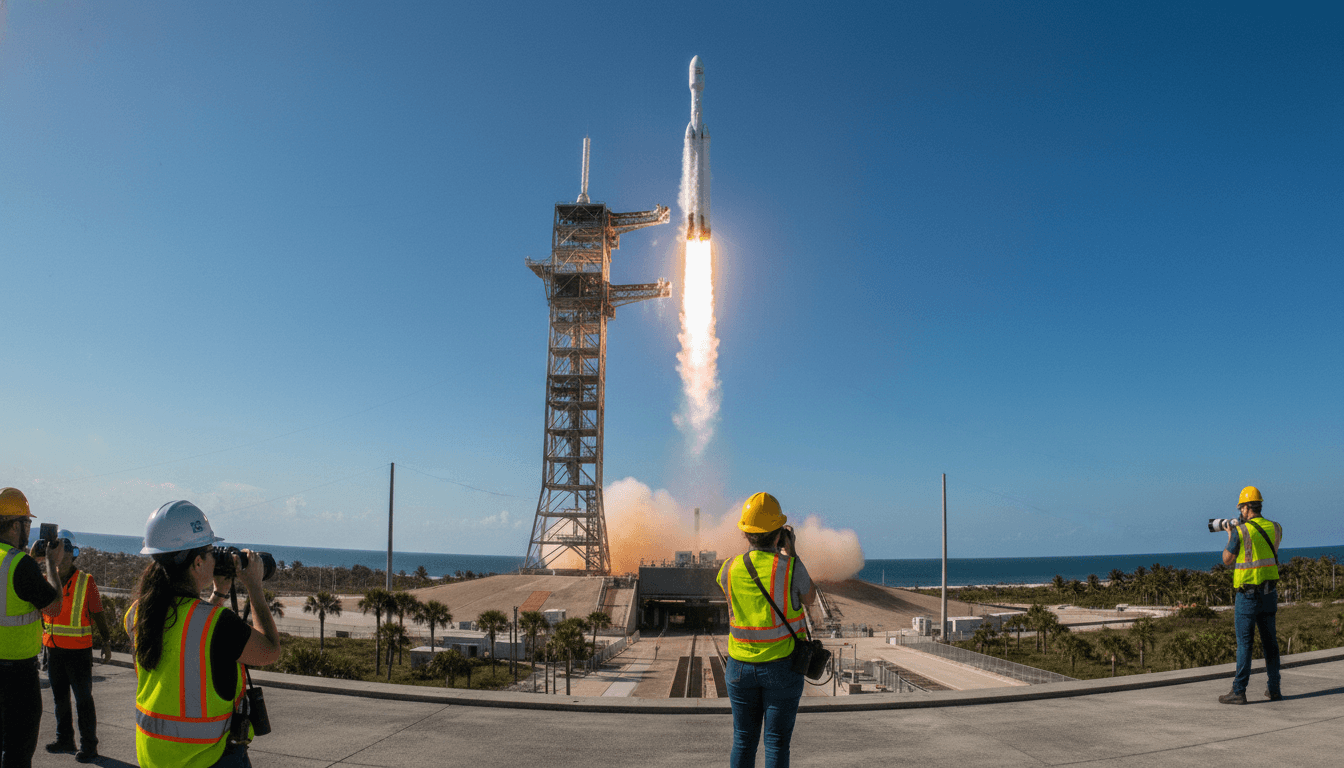
A cornerstone of SpaceX’s strategy has been rocket reusability. In 2015, a Falcon 9 first stage successfully returned to Earth near its launch site, a feat previously considered impossible. This was followed by the deployment of drone ships for ocean landings starting in 2016, and by 2017, a rocket stage that had returned to Earth was successfully reused in a subsequent launch. The Dragon capsule also saw reuse on an ISS flight in 2017. The Falcon Heavy, after its first test flight in 2018 which famously placed a Tesla Roadster with a mannequin into solar orbit, conducted its first operational flight on April 11, 2019, showcasing the company’s heavy-lift prowess.
Impact Analysis: The Broader Science & Space Landscape
SpaceX’s relentless pursuit of innovation has fundamentally reshaped the global aerospace landscape. Its focus on reusability has driven down launch costs, making space access more affordable and fostering a new era of commercial spaceflight. This shift has not only spurred competition among traditional aerospace giants but has also opened doors for new ventures and scientific endeavors that were once prohibitively expensive. The company’s achievements, from the first private orbital launch to the first commercial ISS docking, underscore a paradigm shift from government-led space exploration to a more dynamic, commercially driven model.
“SpaceX’s pioneering efforts in rocket reusability have not just lowered costs; they’ve democratized access to space, accelerating scientific research and commercial opportunities in ways we could only dream of a decade ago.”
The company’s success with the Falcon 9 and Dragon missions to the ISS demonstrates the viability and reliability of private space services, paving the way for further public-private partnerships. This model has proven crucial for maintaining continuous access to the ISS, especially after the retirement of the space shuttle program, ensuring vital cargo and crew transport capabilities.
Starlink and Future Horizons
Beyond its launch services, SpaceX has significantly invested in its Starlink megaconstellation, beginning satellite launches in 2019. This initiative aims to provide global satellite Internet access, further expanding the company’s commercial operations and demonstrating its versatility beyond traditional launch services. The rapid deployment of thousands of satellites for Starlink underscores SpaceX’s capacity for large-scale, complex projects and its commitment to leveraging space technology for broad societal benefit.
Looking ahead, the future implications for SpaceX are vast. The continued development of the Falcon Heavy and other advanced propulsion systems points towards ambitious goals in deep space exploration, potentially including crewed missions beyond Earth orbit. The ongoing expansion of Starlink will continue to disrupt the telecommunications industry, offering high-speed internet to underserved areas globally. The company’s sustained focus on innovation and cost-effectiveness ensures it will remain a central figure in the evolving narrative of space exploration and utilization. The question of “What’s next for SpaceX” is less about if they will push boundaries, but how far, as they continue to define the future of space technology and exploration.
SpaceX’s enduring impact is its demonstration that ambitious, privately funded ventures can not only compete with but also surpass government-backed programs in efficiency and innovation. Its ongoing advancements in launch technology, commercial operations, and deep space aspirations confirm its role as a pivotal driver in the new space age, promising a future where space is more accessible and integral to daily life than ever before.