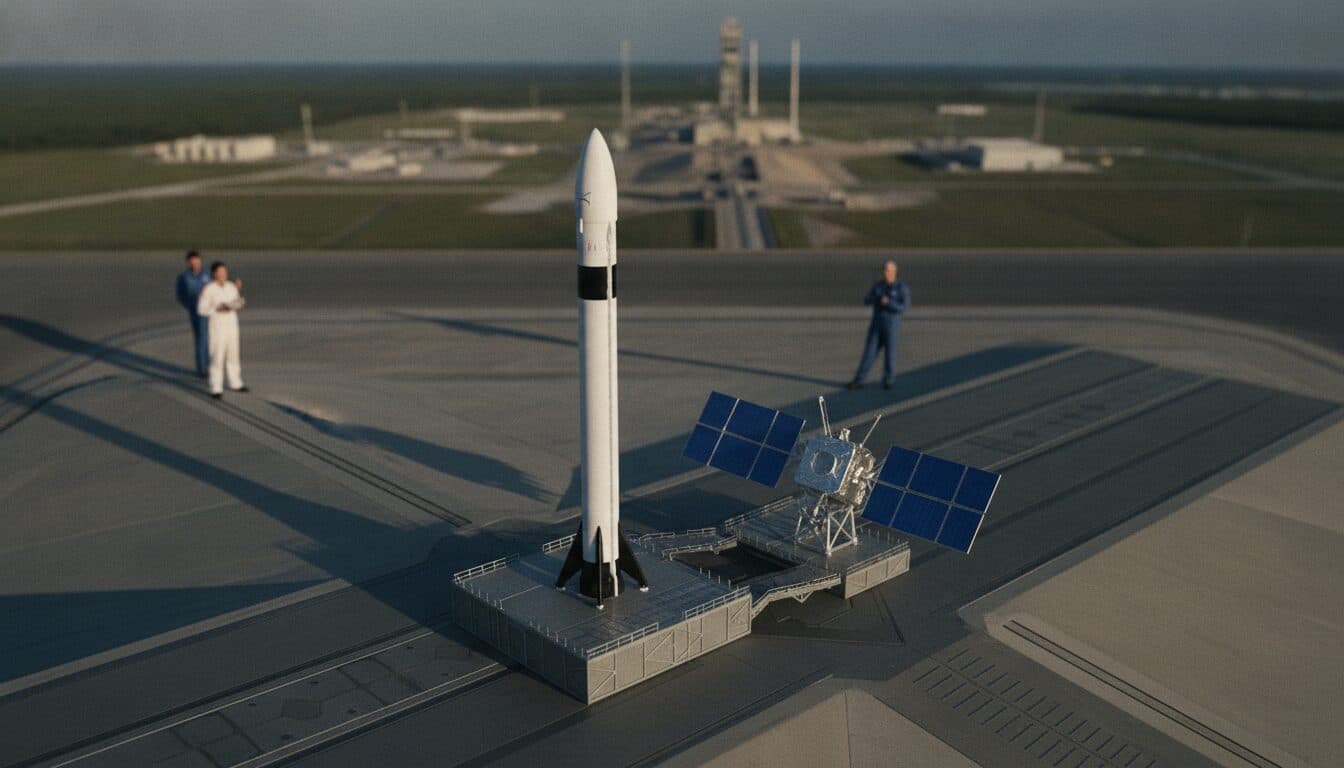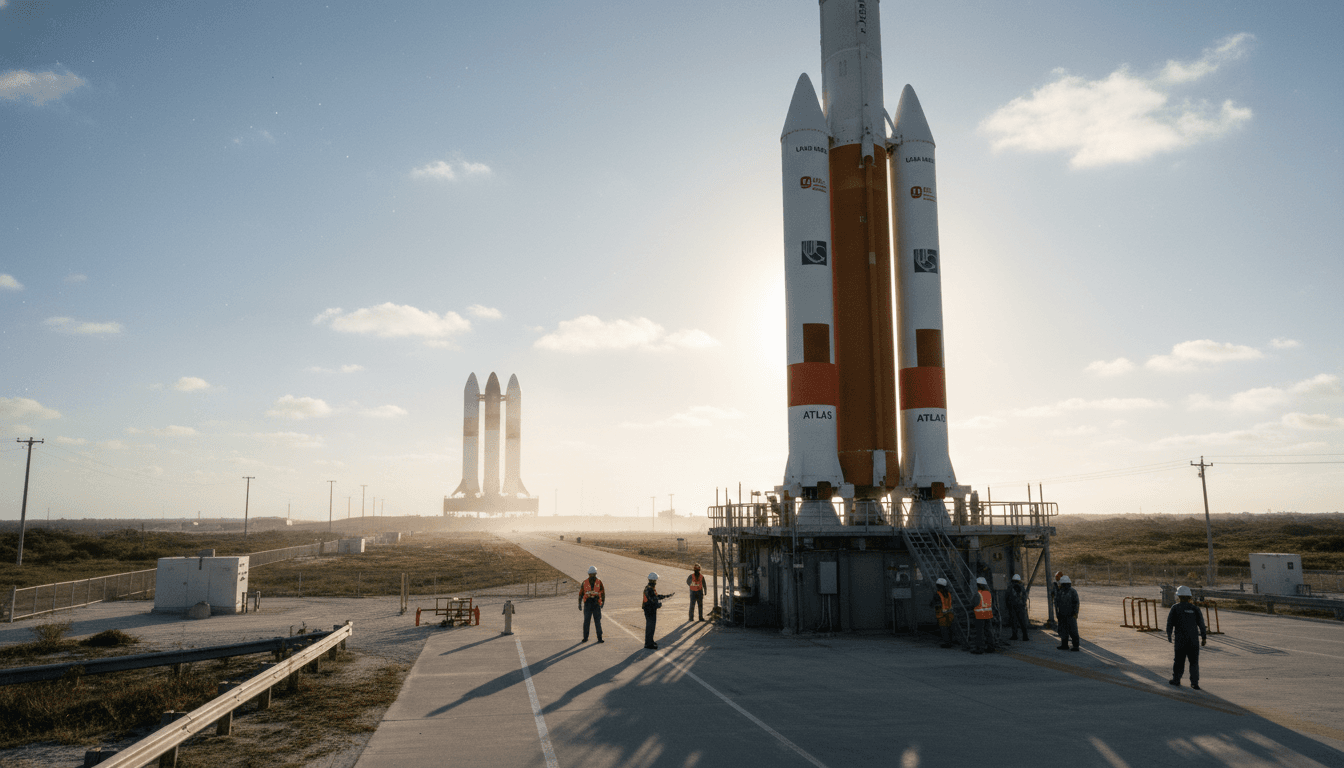
A rare double launch is set to electrify Cape Canaveral on Friday, April 24, 2026, as both SpaceX and United Launch Alliance (ULA) prepare to send their respective heavy-lift rockets skyward. This simultaneous readiness for liftoff from Florida’s Space Coast marks a significant moment for the commercial space industry, highlighting both the increasing cadence of launches and the logistical prowess required to manage such complex operations.
The core of this unprecedented event involves two of the most powerful launch vehicles currently in operation: the SpaceX Falcon Heavy and the ULA Atlas V. While specific payloads were not detailed in the initial reports, the mere prospect of both these rockets launching on the same day from the same general vicinity underscores the burgeoning activity at Cape Canaveral. Such an occurrence is not merely a logistical challenge but a testament to the advanced capabilities and operational efficiencies achieved by these private space companies. The parallel launch preparations will undoubtedly draw global attention to Florida, further cementing its role as a premier hub for space exploration and commercial ventures.
Impact Analysis
The implications of this rare double launch extend far beyond the spectacle itself. For the broader science and space landscape, it signifies a maturation of commercial spaceflight capabilities. The ability of two major players, SpaceX and ULA, to coordinate and execute near-simultaneous heavy-lift launches demonstrates an increased capacity and resilience within the industry. This operational flexibility is crucial for national security missions, scientific endeavors, and the continued expansion of commercial satellite constellations. It also showcases the intense competition and innovation driving advancements in launch technology and efficiency.
Furthermore, the event will likely serve as a powerful visual representation of the ‘new space race’ – one characterized by private enterprise and rapid iteration. The Falcon Heavy, with its reusable booster technology, and the Atlas V, a workhorse known for its reliability, represent different philosophies in launch vehicle design and operation. Their simultaneous presence on the pad highlights the diverse approaches being taken to achieve space access, ultimately benefiting customers with a wider array of options and potentially lower costs. This increased launch cadence also puts pressure on support infrastructure, from ground crews to range safety, to perform at peak efficiency.
Context & Background: A Busy Cape Canaveral
Cape Canaveral has long been synonymous with space launches, but the frequency and diversity of operations have accelerated dramatically in recent years. Historically, double launches from separate pads on the same day were exceedingly rare, often requiring extensive coordination and specific orbital windows. The 2026 event underscores a significant evolution in launch operations, driven by technological advancements and increased demand for space access. SpaceX, under Elon Musk, has revolutionized the industry with its focus on reusability, dramatically increasing launch frequency and reducing costs. ULA, a joint venture of Lockheed Martin and Boeing, has consistently delivered critical payloads for government and commercial clients with a strong track record of reliability.
The preparations for this rare double launch are a culmination of years of investment in infrastructure and operational expertise at the Cape. Both companies have expanded their facilities and streamlined their launch processes, enabling them to handle a higher volume of missions. This increased capacity is vital as demand for satellite launches, lunar missions, and deep space probes continues to grow. The parallel operations on April 24, 2026, will serve as a practical demonstration of these enhanced capabilities, setting a new benchmark for concurrent launch activities.
What’s Next
Looking ahead, the successful execution of this rare double launch will likely pave the way for even more ambitious scheduling at Cape Canaveral. As the space industry matures, the ability to manage multiple complex launch campaigns concurrently will become increasingly important. This event could prompt further investment in shared launch infrastructure and advanced traffic management systems for orbital assets. The lessons learned from coordinating two major launches on the same day will undoubtedly inform future operational protocols, potentially leading to greater efficiencies and flexibility for all launch providers.
“The ability to seamlessly orchestrate two high-profile launches from different providers on the same day is a powerful indicator of the aerospace industry’s rapid advancements and growing sophistication.”
Furthermore, the increased visibility generated by such an event could attract more talent and investment into the space sector, fostering further innovation. As humanity sets its sights on returning to the Moon and eventually Mars, a robust and highly efficient launch infrastructure will be paramount. The events of April 24, 2026, will be closely watched by industry analysts, government officials, and space enthusiasts alike, offering a glimpse into the future of spaceflight operations. This enhanced launch capability is crucial for supporting future endeavors in space exploration and commercialization.
Key Takeaway
The impending rare double launch from Cape Canaveral on April 24, 2026, is more than just a logistical feat; it is a clear signal of the accelerating pace and increasing maturity of the commercial space industry. It underscores the enhanced capabilities of companies like SpaceX and ULA to manage complex operations, driving forward both scientific exploration and commercial opportunities in space. This event will serve as a powerful testament to the collaborative yet competitive spirit propelling humanity deeper into the cosmos, fundamentally reshaping our access to and utilization of space.