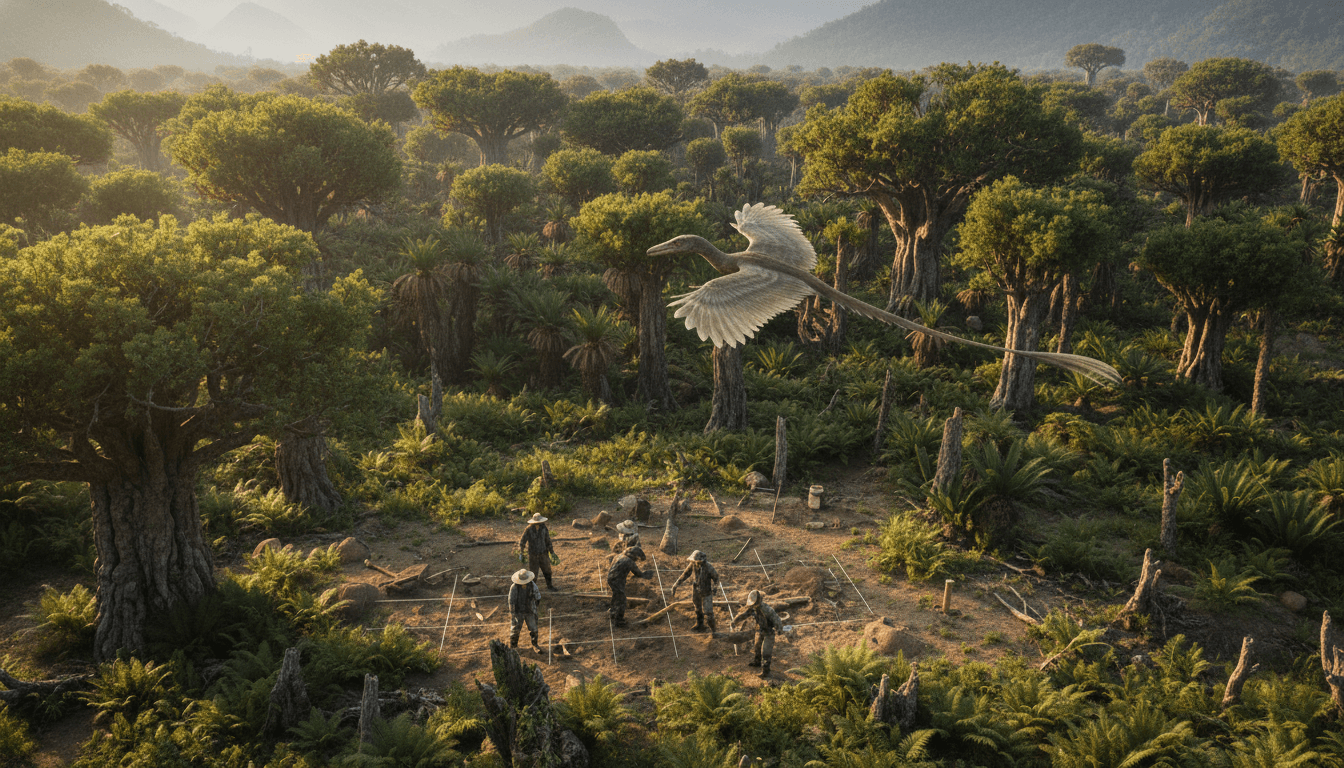
A new Microraptor species discovered in China has significantly rewritten the understanding of dinosaur flight history, extending the known geographic range and survival timeline of these unique four-winged creatures. A 120-million-year-old fossil unearthed in northwestern China has revealed this previously unknown species, named Jianchangmaensis. This small, feathered predator likely glided between ancient trees, actively hunting birds, and offers crucial new clues about the evolution of flight and the complex ecosystems that existed alongside the earliest avian species.
The Discovery: A Bird-Hunting Glider Emerges
The discovery of Jianchangmaensis marks a pivotal moment in paleontology. Researchers identified the fossil as a new species within the dromaeosaurid family, which also includes the more widely recognized Velociraptor. This finding is particularly significant as it represents the first definitive microraptor discovered outside northeastern China and is the youngest confirmed member of the group identified to date. Its recovery from the Changma Basin in China’s Gansu Province, a region already renowned for its abundance of early bird fossils, underscores its importance in understanding the interactions between early birds and their predators.
The species was formally described last Thursday in the journal Annals of Carnegie Museum. Identification was made possible through exceptionally preserved shoulder and forelimb bones, specifically a distinctive opening in the shoulder bone known as the supracoracoid fenestra—a feature rarely observed outside the microraptor group. These ancient creatures were characterized by wing-like feathers on both their forelimbs and hindlimbs, giving them a striking four-winged appearance. Previous fossil evidence has indicated that microraptors were versatile hunters, preying on birds, mammals, and fish, thereby occupying a unique ecological niche within ancient forest environments.
“Jianchangmaensis reveals that non-avian dinosaurs lived in what is now the Changma Basin, an area famous for its fossil birds,” stated Dr. Matt Lamanna, a senior dinosaur researcher and curator of vertebrate paleontology at the Carnegie Museum of Natural History. “Our team has recovered more than one hundred bird fossils at Changma, but only this single non-avian dinosaur specimen.”
The name Jianchangmaensis itself is a nod to both Chinese folklore, referencing the mythical one-winged bird “Jian,” and the Changma Basin, its place of discovery. Dr. Lamanna emphasized that this discovery provides “critical new information” about the ancient ecosystem of the region and the very environment in which the ancestors of modern birds evolved.
Impact Analysis: Rewriting Dinosaur Flight History
This new Microraptor species discovery significantly impacts our understanding of the evolutionary trajectory of flight. While only a partial skeleton was recovered, the preserved wing and shoulder bones strongly suggest the animal was adapted for gliding, and potentially even some form of powered flight. The unusually long shoulder structure observed in Jianchangmaensis offers fresh insights into the complex biomechanics of how early feathered dinosaurs transitioned towards the sophisticated flight capabilities seen in modern birds. Related science & space articles often discuss the intricacies of avian evolution, and this fossil adds a crucial piece to that puzzle.
The extended geographic range and survival timeline of microraptors, now confirmed by Jianchangmaensis, indicate that these four-winged gliders were more widespread and persistent than previously thought. This broader distribution implies a more significant role in the Early Cretaceous ecosystems, potentially influencing the evolutionary pressures on early bird species. The presence of a non-avian dinosaur predator adapted for aerial pursuit in a bird-rich environment highlights the intense ecological competition of the time.
What’s Next: Filling Evolutionary Gaps
The discovery of Jianchangmaensis helps to fill an important gap in the evolutionary story linking dinosaurs and modern birds. Researchers will undoubtedly continue to analyze the unique anatomical features of this new Microraptor species, particularly its shoulder and forelimb structures, to better understand the mechanics of its flight and gliding capabilities. Future expeditions to the Changma Basin and similar sites may yield more specimens, providing a more complete picture of Jianchangmaensis and its place in the ancient world. Understanding the diverse forms of early flight and how they interacted within ancient food webs remains a key focus for paleontologists.
Dr. Lamanna noted that microraptors, despite being non-avian dinosaurs, appeared remarkably bird-like, a stark contrast to the popular image of Velociraptor from “Jurassic Park.” This visual congruence underscores the deep evolutionary connections between dinosaurs and birds. The ongoing study of such fossils will continue to refine our models of how flight originated and diversified, offering profound insights into one of life’s most remarkable evolutionary innovations. The new Microraptor species discovery is a testament to the ongoing revelations hidden within Earth’s ancient strata.
The identification of Jianchangmaensis not only extends the known narrative of microraptors but also deepens our appreciation for the intricate and dynamic ecosystems of the Early Cretaceous, providing a clearer window into the prehistoric world where feathered dinosaurs reigned and the foundations of modern avian life were laid.