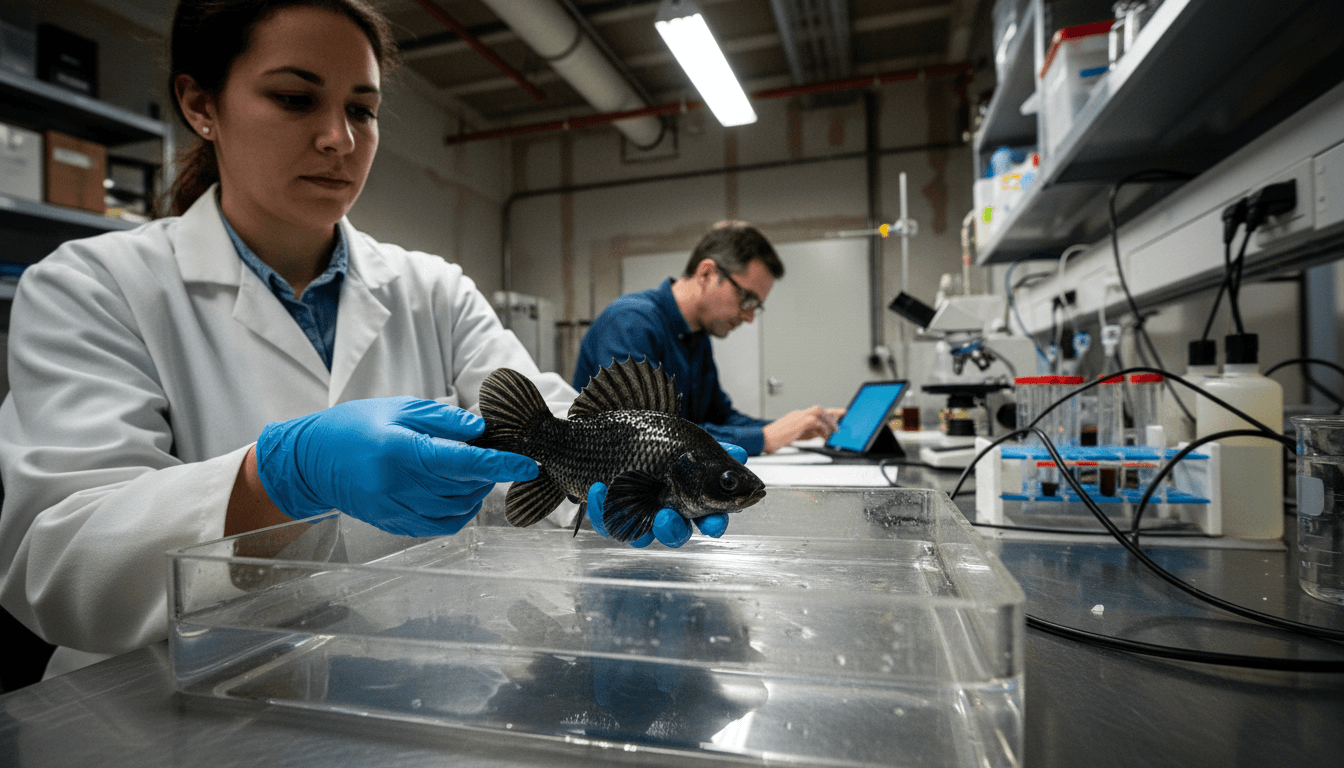
A new freshwater fish species, Labeo kaage, has been discovered in the Shivanasamudra stretch of the Cauvery River basin in Mandya, a significant finding by scientists from the ICAR-National Bureau of Fish Genetic Resources (ICAR-NBFGR), Kochi. This latest addition to the mysterious ‘dark labeo’ group of fishes from the Western Ghats was identified by researchers Rahul G Kumar, Charan Ravi, Krishnaprasoon NP, and VS Basheer. Their findings, published recently in the internationally reputed ‘Journal of Fish Biology,’ highlight the ongoing efforts in freshwater biodiversity exploration.
The name ‘kaage’ is derived from the Kannada word for crow, a direct reference to the fish’s distinctive dark body colour. Locally, it is already known as ‘kaage meenu’ in Karnataka, indicating a prior, albeit informal, recognition by local communities. This discovery is not an isolated incident but rather the latest in a series of dark-coloured Labeo species unearthed in the biodiverse Western Ghats region. Just last year, in 2025, the same dedicated team of scientists also identified Labeo chekida from the Chalakkudy River and Labeo uru from the Chandragiri River, both located in Kerala. These previous findings further underscore the rich, yet largely unexplored, aquatic biodiversity of India’s Western Ghats.
Expanding the ‘Dark Labeo’ Group
The identification of Labeo kaage significantly expands our understanding of the ‘dark labeo’ group, a fascinating and previously taxonomically complex lineage. The researchers have also played a crucial role in clarifying the identity of Labeo nigrescens, the enigmatic ‘Dark Labeo’ originally described in 1870. This resolution of a long-standing taxonomic confusion provides a clearer framework for future studies on these unique fishes. Charan Ravi, one of the researchers from Chikkamagaluru district, explained that the initiative is part of a broader Cauvery River exploration project, which commenced in 2016. “The study covering the Karnataka stretch of the Cauvery began in 2018 and was completed in 2022. In the second phase, we will focus on studying fish species in the tributaries of the Cauvery,” he stated, outlining the ambitious scope of their ongoing work.
These successive discoveries of new freshwater fish species like Labeo kaage reveal that the rivers of the Western Ghats are veritable treasure troves, harbouring several unique and previously undocumented freshwater fishes. The scientific community has long recognized the Western Ghats as a global biodiversity hotspot, and these findings continue to reinforce that designation. However, the researchers also issued a stark warning regarding the increasing threats faced by these fragile aquatic ecosystems. Habitat destruction, the construction of dams, pervasive pollution, and extensive river modification are all endangering numerous species, potentially before they can even be scientifically documented and understood.
“These discoveries reveal that the rivers of the Western Ghats harbour several unique and previously undocumented freshwater fishes.”
The implications of these threats are profound. Undocumented species represent unknown biological resources, potentially holding cures for diseases, offering insights into evolutionary processes, or playing critical roles in ecosystem stability. The urgency of scientific documentation and conservation efforts is paramount to prevent irreversible losses. The meticulous work of scientists in identifying and classifying these new freshwater fish species is a race against time, as human activities continue to alter natural habitats at an alarming rate. The ongoing exploration projects, such as the Cauvery River initiative, are therefore not just academic exercises but vital conservation missions.
The Future of Aquatic Biodiversity in the Western Ghats
The continued exploration of the Cauvery River basin and its tributaries promises to yield further insights into the region’s aquatic life. The second phase of the Cauvery River exploration project, focusing on tributaries, is expected to uncover even more species, given the diverse microhabitats these smaller water bodies often present. This systematic approach to biodiversity assessment is critical for developing comprehensive conservation strategies. Understanding the distribution, habitat requirements, and ecological roles of species like Labeo kaage is fundamental to protecting them from extinction.
The work of ICAR-NBFGR scientists underscores the importance of sustained investment in taxonomic research and biodiversity surveys. Without such foundational work, the true extent of Earth’s biological richness remains unknown, and conservation efforts are severely hampered. The discovery of a new freshwater fish species in Mandya serves as a powerful reminder of the hidden wonders that still exist in our natural world and the critical need to protect them.