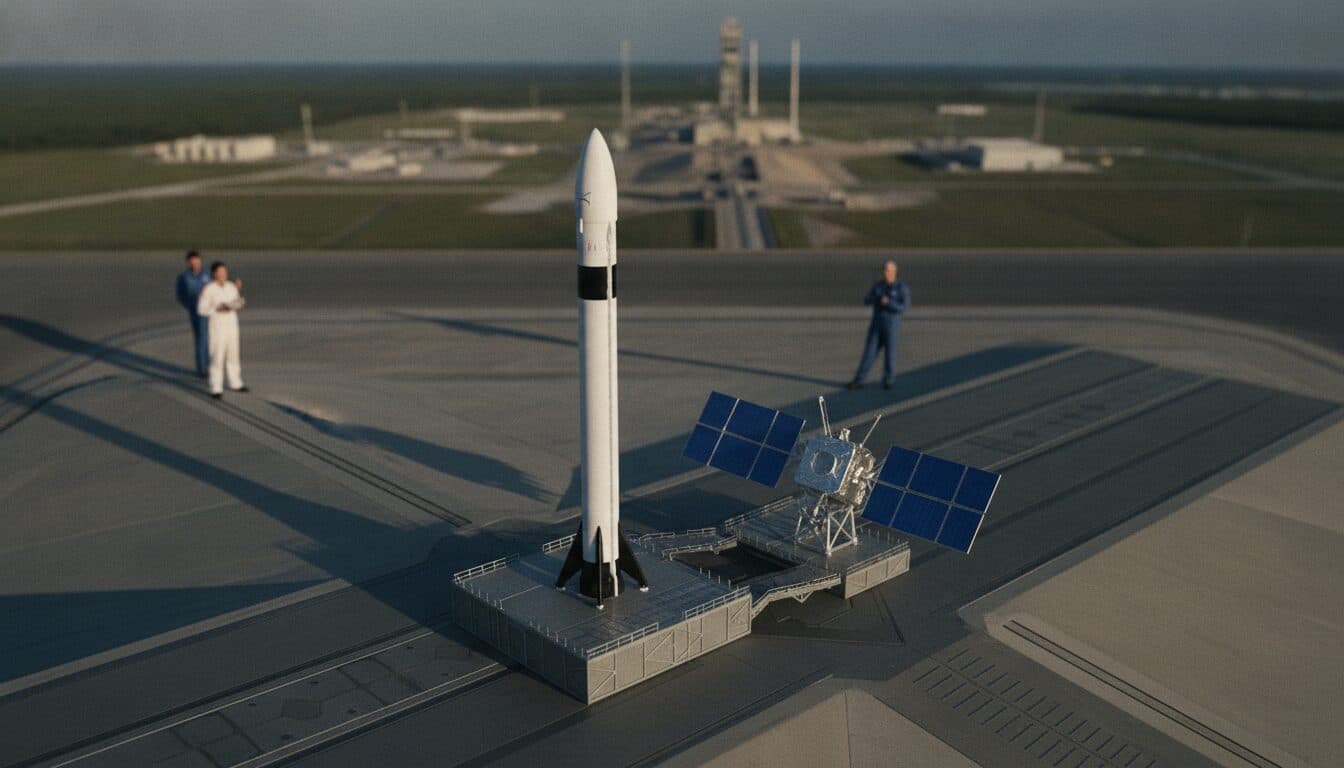
A NASA-SpaceX launch, initially scheduled to proceed, was scrubbed due to adverse weather conditions, specifically heavy cloud cover, prompting a delay with the new target time moved to Friday evening. This postponement, announced on Tuesday, May 19, 2026, underscores the persistent challenges of spaceflight operations, where even minor atmospheric disturbances can necessitate significant schedule adjustments. The mission, a collaborative effort between the National Aeronautics and Space Administration and Elon Musk’s private aerospace company, represents a critical step in ongoing space exploration initiatives.
The Story: Weather Delays Spaceflight
The decision to scrub the NASA-SpaceX launch came after meteorologists determined that cloud conditions at the launch site posed an unacceptable risk for the planned Tuesday liftoff. While the specific nature of the mission was not detailed in the announcement, NASA and SpaceX frequently collaborate on crewed and uncrewed missions to the International Space Station (ISS), as well as various scientific and exploratory ventures. These joint operations are characterized by rigorous safety protocols, where weather parameters are among the most stringent. High clouds, often indicative of strong upper-level winds or potential for lightning, can interfere with launch trajectories, communications, and recovery operations. Consequently, the mission control teams opted for caution, rescheduling the launch attempt for Friday evening.
This delay highlights the intricate dance between cutting-edge technology and Earth’s unpredictable environment. Every launch window is meticulously calculated, not just for orbital mechanics but also for atmospheric conditions at the launch site and along the ascent corridor. A scrub, while disappointing for teams and observers, is a routine part of space operations, prioritizing safety and mission success over adherence to initial schedules. The new target of Friday evening provides a brief window for conditions to improve, allowing the teams to re-evaluate and prepare for the next attempt.
Impact Analysis
The impact of a launch scrub, particularly for a high-profile NASA-SpaceX launch, extends beyond mere scheduling adjustments. For NASA, such delays can ripple through complex mission timelines, affecting crew rotations, resupply schedules for the ISS, and the sequencing of scientific experiments. Each day of delay incurs additional operational costs, from maintaining launch readiness to personnel time. For SpaceX, these postponements can influence their ambitious launch cadence, which is crucial for their commercial satellite deployment services and their long-term goals of Mars colonization. Maintaining a tight schedule is a cornerstone of their business model, making every scrub a logistical puzzle.
“The meticulous attention to weather parameters for every NASA-SpaceX launch underscores the fundamental principle of safety first in space exploration. While frustrating, a scrub is a testament to the rigorous standards that protect both human lives and invaluable assets.”
Furthermore, these delays can impact public engagement. High-profile launches generate significant public interest, and repeated postponements can sometimes dampen enthusiasm, though the resilience and ultimate success of these missions usually overcome initial frustrations. The public’s understanding of the complexities of spaceflight is often shaped by these real-world challenges, reinforcing the idea that space exploration is a difficult and demanding endeavor.
Context & Background
The collaboration between NASA and SpaceX has been a defining feature of 21st-century spaceflight. Since the retirement of the Space Shuttle program, NASA has increasingly relied on commercial partners like SpaceX for transport to low-Earth orbit, particularly for crew and cargo missions to the ISS. This partnership has revitalized American human spaceflight capabilities, reducing reliance on foreign launch providers. SpaceX’s Falcon 9 rockets and Dragon spacecraft have become workhorses, demonstrating reliability and reusability, which significantly lowers the cost of access to space. However, even with advanced technology, terrestrial weather remains an unconquered variable. Historical data shows that weather accounts for a significant percentage of launch delays, a factor that has plagued space programs since their inception.
Previous NASA-SpaceX launch attempts have also faced similar weather-related delays, illustrating that this is a persistent operational reality rather than an anomaly. From high winds to precipitation and cloud ceiling violations, meteorology plays a crucial role in the ‘go/no-go’ decision for every launch. The stringent criteria are in place to ensure that the launch vehicle can safely ascend through the atmosphere and, in the case of crewed missions, that emergency abort and recovery procedures can be executed without additional weather-related complications. Related science & space articles often detail the intricate weather models employed by launch centers.
What’s Next
With the new target set for Friday evening, the teams at NASA and SpaceX will closely monitor weather forecasts for the Cape Canaveral region. The decision to proceed will depend on a confluence of factors, including cloud coverage, wind speeds, and the absence of lightning potential within a specified radius. Ground crews will continue to maintain the rocket and spacecraft in launch-ready condition, while mission control personnel will update their flight plans and contingency procedures. The next 72 hours will be critical for meteorologists to refine their predictions and for the launch teams to make the final ‘go’ decision. Any further adverse weather could lead to additional delays, potentially pushing the launch into the following week, impacting orbital mechanics and mission windows.
The successful execution of this NASA-SpaceX launch is vital for maintaining momentum in their respective programs. For NASA, it’s about continuing scientific research and supporting the ISS. For SpaceX, it’s about demonstrating consistent operational capability and advancing its long-term strategic goals. The ability to manage and adapt to these challenges is a hallmark of successful space agencies and private enterprises. Further updates will undoubtedly be issued as the Friday evening window approaches, keeping the public informed of the progress.
Key Takeaway
The scrub of the NASA-SpaceX launch due to cloud cover, with the target moved to Friday evening, serves as a powerful reminder of the inherent complexities and environmental dependencies of space exploration. Despite decades of technological advancement, terrestrial weather remains a formidable, unpredictable variable that dictates the pace of our reach into the cosmos. This event underscores the unwavering commitment to safety and precision that defines modern spaceflight, prioritizing mission integrity over adherence to a rigid schedule. Each such delay, while frustrating, reinforces the profound respect and meticulous planning required to navigate the perilous journey from Earth to orbit, ensuring that humanity’s ambitions in space are pursued with the utmost care and diligence. The ongoing collaboration between NASA and SpaceX continues to push the boundaries of what is possible, even as they contend with the most fundamental forces of nature.