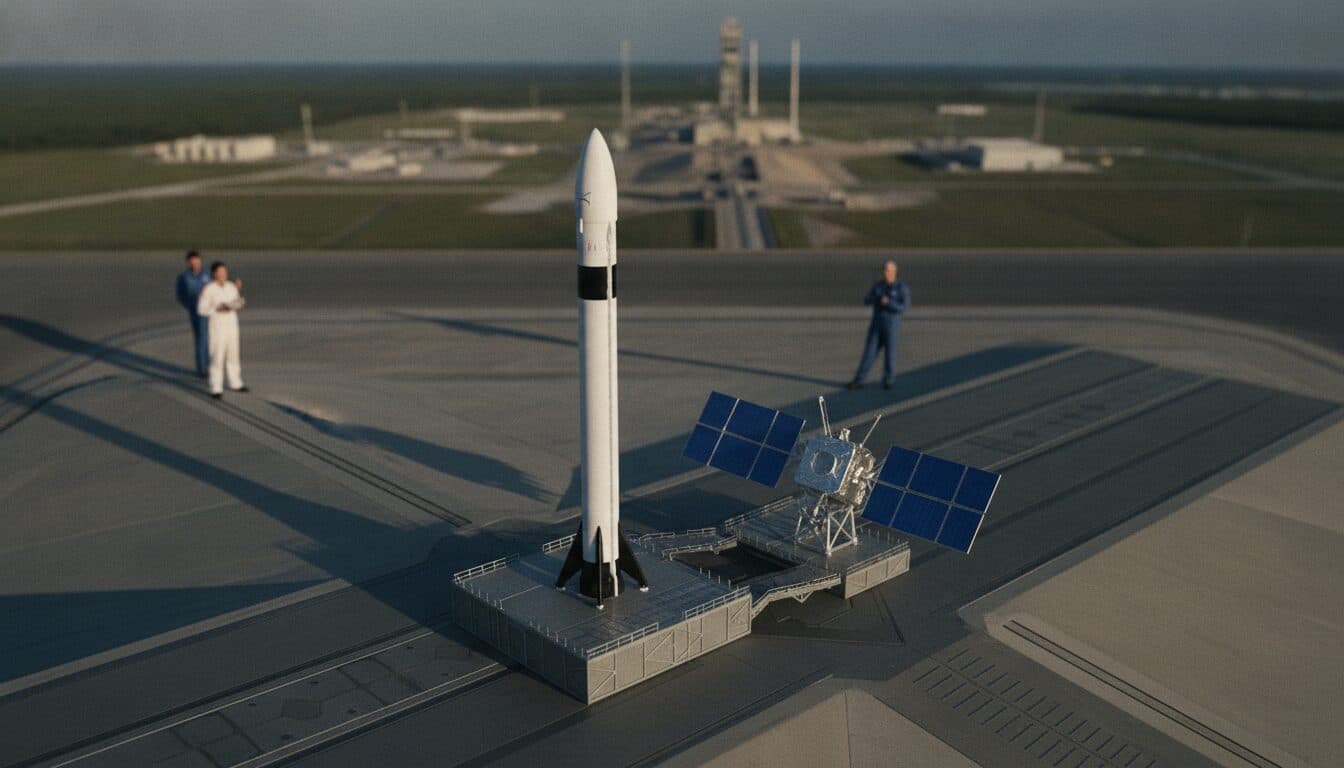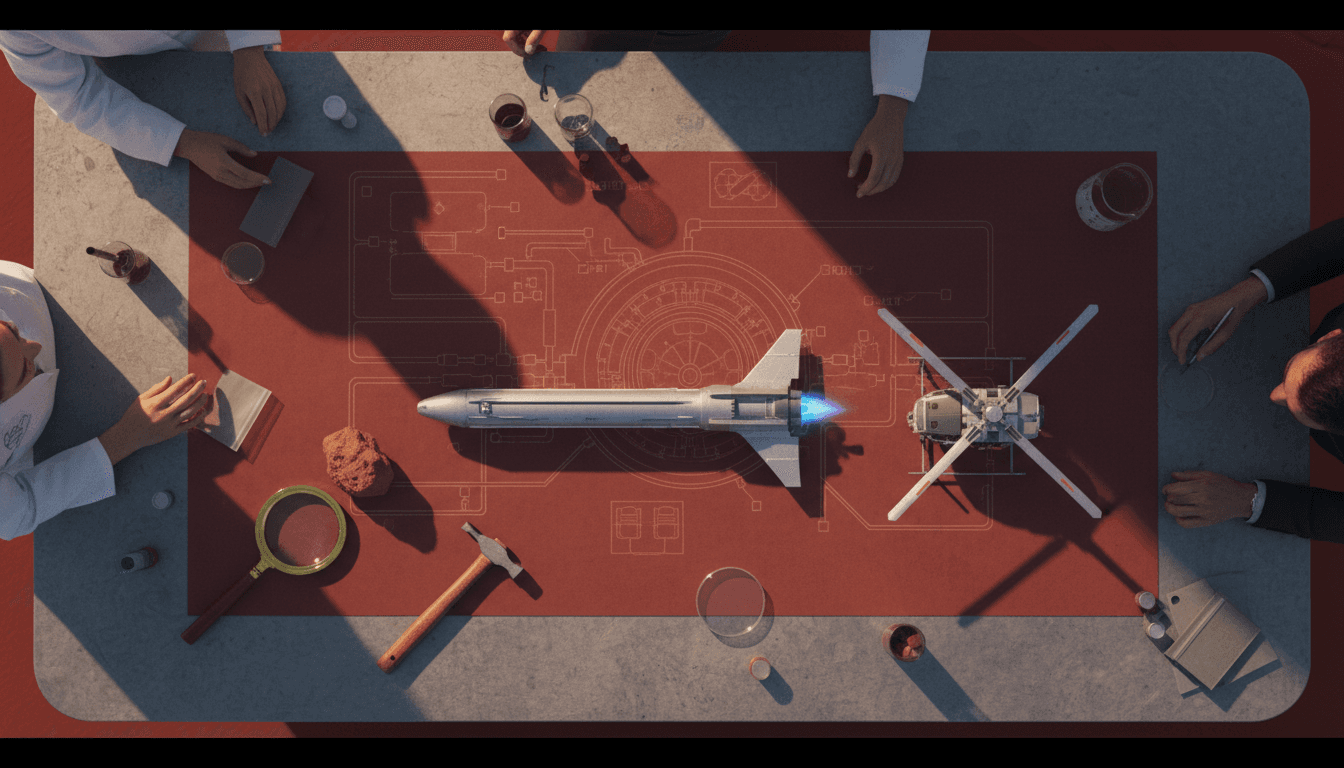
NASA’s first nuclear-powered spacecraft is heading to Mars, marking a significant leap in interplanetary exploration. Launched on Monday, May 4, 2026, this mission represents a critical advancement in propulsion technology for deep space travel, promising to revolutionize how humanity reaches and studies other planets. The inclusion of helicopters aboard the spacecraft further underscores an evolving strategy for Martian surface exploration, moving beyond stationary landers and rovers to embrace aerial reconnaissance.
The Mission: A New Era of Martian Exploration
The spacecraft, which leverages nuclear power for propulsion, is a direct response to the challenges of traditional chemical rockets for long-duration, high-payload missions. While specific details on the nuclear propulsion system were not fully disclosed in the initial report, the implication is a more efficient and potentially faster transit to Mars. This technology could drastically reduce travel times, decrease mission costs, and enable more ambitious scientific payloads.
Beyond its innovative propulsion, the mission is notable for its auxiliary payload: a contingent of helicopters designed for Martian atmospheric flight. These aerial vehicles are expected to provide unprecedented perspectives on the Martian landscape, accessing areas that ground-based rovers cannot reach. Their capabilities will likely include high-resolution imaging, geological surveying, and scouting potential landing sites for future human missions. This dual approach – advanced propulsion and aerial reconnaissance – positions the mission as a multifaceted endeavor to deepen our understanding of the Red Planet.
Impact Analysis
The deployment of NASA’s first nuclear-powered spacecraft has profound implications for the future of space exploration. For decades, the limitations of chemical propulsion have dictated the scope and duration of deep-space missions. Nuclear propulsion offers a pathway to overcome these hurdles, potentially enabling faster travel to the outer solar system and even interstellar space. This shift could accelerate scientific discovery, allowing for more frequent and complex missions to distant celestial bodies.
Furthermore, the integration of helicopters into a Mars mission signals a paradigm shift in planetary exploration. Following the success of the Ingenuity helicopter, which demonstrated powered flight on Mars, these new rotorcraft are poised to expand aerial capabilities significantly. They offer a unique vantage point, ideal for mapping vast terrains, investigating challenging geological features like canyon walls or volcanic vents, and even assisting future human explorers by scouting routes or delivering supplies. This combination of advanced propulsion and aerial mobility could redefine the operational models for planetary science. Such innovations are crucial as agencies eye human missions to Mars, requiring robust infrastructure and detailed knowledge of the Martian environment. For more on the evolving strategies in space exploration, readers can explore related science & space articles.
Context & Background: A Long Road to Nuclear Power
The concept of nuclear propulsion for space travel is not new; it has been explored since the early days of the space age. However, technological hurdles and safety concerns have historically limited its widespread adoption. This mission, launching on Monday, May 4, 2026, represents the culmination of years of research and development, overcoming significant engineering and regulatory challenges. The decision to proceed with NASA’s first nuclear-powered spacecraft underscores a growing confidence in the safety and efficacy of these systems.
“The transition to nuclear propulsion represents a pivotal moment, moving beyond incremental improvements to a fundamental change in how we envision deep-space travel. It’s a testament to decades of scientific perseverance.”
Parallel to the propulsion advancements, the development of Martian helicopters builds upon the groundbreaking success of NASA’s Ingenuity, which demonstrated the feasibility of powered, controlled flight in the thin Martian atmosphere. That initial proof-of-concept mission paved the way for more sophisticated, mission-critical aerial vehicles, now integral to this new expedition. This progressive approach, from concept demonstration to operational deployment, is a hallmark of NASA’s long-term strategy in planetary science.
What’s Next: Expanding the Horizons
The success of NASA’s first nuclear-powered spacecraft to Mars will undoubtedly influence future mission planning across multiple space agencies. Should this mission prove the efficiency and reliability of nuclear propulsion, it could pave the way for a new generation of spacecraft capable of reaching the outer planets—Jupiter, Saturn, Uranus, and Neptune—in significantly less time. This acceleration would enable more frequent flybys, orbiters, and even landers to these distant worlds, dramatically expanding our knowledge of the solar system.
On Mars, the helicopters are expected to begin their operational phase shortly after arrival, providing invaluable data that will inform site selection for future human outposts. The insights gained from their aerial surveys could refine our understanding of Martian geology, atmospheric conditions, and the potential for extant or extinct life. This mission serves as a critical precursor, not just for robotic exploration, but for the eventual human footprint on Mars. Future decisions will likely involve scaling up nuclear propulsion systems for even larger payloads and exploring their application in crewed missions, pushing the boundaries of human reach. For further insights into the future of space travel, see our science & space coverage.
Key Takeaway: Redefining Space Travel
The launch of NASA’s first nuclear-powered spacecraft to Mars, complete with a fleet of exploration helicopters, is more than just another mission; it is a transformative event in space exploration. It signifies a decisive move towards more ambitious, efficient, and versatile methods of reaching and studying other worlds. This blend of advanced propulsion and novel exploration tools promises to unlock new scientific frontiers and fundamentally alter our approach to interplanetary travel, setting the stage for an era where deep space is more accessible than ever before.