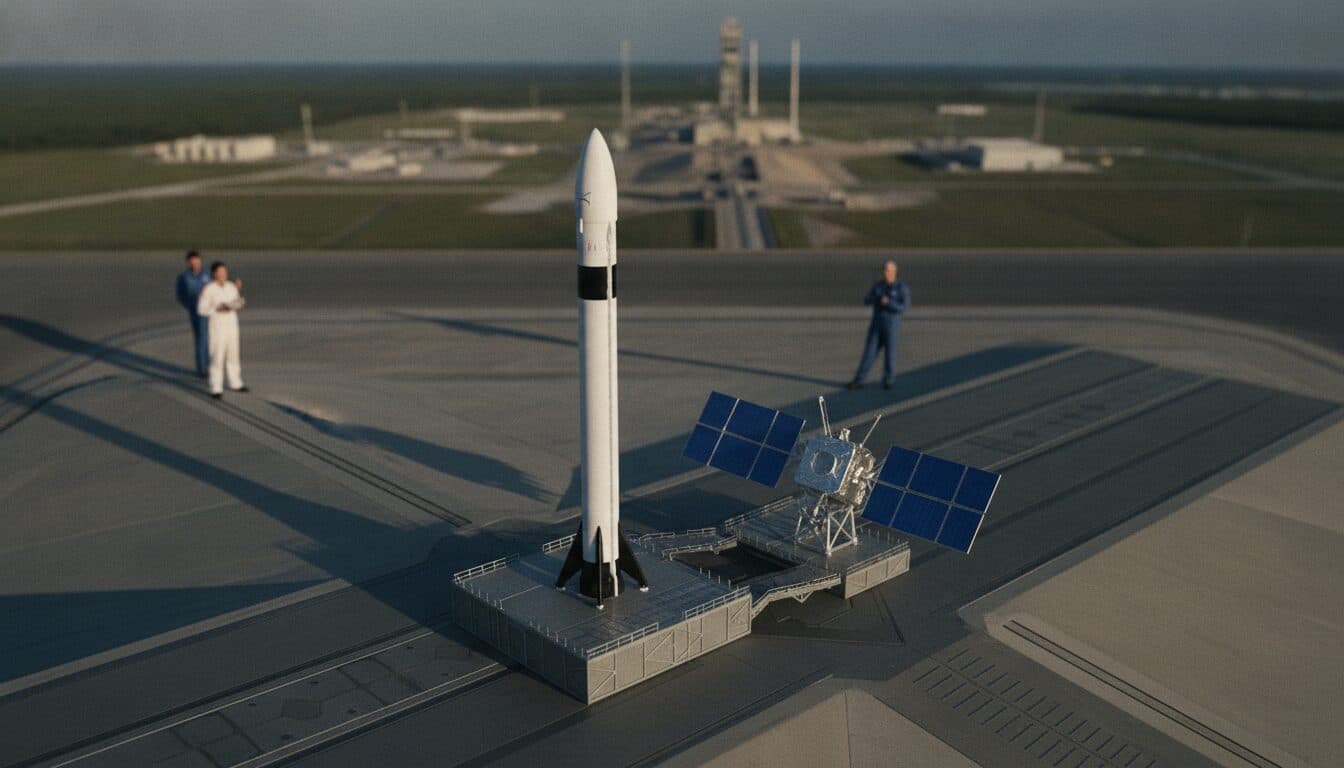
A new hybrid quantum-classical algorithm has successfully matched classical aerodynamic results, marking a significant milestone in the development of quantum computing for real-world engineering applications. This breakthrough, reported on Tuesday, June 2, 2026, by Quantum Zeitgeist, demonstrates the increasing viability of quantum solutions for complex computational problems traditionally handled by supercomputers.
The Story
The core of this development lies in a novel computational approach that combines the strengths of both quantum and classical computing paradigms. While the specific entities involved in developing the algorithm were not detailed in the initial report, the achievement itself signifies a collaborative push within the quantum research community. The algorithm successfully simulated aerodynamic phenomena, yielding results that were indistinguishable from those obtained through established classical methods. This direct correlation is crucial, as it provides a robust validation of the quantum-classical hybrid approach, moving it beyond theoretical potential into practical application. The ability of a hybrid quantum-classical algorithm to accurately model such intricate physics opens doors for more efficient and potentially faster simulations in fields like aerospace engineering, where computational demands are immense.
Impact Analysis
This development has profound implications for the broader science and space landscape. For aerospace, the ability to perform complex aerodynamic simulations with quantum assistance could drastically reduce design cycles for aircraft and spacecraft, leading to faster innovation and more optimized designs. Beyond aerospace, the success of a hybrid quantum-classical algorithm in matching classical results suggests a powerful new tool for other computationally intensive fields such as materials science, drug discovery, and climate modeling. The validation provided by this work builds confidence in quantum computing’s future role, encouraging further investment and research into quantum hardware and software development. It signals a shift from purely theoretical quantum advantage discussions to demonstrable, practical applications.
Context & Background
For decades, classical supercomputers have been the workhorses of aerodynamic simulation, performing billions of calculations to model airflow, lift, and drag. These simulations are fundamental to the design of everything from commercial airliners to hypersonic vehicles. However, even with the most powerful classical machines, certain problems remain intractable due to the exponential increase in computational complexity. Quantum computing, with its ability to process information in fundamentally different ways, has long been touted as a potential solution to these ‘hard’ problems. Early quantum algorithms showed theoretical promise, but practical implementations have been limited by the nascent stage of quantum hardware. The rise of hybrid quantum-classical algorithm approaches represents a pragmatic step, leveraging existing classical computing power for parts of a problem while offloading the most computationally challenging aspects to quantum processors. This strategy is seen as a bridge to full-scale fault-tolerant quantum computers, allowing researchers to explore quantum advantage with current noisy intermediate-scale quantum (NISQ) devices. This latest achievement validates this hybrid strategy as a viable path forward. For more on the evolving landscape of quantum applications, explore our related science & space articles.
What’s Next
The immediate next steps will likely involve scaling up these hybrid quantum-classical algorithm implementations to more complex aerodynamic scenarios and exploring their performance against classical methods in terms of speed and resource efficiency. Researchers will undoubtedly seek to identify specific areas where quantum acceleration offers a tangible advantage, potentially tackling problems that are currently beyond the reach of classical supercomputers. This could lead to the development of new design methodologies and previously unimaginable engineering capabilities. Furthermore, this success will likely spur greater collaboration between quantum computing experts and domain specialists in fields like aerospace, accelerating the integration of quantum tools into industry workflows. The validation of this hybrid quantum-classical algorithm also sets a precedent for other scientific disciplines to explore similar quantum-enhanced solutions, paving the way for a new era of computational discovery.
“This validation of a hybrid quantum-classical algorithm against established classical results is a critical step, demonstrating that quantum computing is moving from theoretical potential to practical utility in complex engineering domains.”
Key Takeaway
The successful matching of classical aerodynamic results by a hybrid quantum-classical algorithm is a pivotal moment, affirming the practical utility of quantum computing in complex scientific and engineering fields. It underscores the growing maturity of quantum technologies and the strategic importance of hybrid approaches in bridging the gap between current classical capabilities and future quantum supremacy. This development is not merely a technical achievement; it represents a tangible step towards a future where quantum-enhanced simulations drive innovation across industries, fundamentally altering how we design, discover, and understand the world around us.