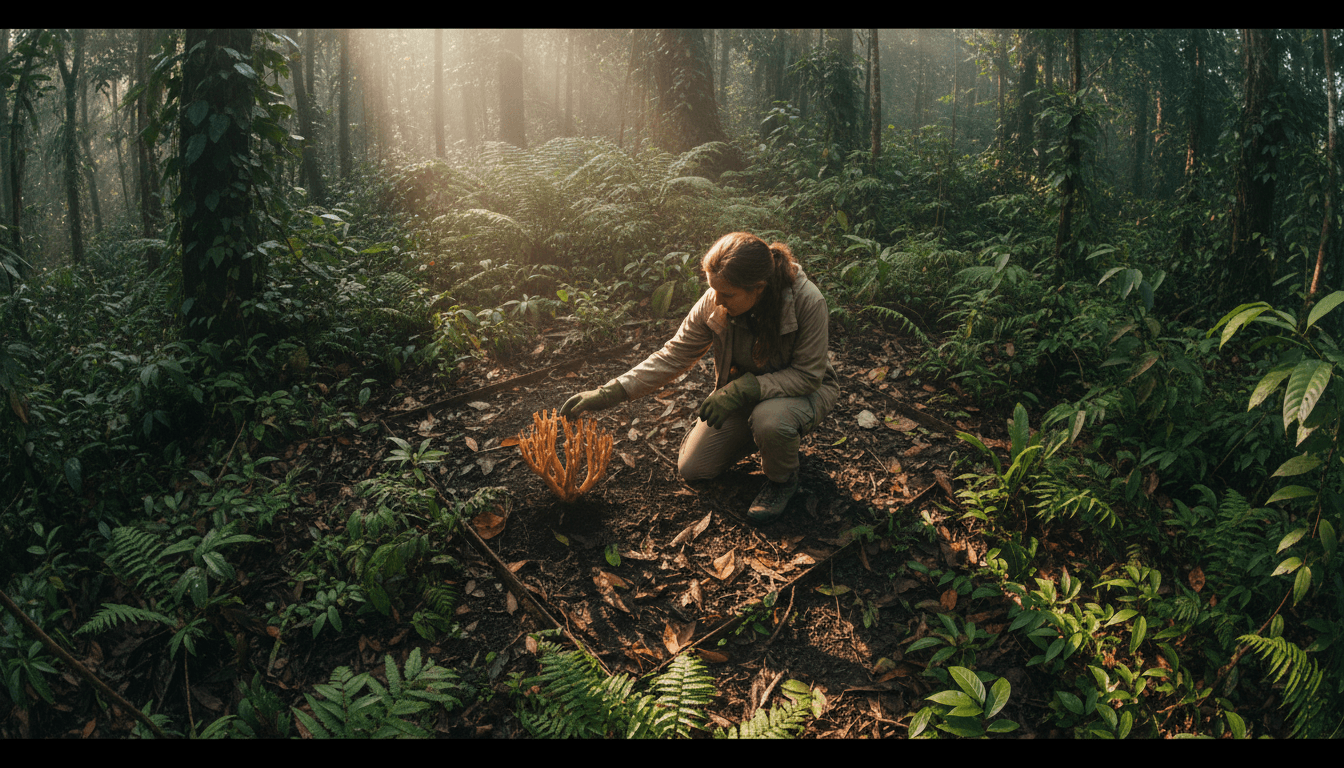
A groundbreaking horn-like fungus species has been discovered in the pristine Danum Valley, marking a significant moment for biodiversity research and underscoring the vital importance of preserving Earth’s remaining primary rainforests. This new find, announced on Sunday, April 12, 2026, highlights the incredible, yet still largely unknown, biological richness hidden within these crucial ecosystems.
The Discovery Unveiled
The discovery, made by an international team of scientists, centers on a previously uncatalogued species of fungus characterized by its distinctive horn-like morphology. While specific details about the research team or the exact scientific classification were not immediately available, the announcement from The Star emphasizes the unique appearance of this organism. The Danum Valley, located in Sabah, Malaysian Borneo, is renowned globally as a biodiversity hotspot and a critical site for ecological research. This latest find reinforces its status as a living laboratory, continually yielding new insights into the natural world. The implications for mycology and broader ecological understanding are considerable, as each new species offers clues to evolutionary pathways, ecosystem functions, and potential biotechnological applications.
Impact Analysis
The discovery of a new horn-like fungus species in Danum Valley carries substantial weight for the broader scientific and space landscape, particularly in the realm of astrobiology and extremophile research. While seemingly terrestrial, findings in extreme or previously unexplored environments on Earth often inform our understanding of life’s potential beyond our planet. Fungi, known for their resilience and adaptability, thrive in diverse conditions, making them analogs for potential extraterrestrial life forms. This new species could possess unique metabolic pathways or survival mechanisms that expand our theoretical models for life in harsh environments, from Martian subsurface habitats to the icy moons of Jupiter and Saturn. Furthermore, the genetic sequencing of such novel organisms often reveals evolutionary relationships and biochemical innovations that can inspire new materials science or pharmaceutical advancements. Related science & space articles frequently explore how terrestrial biology informs our search for life beyond Earth.
“Each new species discovered, particularly one with such distinct morphology, is a testament to the vast, unexplored biodiversity on Earth and a potential blueprint for understanding life’s tenacity across the cosmos.”
Context & Background: A Biodiversity Hotspot
The Danum Valley Conservation Area spans approximately 43,800 hectares of relatively undisturbed lowland dipterocarp rainforest, representing one of the most biodiverse regions on Earth. Its history as a research site dates back decades, with countless expeditions yielding new species of flora and fauna, from insects and amphibians to trees and now, fungi. This continuous stream of discoveries underscores a critical industry trend: despite advanced technology, vast swathes of our planet remain scientifically unexplored. The valley’s protected status has been crucial in safeguarding its ecological integrity against the pressures of deforestation and development, issues that plague many other parts of Borneo. Previous events in similar regions have shown that understanding and cataloging biodiversity is a race against time, as habitats shrink and species face extinction before they are even known to science. This horn-like fungus is a stark reminder of what stands to be lost without dedicated conservation efforts.
What’s Next for the Horn-Like Fungus?
Following the initial announcement, the scientific community will eagerly anticipate further details regarding the new horn-like fungus. Future implications will likely include comprehensive taxonomic studies, genetic sequencing to understand its evolutionary lineage, and ecological surveys to determine its role within the Danum Valley ecosystem. Researchers will investigate its unique biochemical properties, which could hold potential for novel enzymes, antibiotics, or other biotechnological applications. Decisions regarding its formal scientific naming and classification will follow, along with potential conservation strategies if its habitat is deemed vulnerable. Predictions suggest that this discovery will spur renewed interest and funding for mycological research in Southeast Asian rainforests, leading to further new findings and a deeper appreciation for fungal diversity. Continued exploration of the Danum Valley is paramount, as it undoubtedly harbors many more undiscovered species.
Key Takeaway
The discovery of this new horn-like fungus species in Danum Valley is more than just an addition to a scientific catalog; it is a powerful affirmation of the planet’s immense biodiversity and the critical need for its preservation. It reinforces the notion that even in well-studied areas, nature continues to surprise us with its complexity and novelty. Such discoveries not only advance our understanding of life on Earth but also inspire future generations of scientists and conservationists. They serve as a poignant reminder that the natural world holds countless secrets yet to be uncovered, many of which may possess unforeseen benefits for humanity, from medical breakthroughs to insights into the origins and evolution of life itself. Protecting these invaluable ecosystems is not merely an environmental concern; it is an investment in our collective scientific future and our understanding of the universe.