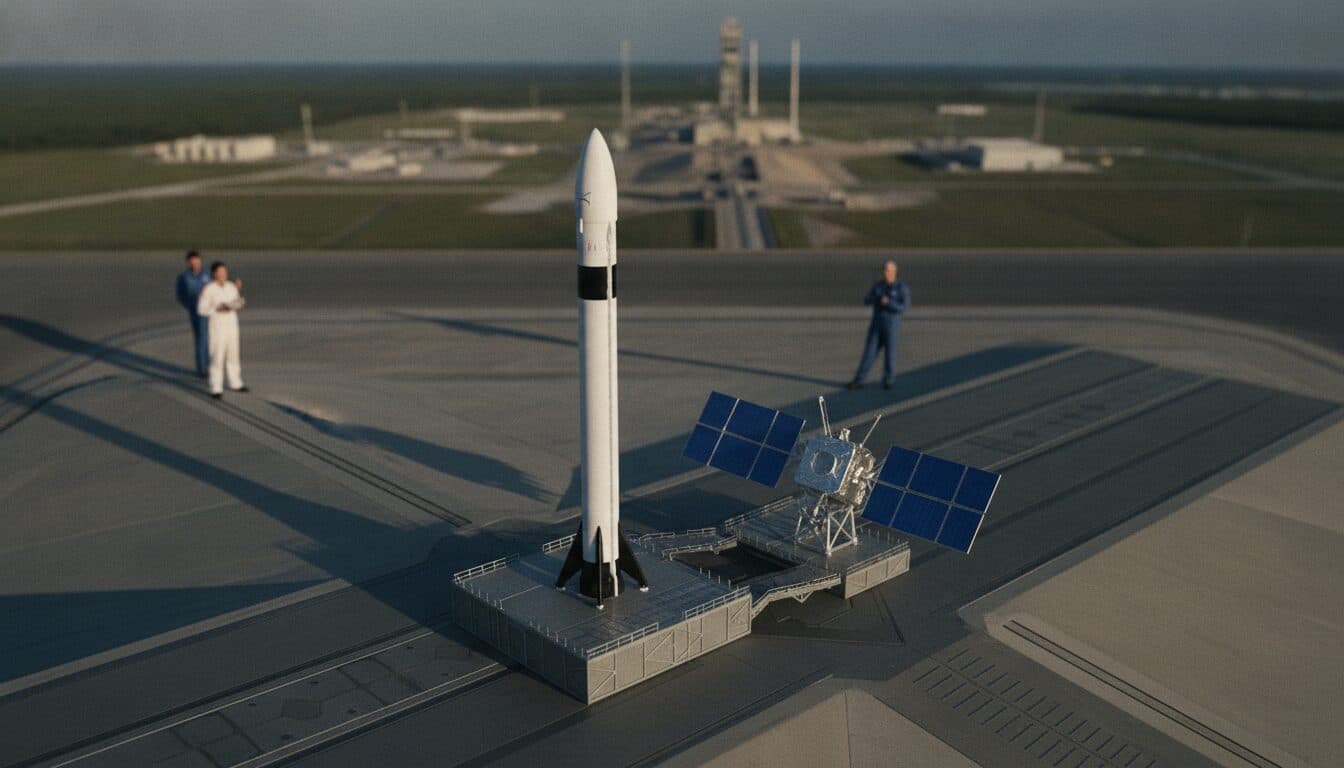
Historic Artemis 2 astronauts are making a monumental moon flyby today, Tuesday, April 7, 2026, marking a critical step in humanity’s return to lunar exploration. This unprecedented mission sees a crewed Orion spacecraft execute a close-range maneuver around the Moon, testing vital systems and procedures before future lunar landings.
The Historic Moon Flyby
The mission involves a crew of four astronauts aboard NASA’s Orion capsule, launched as part of the Artemis II mission. While specific names are not provided in the source material, the focus remains on the collective endeavor of these pioneers. Their journey today entails a complex trajectory designed to take them beyond the Moon and back, validating Orion’s performance in deep space and its life support systems. The ‘hour by hour’ timeline, though not detailed in the provided content, signifies the meticulous planning and precise execution required for such a sophisticated maneuver. This flyby is not merely a symbolic gesture; it is a rigorous test, pushing the boundaries of human spaceflight and setting the stage for sustained lunar presence. The crew’s direct involvement in navigating and monitoring the spacecraft during this critical phase provides invaluable real-time data and experience.
“This flyby is a rigorous test, pushing the boundaries of human spaceflight and setting the stage for sustained lunar presence.”
The significance of this historic moon flyby cannot be overstated. It represents the first time humans have ventured this far from Earth since the Apollo era, re-establishing a vital capability for deep-space missions. The data gathered from the Orion capsule’s performance, the crew’s health, and the operational procedures will be crucial for refining plans for Artemis III, which aims to land astronauts on the lunar surface. The mission also serves as a powerful demonstration of international collaboration and technological prowess, inspiring a new generation of scientists and engineers.
Impact Analysis
The successful execution of the Artemis II historic moon flyby profoundly impacts the broader science and space landscape. For NASA, it validates years of development and billions of dollars invested in the Artemis program, reaffirming its leadership in space exploration. For the global space community, it signals a renewed era of human lunar missions, potentially opening doors for international partnerships in building lunar habitats and conducting scientific research on the Moon. This mission also significantly advances the technological readiness levels for future deep-space endeavors, including missions to Mars. The insights gained from how the human body adapts to extended periods in deep space, coupled with the performance data of the Orion spacecraft, will be instrumental in designing more robust and safer missions for the future.
Context & Background
The Artemis program represents a paradigm shift from the short-duration Apollo missions. While Apollo focused on initial landings, Artemis aims for sustained human presence on and around the Moon, utilizing it as a proving ground for Mars. This historic moon flyby builds directly upon the success of Artemis I, an uncrewed test flight of the Space Launch System (SLS) rocket and Orion capsule that successfully orbited the Moon in late 2022. That mission demonstrated the hardware’s capability to withstand the rigors of deep space and re-entry. The current mission, Artemis II, adds the crucial human element, verifying that the spacecraft can safely support a crew for an extended journey beyond low Earth orbit. This methodical, step-by-step approach is characteristic of complex space exploration programs, where each mission builds upon the lessons learned from its predecessors. The broader trend in space exploration sees a convergence of governmental agencies and private entities, all contributing to a vibrant and competitive industry focused on expanding humanity’s footprint beyond Earth.
What’s Next
Following the successful completion of the historic moon flyby, the immediate next steps will involve extensive data analysis from the mission. Engineers and scientists will meticulously review every aspect of Orion’s performance, the crew’s health, and the operational protocols. This analysis will directly inform the planning and execution of Artemis III, which targets the first human landing on the Moon since 1972. Future implications extend to the development of the Lunar Gateway, a planned space station orbiting the Moon, and further exploration of the lunar south pole, a region believed to harbor significant water ice resources. Upcoming decisions will revolve around the finalization of landing sites for Artemis III and the selection of subsequent crews for future lunar missions. Predictions suggest an accelerated pace of lunar exploration, potentially leading to permanent human outposts on the Moon within the next two decades, paving the way for eventual crewed missions to Mars.
Key Takeaway
The Artemis 2 astronauts’ historic moon flyby today is more than just a journey around our nearest celestial neighbor; it is a powerful reaffirmation of humanity’s enduring drive to explore and innovate. It solidifies the foundation for a new era of lunar exploration, promising not just a return to the Moon, but a sustained presence that will unlock unprecedented scientific discoveries and technological advancements, ultimately paving the way for humanity’s expansion deeper into the solar system.