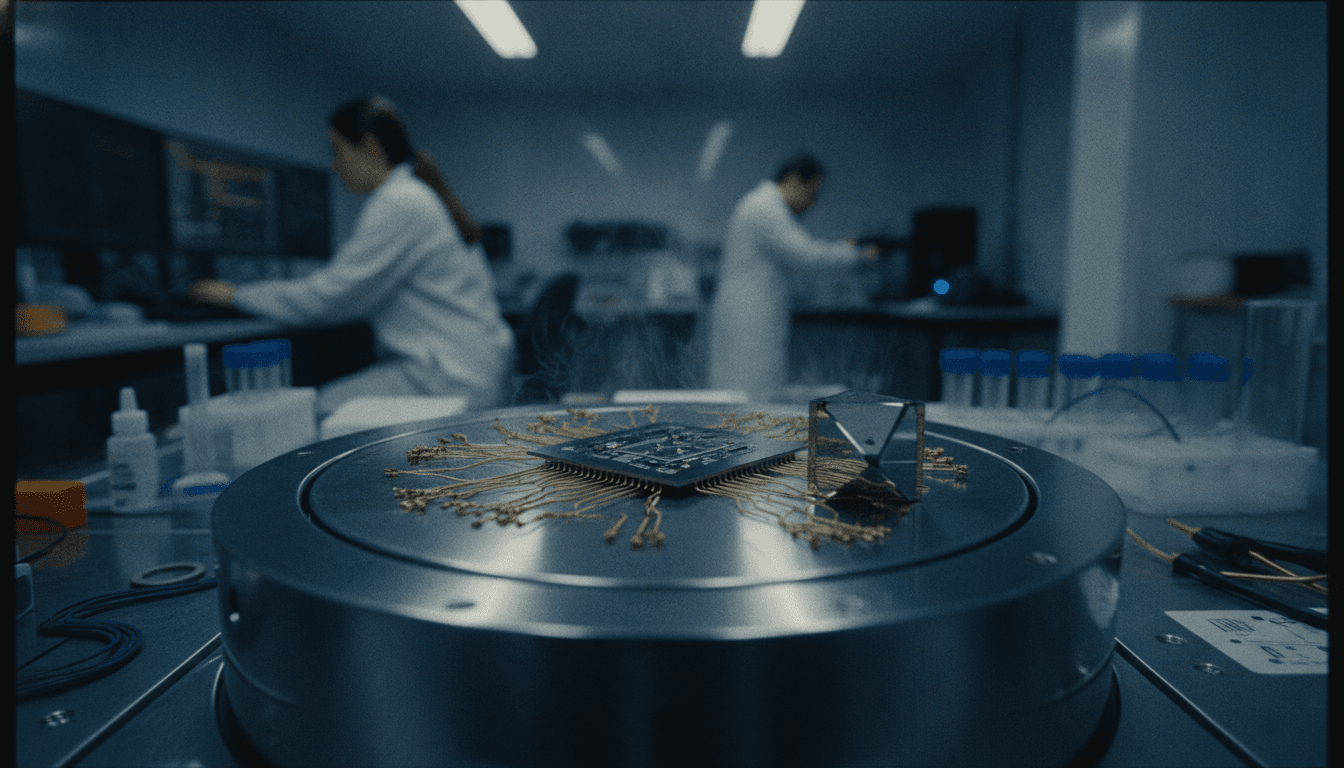
A groundbreaking factory efficiency discovery, announced on Saturday, April 18, 2026, promises a major impact on manufacturing processes worldwide, offering a new approach to industrial operations. This significant scientific advancement could redefine how factories operate, leading to substantial improvements in productivity and resource management across various sectors.
The Breakthrough: A New Approach to Manufacturing
The core of this revelation lies in a novel methodology that scientists have developed, providing a fundamentally different perspective on optimizing factory output. While specific details regarding the scientific principles and technologies involved remain under wraps, the announcement from MSN emphasizes that this finding offers a ‘new approach’ to industrial challenges. This suggests a paradigm shift rather than incremental improvements, potentially leveraging interdisciplinary insights from materials science, automation, or process engineering.
The ‘who’ behind this breakthrough remains unspecified in the initial report, typical of early announcements designed to build anticipation while further details are prepared for release. However, the scope of the claim – a ‘major impact on factories worldwide’ – indicates that the discovery has undergone rigorous validation and is deemed significant enough to warrant global attention from industrial leaders and policymakers alike. This suggests a collaborative effort, likely involving academic institutions, research labs, or even private sector R&D departments that have been working on complex manufacturing challenges.
Impact Analysis: Redefining Global Production
The ramifications of this discovery are projected to be far-reaching, fundamentally altering the global manufacturing landscape. For factories, this ‘new approach’ could translate into reduced energy consumption, optimized raw material usage, faster production cycles, and potentially even the ability to produce goods with higher precision or novel properties. Such improvements would directly address pressing industrial concerns such as sustainability, cost reduction, and competitive advantage.
Economically, a widespread adoption of this breakthrough could stimulate significant investment in new industrial infrastructure and technologies. Nations and corporations that are early adopters could gain a substantial lead in global markets. Furthermore, the nature of a ‘new approach’ implies potential for entirely new types of factories or production lines, fostering innovation and creating new job markets focused on advanced manufacturing techniques. This could also alleviate supply chain vulnerabilities by making local production more efficient and cost-effective.
“This finding provides a new approach that could fundamentally reshape how we think about industrial production, offering unprecedented levels of factory efficiency.”
Context & Background: The Drive for Sustainable Productivity
The industrial sector has long been a focal point for innovation, driven by an incessant demand for higher productivity, lower costs, and increasingly, greater sustainability. Over the past decade, trends like Industry 4.0, advanced robotics, and artificial intelligence have incrementally improved factory operations. However, many of these advancements have built upon existing frameworks. A ‘new approach’ suggests a departure from these evolutionary steps, perhaps addressing fundamental limitations that current technologies cannot overcome.
Concerns over climate change and resource depletion have amplified the need for more efficient and sustainable manufacturing processes. Factories worldwide are under pressure to reduce their carbon footprint, minimize waste, and operate with greater energy autonomy. This scientific breakthrough, if it delivers on its promise, could be a critical enabler for industries striving to meet these environmental and economic targets simultaneously. It aligns with a broader global push towards green manufacturing technologies and circular economy principles.
What’s Next: Implementation and Adaptation
The immediate future will likely involve more detailed scientific publications and technical demonstrations to elaborate on the specifics of this groundbreaking factory efficiency discovery. Industry leaders will be keenly observing how this ‘new approach’ can be integrated into existing infrastructure or if it necessitates a complete overhaul. Pilot programs and partnerships between the scientific discoverers and major industrial players are anticipated to test the scalability and real-world applicability of the findings.
Regulatory bodies may also need to consider new standards or frameworks to accommodate the unique aspects of this breakthrough, particularly if it introduces novel materials or processes. The speed of adoption will depend on several factors: the cost-benefit analysis for implementation, the ease of integration, and the demonstrable advantages over current methods. We can expect a period of intense research and development as companies seek to harness this new capability. This could also spur a new wave of venture capital investment in companies specializing in deploying these advanced manufacturing techniques, further accelerating the transition.
Key Takeaway: A Catalyst for Industrial Transformation
This scientific breakthrough represents more than just an incremental improvement; it signals a potential paradigm shift in industrial operations. By offering a ‘new approach’ to factory efficiency, scientists have unveiled a powerful tool that could drive global manufacturing into an era of unprecedented productivity, sustainability, and innovation. The implications extend beyond the factory floor, promising ripple effects across global economies, supply chains, and environmental stewardship, fundamentally altering how goods are made and consumed in the 21st century. This discovery is poised to be a catalyst for a new industrial revolution, redefining competitiveness and operational excellence for decades to come.