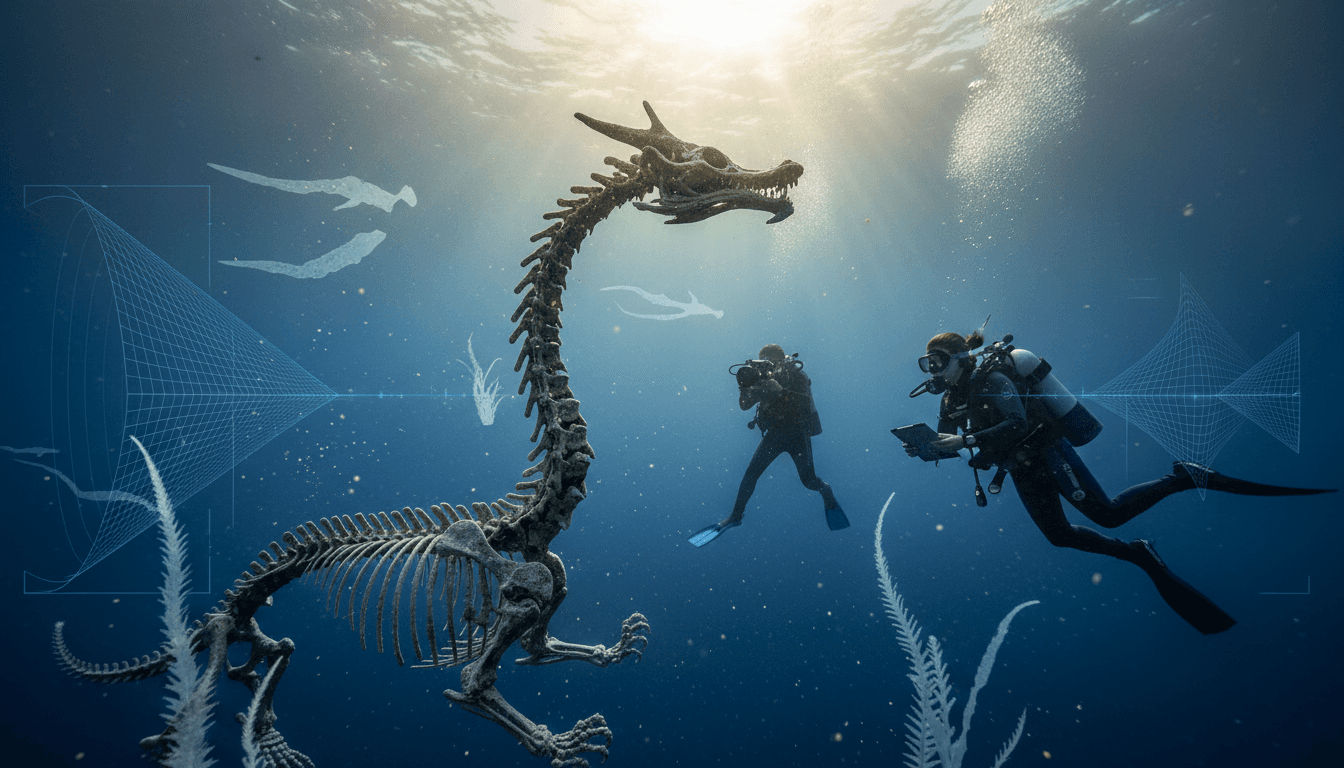
Scientists announced the discovery of a very strange Chinese dragon fossil, dating back an astonishing 240 million years, marking a significant moment in paleontology. The revelation, made public on Friday, April 24, 2026, by researchers, brings to light an ancient marine reptile with a remarkably elongated neck, earning it the moniker ‘Chinese dragon’ due to its serpentine appearance and origin. This fossil represents a previously unknown species, offering invaluable insights into the biodiversity and evolutionary pathways of the Triassic period.
The Strange Chinese Dragon Fossil Unveiled
The discovery of this ancient creature was announced by scientists, though specific names of the lead researchers or institutions involved were not detailed in the initial report. What is clear, however, is the profound nature of their find: a 240 million-year-old fossil that has been described as ‘very strange.’ The ‘Chinese dragon’ nickname stems from its unique morphology – a body plan that evokes mythical imagery, specifically its exceptionally long neck. This anatomical feature is particularly intriguing, suggesting specialized feeding strategies or environmental adaptations in the ancient seas it inhabited.
The exact location of the fossil’s excavation was not specified beyond its general origin in China, but the age of the specimen firmly places it within the Middle Triassic epoch. This period was a time of significant ecological recovery and diversification following the Permian-Triassic extinction event, often referred to as ‘The Great Dying.’ The presence of such a distinct and unusual marine reptile further underscores the rapid evolution and emergence of novel life forms during this critical geological interval. Paleontologists will undoubtedly be eager to conduct further analyses to understand its phylogenetic relationships and ecological role.
“This discovery challenges our existing understanding of marine reptile evolution during the Triassic period, hinting at a much stranger and more diverse ancient world than previously imagined.”
Impact on Science & Space Landscape
The unearthing of this strange Chinese dragon fossil has immediate and profound implications for the fields of paleontology and evolutionary biology. It expands the known diversity of marine reptiles from the Triassic period, a time that saw the rise of many iconic groups, including ichthyosaurs and plesiosaurs. The unique features of this new species, particularly its elongated neck, will prompt new research into the functional morphology and biomechanics of ancient marine predators. Such studies could lead to revisions in our understanding of how these creatures hunted, moved, and interacted within their ecosystems.
Beyond its direct impact on paleontology, this discovery reinforces the importance of continued fossil exploration, especially in regions like China, which have consistently yielded extraordinary finds. Each new species adds another piece to the complex puzzle of life’s history on Earth, informing our understanding of large-scale evolutionary trends, extinction events, and the resilience of life. Furthermore, findings like this often capture public imagination, inspiring a new generation of scientists and fostering greater appreciation for Earth’s deep past, resonating with broader themes covered in related science & space articles.
Context and Background
The Triassic period, spanning from approximately 252 to 201 million years ago, was a pivotal era for the evolution of life. It began in the aftermath of the Permian-Triassic extinction, the most severe mass extinction event in Earth’s history. Following this cataclysm, life slowly recovered and diversified, leading to the emergence of dinosaurs, pterosaurs, and a wide array of marine reptiles. China has long been a hotbed for paleontological discoveries, particularly for Triassic marine faunas, with numerous well-preserved fossils providing snapshots of ancient aquatic ecosystems.
Previous discoveries in China have included diverse ichthyosaurs and nothosaurs, contributing significantly to our understanding of marine reptile evolution. The ‘Chinese dragon’ fossil, however, appears to represent a distinct lineage, potentially belonging to a group known for their long necks, such as the tanystropheids, though without further details, this remains speculative. These long-necked reptiles often inhabited shallow marine environments, using their specialized anatomy to ambush prey or forage in complex underwater landscapes. The ongoing research in this region continues to unveil the rich tapestry of ancient life.
What’s Next for the Strange Chinese Dragon Fossil
The immediate next steps following this announcement will undoubtedly involve detailed scientific analysis of the strange Chinese dragon fossil. Researchers will likely employ advanced imaging techniques, such as CT scans, to reconstruct its internal anatomy and understand its skeletal structure without damaging the delicate specimen. Comparative anatomical studies will be crucial to determine its exact taxonomic placement and its relationship to other known marine reptiles. Further expeditions in the region where the fossil was found could also yield additional specimens, providing a more complete picture of this species and its ancient habitat.
Beyond scientific papers and academic conferences, the public display of such an extraordinary fossil could be anticipated, offering educational opportunities and inspiring fascination with prehistoric life. Future research may also delve into the paleoenvironmental conditions of the Middle Triassic in China, using geochemical analyses to understand the climate and oceanographic features that supported such unique life forms. The implications of this discovery are far-reaching, promising to reshape aspects of Triassic paleontology for years to come.
Key Takeaway
The discovery of the 240-million-year-old ‘Chinese dragon’ fossil is more than just another ancient find; it is a testament to the enduring mystery and richness of Earth’s paleontological record. This ‘very strange’ marine reptile challenges existing paradigms of Triassic biodiversity and evolution, underscoring the dynamic and often surprising pathways life has taken over millions of years. It highlights the critical role of ongoing scientific exploration in unraveling the planet’s deep history and reminds us that even after centuries of discovery, the Earth still holds secrets capable of fundamentally altering our understanding of life itself.