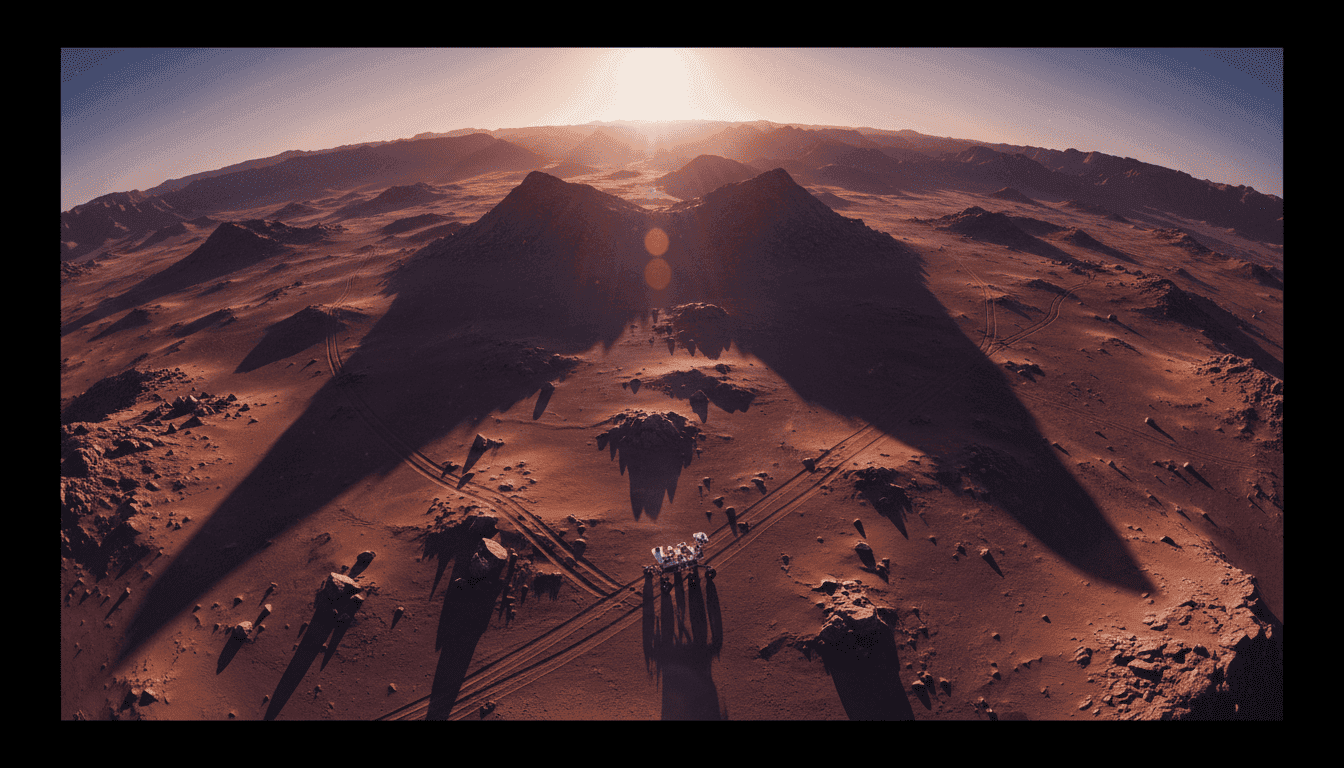
Building blocks of life on Mars have been unequivocally detected by NASA’s Curiosity rover, marking a pivotal moment in the search for extraterrestrial biology. This groundbreaking discovery, announced on Tuesday, April 21, 2026, has ignited a fresh wave of scientific inquiry and speculation, particularly concerning the enigmatic origin of these crucial organic molecules on the Red Planet.
The Curiosity Revelation
The latest findings from NASA’s Curiosity rover, which has been exploring Mars’ Gale Crater since 2012, confirm the presence of complex organic molecules essential for life as we know it. While the specific compounds have not been fully detailed in initial reports, the announcement from Space.com emphasizes their significance as fundamental building blocks of life on Mars. This isn’t the first time Curiosity has hinted at organic matter, but the current declaration suggests a more robust and unambiguous detection, pushing the boundaries of what was previously understood about Mars’ geological and potential biological history.
What makes this discovery particularly compelling is the accompanying scientific uncertainty regarding their provenance. Scientists are not yet sure how these building blocks of life on Mars arrived or formed. Theories range from abiotic geological processes, delivery via meteorites, or even remnants of ancient Martian life. The rover’s sophisticated suite of instruments, including the Sample Analysis at Mars (SAM) chemistry lab, would have been instrumental in identifying these complex molecules, analyzing their chemical signatures, and providing the data that underpins this significant announcement.
Impact Analysis
This discovery profoundly impacts the broader science and space landscape. It significantly strengthens the case for Mars as a potentially habitable world, both in its ancient past and possibly even in sheltered niches today. The presence of these vital organic molecules, even without a definitive biological origin, means that at least one of the key ingredients for life was available. This could reshape future mission planning, directing efforts towards sites with higher probabilities of preserving biosignatures or extant life.
The scientific community, already buzzing with Mars exploration efforts, will undoubtedly pivot to prioritize research into the formation and preservation mechanisms of these compounds. It also adds weight to the ongoing debate about planetary protection and the potential for forward contamination from Earth, as understanding the natural Martian organic chemistry becomes even more critical.
“The uncertainty surrounding the origin of these building blocks of life on Mars is as significant as their detection. It opens up a vast new field of inquiry into Martian geochemistry and astrobiology.”
Context & Background
The search for life on Mars has been a cornerstone of space exploration for decades. From the Viking landers in the 1970s, which conducted early life detection experiments with inconclusive results, to subsequent missions like Pathfinder, Spirit, Opportunity, and Perseverance, each has contributed to building a more nuanced picture of Mars. Curiosity, in particular, has been instrumental in characterizing Gale Crater as an ancient lakebed environment, rich in clays and sulfates, providing compelling evidence that Mars once had conditions favorable for microbial life.
Previous findings of methane plumes and various organic molecules, while intriguing, were often ambiguous or could be explained by non-biological processes. This latest announcement, however, signals a potentially higher confidence level in the detection of essential organic compounds, elevating the significance of Curiosity’s ongoing mission. It aligns with the broader industry trend of ‘follow the water’ and ‘follow the organics’ in astrobiology, pushing humanity closer to answering the fundamental question: Are we alone?
What’s Next
The immediate future will involve intensive analysis of the data gathered by Curiosity, with scientists working to unravel the mystery of how these building blocks of life on Mars came to be. Further experiments by the rover, if capabilities allow, might be directed towards identifying more specific types of organic molecules or searching for isotopic signatures that could distinguish between biological and abiotic origins. The Perseverance rover, currently exploring Jezero Crater, may also be tasked with complementary investigations, especially given its sample caching capabilities for eventual return to Earth.
This discovery will undoubtedly influence the design and objectives of upcoming Mars missions, potentially accelerating plans for dedicated astrobiology labs on future landers or even human missions. The implications for understanding the origins of life on Earth, and the potential for life elsewhere in the cosmos, are immense. Decisions regarding mission extensions, funding priorities, and international collaborations will likely be shaped by this new understanding of Martian chemistry.
Key Takeaway
The detection of building blocks of life on Mars by the Curiosity rover is more than just another data point; it’s a profound leap forward in astrobiology. While the definitive presence of life remains unconfirmed, the unequivocal identification of these essential organic molecules transforms our understanding of Mars’ potential habitability. It underscores the immense value of long-duration planetary exploration and sets the stage for an intense period of scientific investigation, bringing humanity closer to one of the most significant discoveries imaginable: evidence of life beyond Earth.