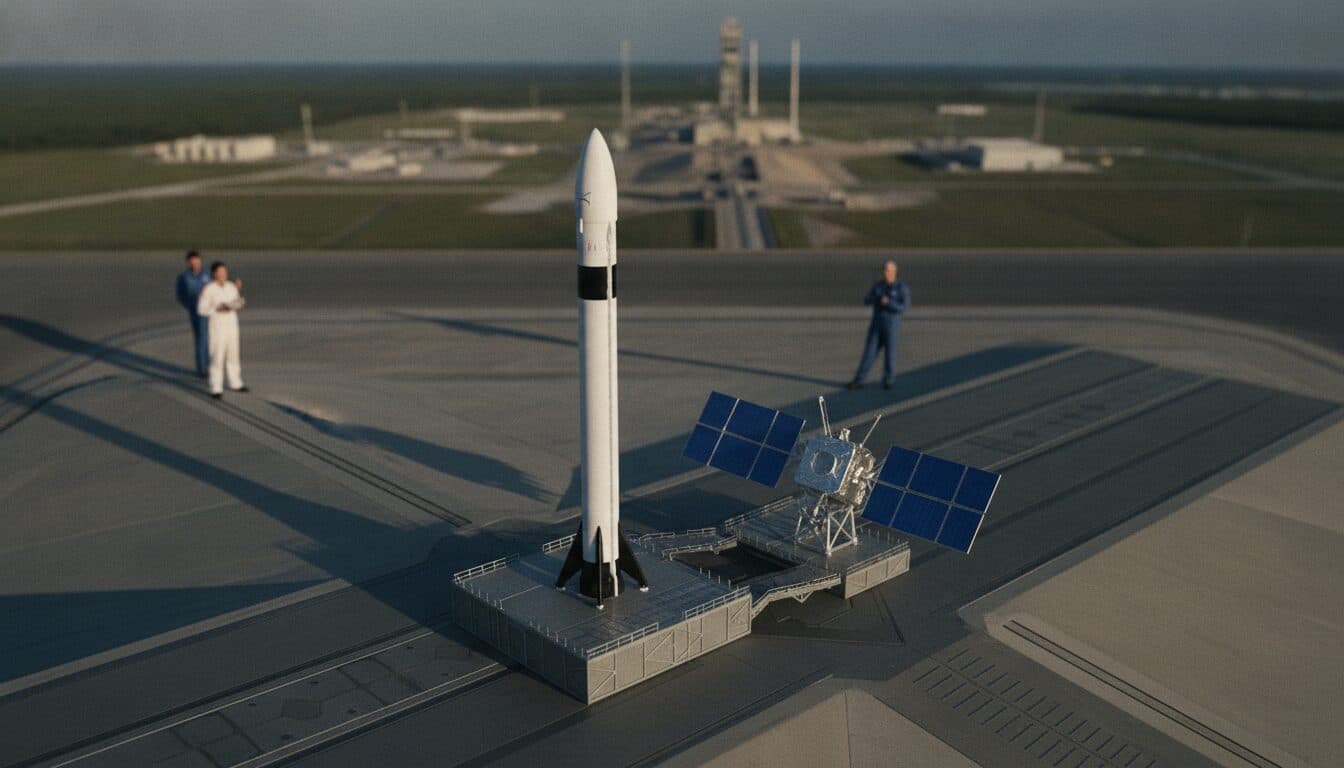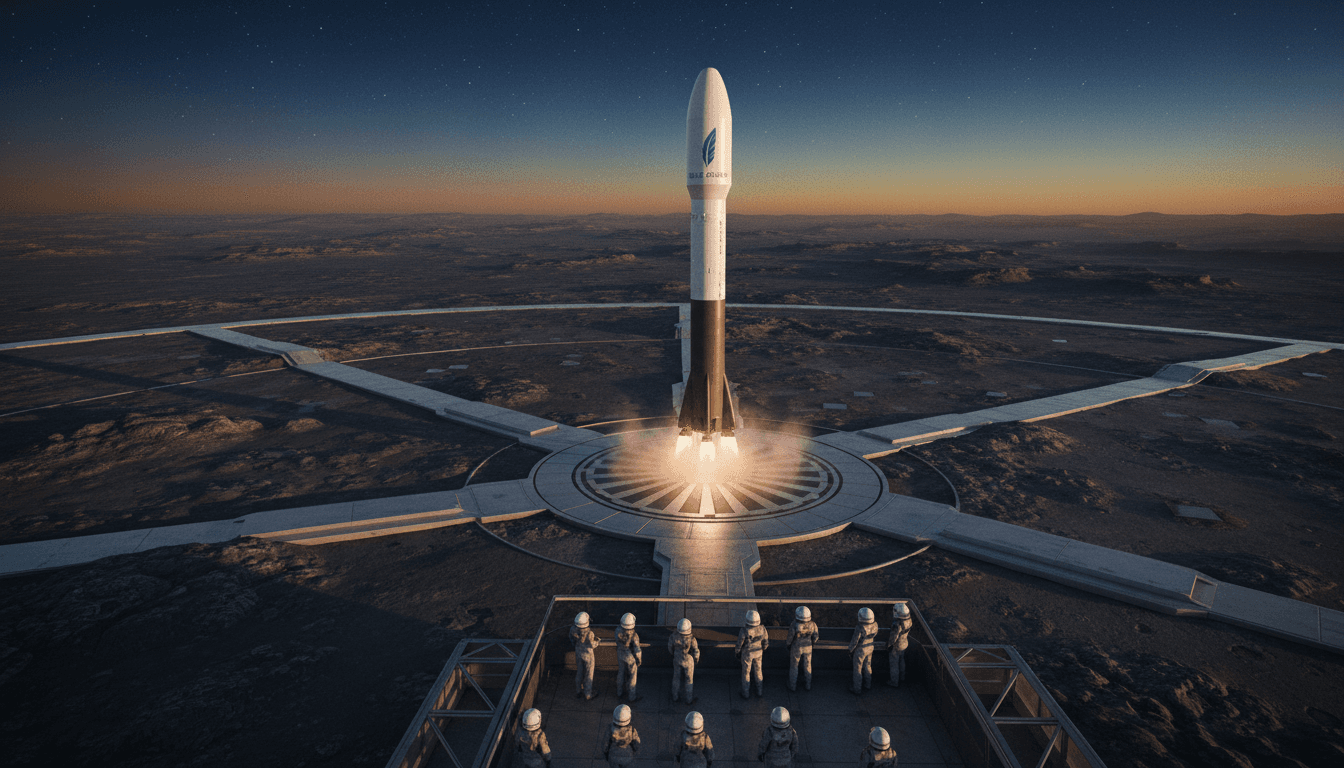
A new era in rocketry has undeniably dawned, marked by Blue Origin’s recent monumental achievement. On Thursday, April 16, 2026, Jeff Bezos’s aerospace venture successfully landed a building-sized rocket, a feat that reverberates through the entire space industry. This marks only the second time such a colossal vehicle has been recovered after launch, placing Blue Origin squarely alongside SpaceX as a leading innovator in reusable rocket technology.
The successful recovery of the massive booster by Blue Origin represents a critical step towards more sustainable and cost-effective space travel. While the specifics of the mission — the launch site, the payload, or the precise rocket model — were not detailed in the initial report, the sheer scale of the achievement speaks volumes. Landing a ‘building-sized rocket’ demands an extraordinary level of precision engineering, advanced guidance systems, and robust control algorithms. This successful landing demonstrates Blue Origin’s maturing capabilities and its serious intent to become a dominant player in the commercial space sector.
Impact Analysis
The implications of this Blue Origin landing extend far beyond the company’s immediate success. For years, the high cost of space launches has been a primary barrier to more frequent missions, scientific exploration, and the development of a robust space economy. Reusable rockets fundamentally alter this economic equation. By significantly reducing the per-launch cost, they pave the way for a dramatic increase in satellite deployments, lunar missions, and potentially, human spaceflight. This achievement by Blue Origin intensifies the competition in the reusable rocket market, pushing all players to innovate faster and more efficiently. This competitive drive is ultimately beneficial for the entire industry, fostering rapid advancements and driving down costs for consumers and governments alike. It also validates the long-held vision of a future where rockets are not single-use expenditures but rather assets that can be leveraged repeatedly, much like aircraft.
“The successful recovery of a building-sized rocket is not just an engineering marvel; it’s a profound economic shift for space, promising to unlock unprecedented access and opportunity.”
This development also has significant strategic implications. As more nations and private entities vie for access to space, the ability to launch and recover large rockets reliably and affordably becomes a strategic national asset. Blue Origin’s progress, therefore, contributes to a broader trend of democratizing space, making it accessible to a wider array of participants.
Context & Background
The pursuit of reusable rocket technology has been a defining characteristic of the 21st-century space race. For decades, rockets were designed to be expendable, with stages jettisoned after use, ultimately falling back to Earth or burning up in the atmosphere. This ‘throwaway’ model was inherently inefficient and expensive. SpaceX, under Elon Musk, pioneered the successful and routine landing of orbital-class boosters, fundamentally altering industry expectations. Their repeated successes demonstrated that reusability was not merely a theoretical concept but a practical, operational reality. Blue Origin, while perhaps less public in its early stages, has been steadily developing its own reusable technology, primarily with its New Shepard suborbital vehicle. This latest landing of a building-sized rocket suggests a significant leap in scale and complexity, moving beyond suborbital hops to potentially orbital or even interplanetary ambitions. It highlights a broader industry trend towards vertical integration and ambitious long-term visions, as companies like Blue Origin invest heavily in infrastructure and advanced manufacturing to achieve their goals. For more insights into the evolving landscape of private spaceflight, explore our related science & space articles.
What’s Next for Blue Origin Landing
The immediate aftermath of this successful Blue Origin landing will undoubtedly involve rigorous analysis of flight data and post-flight inspections of the recovered booster. This data will be crucial for refining future designs and operational procedures. Looking ahead, this achievement strongly signals Blue Origin’s readiness to escalate its ambitions. It paves the way for potential announcements regarding specific orbital launch schedules, larger payload capacities, or even human spaceflight missions using this class of rocket. The intensified competition with SpaceX will likely spur both companies to accelerate their development timelines, potentially leading to faster innovation in areas like in-space refueling, advanced propulsion, and lunar infrastructure. We can anticipate more frequent demonstrations of reusability, a further reduction in launch costs, and a diversification of services offered by these private space entities.
Key Takeaway
The successful Blue Origin landing of a building-sized rocket is more than just a technical triumph; it is a powerful indicator of the accelerating pace of innovation in the private space sector. This achievement underscores the growing feasibility of routine, affordable access to space, fundamentally reshaping the economic and operational paradigms of an entire industry. As companies like Blue Origin continue to push the boundaries of what is possible, the future of space exploration promises to be more dynamic, accessible, and transformative than ever before, with profound implications for science, commerce, and humanity’s place in the cosmos.