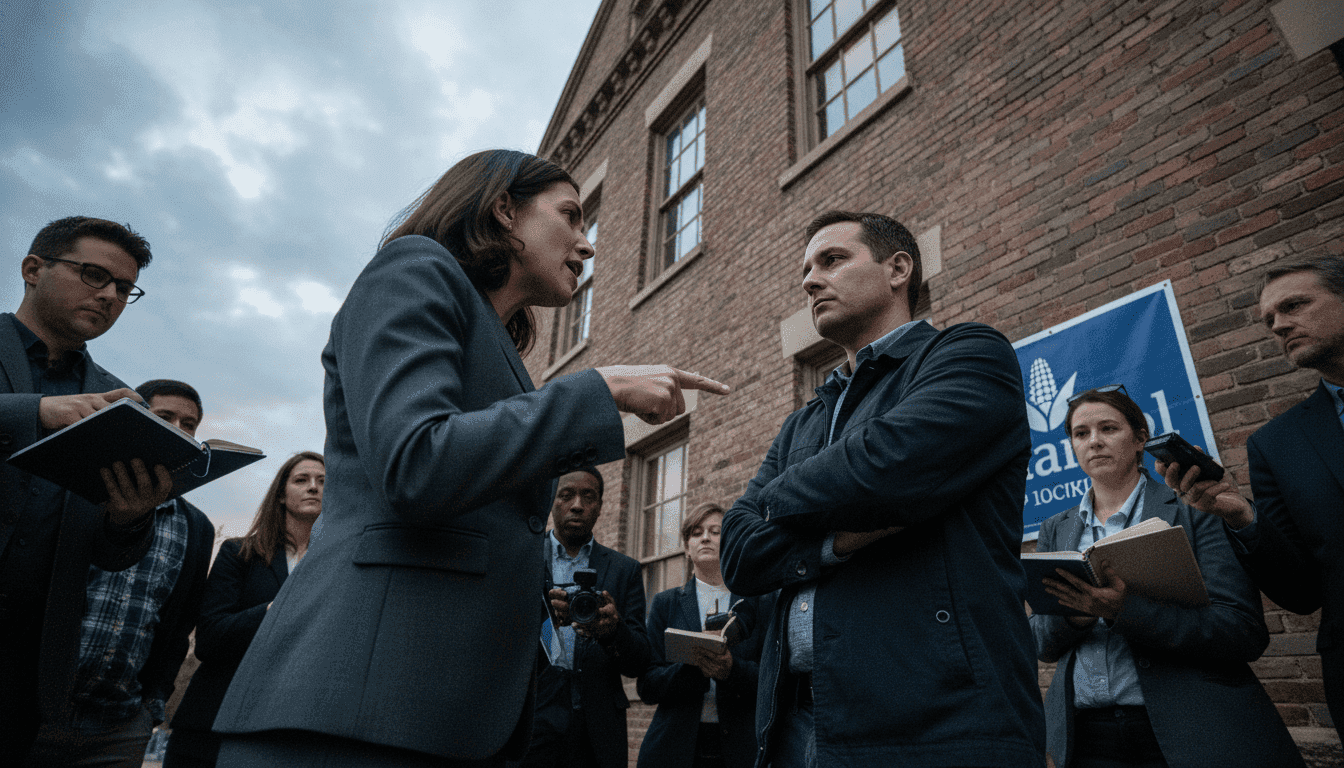
The recent clash in the Iowa Democratic U.S. Senate debate between State Senator Sarah Wahls and progressive activist Ben Turek on Friday, May 8, 2026, has significantly sharpened the contours of the Democratic primary race, highlighting ideological divisions that could define the party’s general election strategy. This highly anticipated encounter, reported by thegazette.com, laid bare the competing visions for Iowa’s future and the national Democratic agenda, setting the stage for a potentially bruising primary battle.
The Story: Ideological Fault Lines Emerge
The debate saw State Senator Sarah Wahls, a prominent figure within the Iowa Democratic Party establishment, square off against Ben Turek, a self-identified progressive activist whose campaign has gained traction with grassroots support. While specific policy disagreements from the debate were not detailed in the initial report, the very nature of their clash suggests a fundamental divergence in approach and priorities.
Wahls, likely advocating for a more centrist, pragmatic approach to appeal to a broader electorate in a swing state like Iowa, would have emphasized her legislative experience and ability to build coalitions. Her strategy would typically focus on issues with bipartisan appeal or those that resonate with moderate voters, aiming to present a viable alternative to the incumbent Republican. Conversely, Turek’s progressive platform would likely push for more transformative policy changes, appealing to the party’s left flank with proposals on issues such as climate change, healthcare reform, and economic inequality. The Wahls, Turek clash underscores the ongoing national debate within the Democratic Party about whether to prioritize ideological purity or electability in challenging races.
Impact Analysis: Shaping the Primary Narrative
This Iowa Democratic U.S. Senate debate is more than just a campaign event; it’s a critical juncture that will shape the primary narrative. For Wahls, the challenge lies in fending off a spirited progressive challenger without alienating her own base or appearing too moderate to energize the party faithful. For Turek, the debate offered a platform to demonstrate his viability and articulate a clear progressive alternative, potentially galvanizing younger voters and those disillusioned with incremental change. The intensity of the Wahls, Turek clash indicates that neither candidate is willing to cede ground, promising a competitive primary.
“The dynamic between Wahls and Turek reflects a broader ideological struggle within the Democratic Party nationally – a tension between pragmatism and progressive ambition that often plays out in critical statewide races like Iowa’s U.S. Senate contest.”
The outcome of this primary will have significant implications for the general election. A moderate Wahls victory might position the party to attract independent voters, but could struggle with enthusiasm among the progressive base. A Turek victory, while energizing the left, might face an uphill battle in convincing moderate Iowa voters, given the state’s increasingly red leanings in federal elections. The debate’s aftermath will see both campaigns intensify their efforts to define themselves and their opponent, leveraging the perceived strengths and weaknesses revealed during the encounter.
Context & Background: Iowa’s Shifting Political Landscape
Iowa has long been a bellwether state, but in recent election cycles, it has trended more Republican at the federal level, making a U.S. Senate seat a formidable challenge for Democrats. The state’s rural-urban divide, coupled with economic anxieties and cultural shifts, has created a complex political environment. Democrats have seen success in gubernatorial and state legislative races, but federal contests require a broader coalition. The last Democratic U.S. Senator from Iowa was Tom Harkin, who retired in 2015. Since then, Republicans have held both Senate seats. This historical context amplifies the stakes of the current primary, as Democrats search for a candidate capable of breaking the Republican stronghold. The Wahls, Turek clash is therefore not just about internal party politics, but about the very viability of the Democratic Party in Iowa’s federal landscape.
What’s Next: Road to the Primary
Following the Friday, May 8, 2026 debate, both Wahls and Turek will undoubtedly be engaging in post-debate messaging, attempting to frame the encounter in their favor. Expect increased fundraising efforts, targeted advertising, and intensified grassroots organizing as the primary election draws closer. Future debates, if scheduled, will likely continue to highlight these ideological differences. Media coverage, especially from outlets like thegazette.com, will scrutinize voter reactions and polling data to gauge the impact of this initial clash. The Democratic Party, both at the state and national level, will be closely watching the trajectory of this race, understanding that the eventual nominee will face a well-funded and organized Republican opponent.
Key Takeaway: Defining the Democratic Path Forward
The Wahls, Turek clash in the Iowa Democratic U.S. Senate debate is a microcosm of the larger strategic debate within the Democratic Party. It forces a crucial decision: whether to nominate a candidate who can appeal to the broadest possible electorate, or one who can energize the base with a bolder progressive vision. The outcome of this primary will not only determine who represents the Democrats on the ballot but will also offer insights into the party’s future direction in competitive states. The path chosen by Iowa Democrats will have ripple effects, influencing electoral strategies and policy debates across the nation as the party seeks to regain ground in the U.S. Senate.