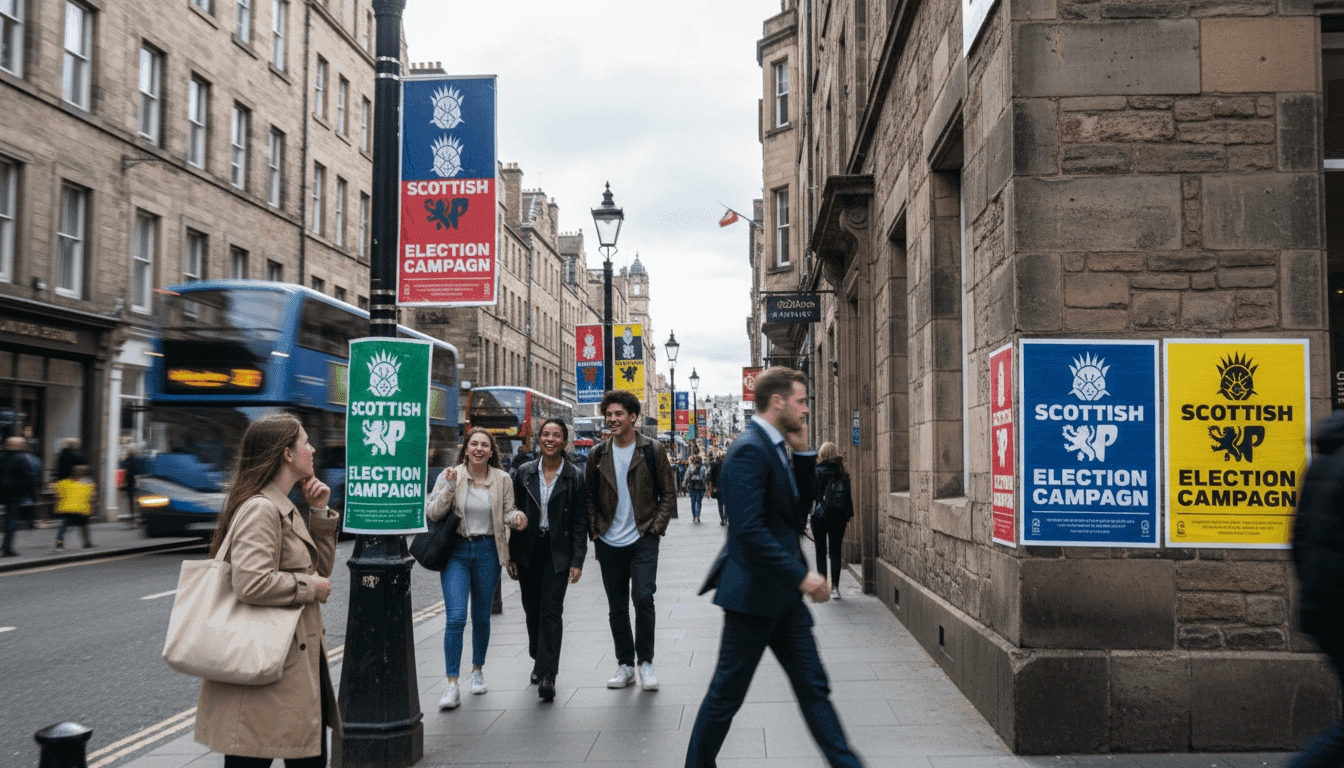
The Scottish election campaign intensifies with seven days remaining until voters cast their ballots, marking a critical juncture for the nation’s political future. With the election scheduled for Monday, May 4, 2026, political parties are entering the final sprint, deploying their most compelling arguments and engaging in last-minute efforts to sway undecided voters. The stakes are particularly high, given the persistent debates surrounding Scotland’s constitutional future and the pressing economic and social challenges facing the country.
The Players and the Stakes
The core of the Scottish election campaign involves a familiar cast of political parties, each vying for dominance in Holyrood. While specific party names are not provided in the source, the context of a Scottish election implies the significant involvement of the Scottish National Party (SNP), typically the dominant force, alongside Scottish Labour, the Scottish Conservatives, and the Scottish Liberal Democrats. The central ‘what happened’ is the continuation of this intense campaigning period, leading up to the May 4, 2026 vote. Details are sparse beyond the impending date, but the implication is a flurry of rallies, policy announcements, and media appearances designed to capture public attention.
The key details revolve around the countdown: exactly one week left. This narrow window means that messaging will become more urgent, direct, and potentially more confrontational as parties seek to differentiate themselves and consolidate support. Issues such as economic recovery, public services (healthcare and education), and critically, the question of a second independence referendum, are almost certainly at the forefront of these discussions. The outcome of this election will not only determine who forms the next Scottish Government but could also significantly alter the political landscape of the wider United Kingdom.
Impact Analysis
The final week of the Scottish election campaign holds profound implications for the broader politics and policy landscape. A strong mandate for any particular party could either solidify the existing constitutional arrangements or reignite calls for significant change. For instance, if a pro-independence party secures a decisive victory, pressure on the UK government for another referendum would undoubtedly mount, potentially leading to a period of heightened political uncertainty. Conversely, a result that sees pro-union parties gain significant ground could temporarily defuse such calls, allowing focus to shift more squarely to domestic policy issues.
Beyond constitutional questions, the election’s outcome will shape Scotland’s approach to critical policy areas. Decisions on public spending, environmental targets, industrial strategy, and social welfare will all be influenced by the composition of the new Parliament. Investors and businesses will be watching closely for signals regarding fiscal stability and regulatory environments, particularly those with significant operations in Scotland or those considering future investments. The election result could, therefore, have tangible economic consequences, impacting everything from local infrastructure projects to international trade relationships. Read more about the economic implications of regional elections.
“The final seven days of campaigning are often where elections are won and lost, as parties make their ultimate pitch to a sometimes volatile electorate. Every policy announcement and every public appearance carries magnified weight.”
Context & Background
Scottish elections have been increasingly characterized by the independence debate since the 2014 referendum. While that vote resulted in a ‘No’ to independence, the issue has remained a potent force in Scottish politics, particularly following Brexit, which saw Scotland vote overwhelmingly to remain in the European Union. This divergence from the rest of the UK has fueled arguments for a renewed look at Scotland’s place within the Union. Previous elections have often seen the SNP emerge as the dominant party, reflecting a consistent, albeit not universal, desire for greater autonomy or outright independence among a significant portion of the Scottish electorate.
Industry trends across the UK also play a role. The broader economic climate, including inflation rates, post-pandemic recovery efforts, and global geopolitical shifts, invariably influences voter sentiment. Parties campaigning in Scotland must address these wider concerns while also tailoring their messages to specific Scottish priorities and grievances. The Scottish election campaign, therefore, is not an isolated event but rather a crucial component of the broader political narrative unfolding across the British Isles.
What’s Next
With the Scottish election campaign concluding on Monday, May 4, 2026, the immediate next step is, of course, the vote itself, followed swiftly by ballot counting and the declaration of results. The days immediately following the election will be dominated by analysis of seat counts, potential coalition negotiations if no single party achieves an outright majority, and the formation of the next Scottish Government. Key appointments to ministerial positions will be closely scrutinized for indications of policy direction.
Looking further ahead, the implications could be far-reaching. Should a pro-independence government be formed, the question of a second independence referendum will inevitably rise to the top of the political agenda, setting up a potential constitutional clash with the UK government. Conversely, a government focused on domestic issues might prioritize economic growth, social reforms, or environmental policies, leading to specific legislative actions in the coming months and years. Future decisions will hinge entirely on the mandate delivered by the Scottish people on election day. Explore expert predictions on post-election policy shifts.
Key Takeaway
The ongoing Scottish election campaign is more than just a contest for seats; it is a pivotal moment that will define Scotland’s trajectory for the foreseeable future. The choices made by voters on May 4, 2026, will not only determine the composition of the Scottish Parliament but also set the tone for constitutional debates, economic policy, and social priorities. The intense final week of campaigning underscores the high stakes involved, making this election a crucial barometer of political sentiment in a significant part of the United Kingdom.