Real Madrid’s presidential election process has officially commenced, marking a significant moment for one of the world’s most prominent football clubs. The announcement, made on Thursday, May 15, 2026, follows current president Florentino Pérez’s decision to call for new elections and seek another term at the helm of the Spanish giants. This move sets the stage for a potentially contested leadership race, though the strict candidacy requirements historically favor incumbent figures.
The club’s official statement confirmed a tight 10-day window for candidacy submissions, closing on May 23. Prospective candidates face formidable barriers to entry, including the necessity of having been a club member for a minimum of 20 years. More critically, they must furnish a financial guarantee amounting to €187 million, which represents 15% of the club’s substantial annual budget, and crucially, this guarantee must be backed by personal assets. These stringent financial stipulations have long been a subject of debate, often cited as a key factor in limiting viable challengers to the presidency.
The Incumbent and Potential Challengers
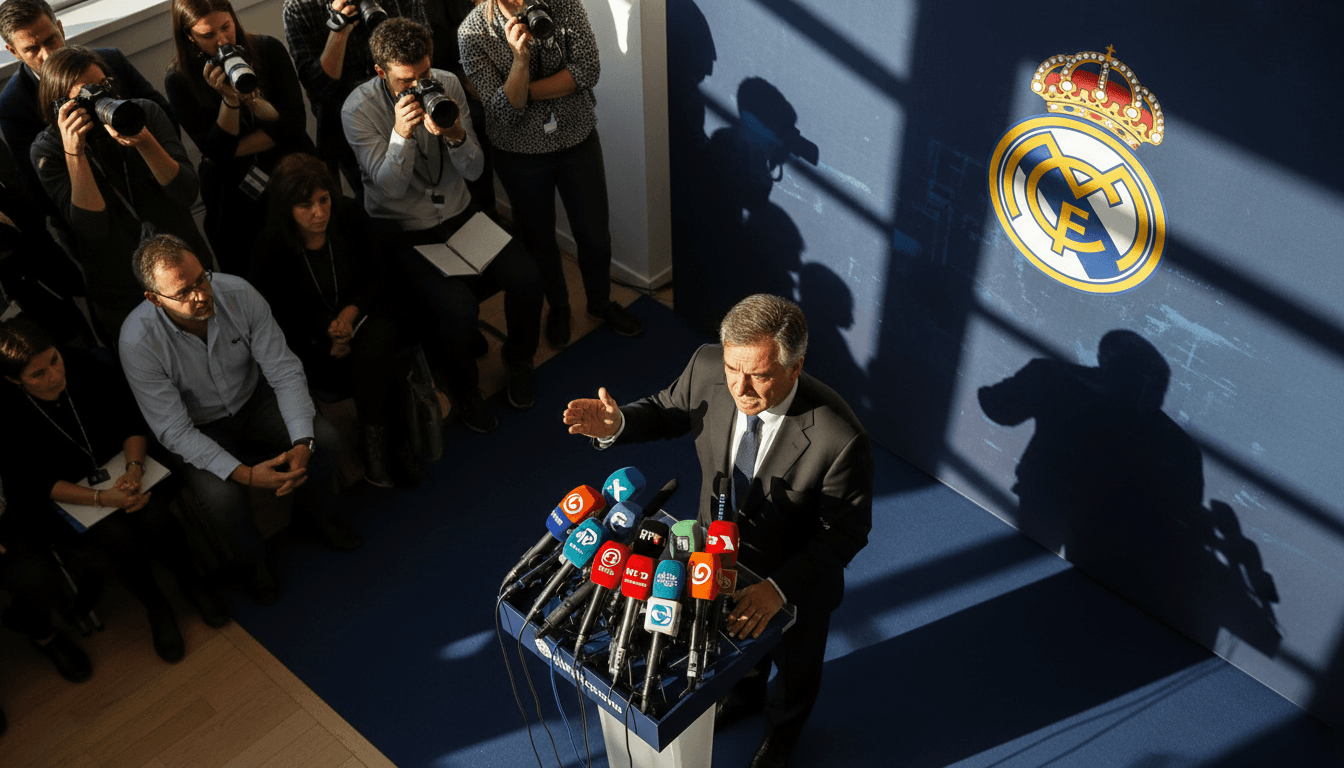
Florentino Pérez, 79, is no stranger to the electoral arena. He was re-elected unopposed in January 2025 for what was then a four-year term. His recent press conference on Tuesday, May 13, 2026, saw him explicitly state his intention to seek re-election, effectively initiating this latest electoral cycle. Pérez’s tenure has been characterized by both periods of unparalleled success and significant financial maneuvers, solidifying his reputation as a formidable leader.
While Pérez has often run unopposed, Spanish media reports suggest that Enrique Riquelme, president of the Cox Group, a conglomerate specializing in water and energy, is actively considering entering the electoral race. Riquelme, a renewable energy businessman, reportedly sought an extension from Pérez to adequately prepare his potential candidacy. However, Pérez’s response, delivered during an interview with Spanish television channel La Sexta on Wednesday, was unequivocal:
“When I ran in the 2000 elections, I did not ask for more time. I presented my candidacy and won.”
This firm stance underscores the competitive and often uncompromising nature of Real Madrid’s internal politics.
Impact Analysis: The Unyielding Grip of Power
The launch of Real Madrid’s presidential election process, with its demanding financial and membership requirements, highlights a unique governance model in elite European football. Unlike publicly traded clubs or those with more dispersed ownership, Real Madrid operates as a member-owned entity, or ‘socios’ club. However, the financial guarantee, pegged at a staggering 15% of the club’s annual budget, effectively narrows the field to an exclusive group of extremely wealthy individuals. This policy has ensured a remarkable continuity of leadership under Pérez, who has been unopposed in the 2013, 2017, 2021, and 2025 elections.
The political implications extend beyond the club’s immediate operations. Pérez’s continued dominance ensures a consistent strategic direction for Real Madrid, particularly concerning major infrastructure projects like the ongoing redevelopment of the Santiago Bernabéu stadium and the club’s long-term financial stability. His approach has often involved significant investments in ‘Galácticos’ – world-class players – a strategy that has brought both immense sporting success and considerable commercial revenue. The absence of genuine electoral challenges reduces the likelihood of radical shifts in club policy, providing a stable, albeit less democratic, environment for decision-making.
Context & Background: A Legacy Forged in Trophies and Billions
Florentino Pérez’s history with Real Madrid is deeply intertwined with the club’s modern era. His first presidential term began in 2000, ushering in the original ‘Galácticos’ era, characterized by the acquisition of global superstars like Luis Figo, Zinedine Zidane, and David Beckham. After a resignation in 2006, he returned to the presidency in 2009, commencing his second, and significantly more enduring, period of leadership. Under his guidance, Real Madrid has secured an impressive five La Liga titles and a remarkable six UEFA Champions League triumphs, alongside numerous other domestic and international accolades. This unparalleled success on the pitch often overshadows any internal political dissent.
The current electoral cycle, therefore, is more a reaffirmation of his power than an open contest, unless Riquelme or another contender can quickly mobilize the necessary financial backing and meet the stringent club membership criteria within the ten-day deadline. The club’s financial health, bolstered by consistent sporting success and shrewd commercial deals, further strengthens Pérez’s position, making any challenge appear daunting.
What’s Next: A Foregone Conclusion or a Late Surprise?
The immediate future hinges on the submission of candidacies by May 23. If Enrique Riquelme, or any other potential candidate, formally enters the race, an electoral board will convene to announce the date and venue for the elections. However, given Pérez’s track record of running unopposed in recent elections, the most probable outcome is that the 79-year-old president will automatically retain his position for another term. This continuity would ensure the ongoing pursuit of his strategic vision for the club, both on and off the field.
The stringent financial requirements and limited timeframe make a serious challenge highly improbable, reinforcing the perception that Real Madrid’s presidency is a role reserved for a select few. This structure, while providing stability, also raises questions about the democratic principles within the club’s governance, a topic frequently debated in broader discussions about sports governance and policy.
The launch of Real Madrid’s presidential election process underscores the unique blend of sporting ambition, financial might, and entrenched leadership that defines the club. While the democratic façade of an election is maintained, the formidable barriers to entry suggest that Florentino Pérez’s reign is likely to continue, ensuring a steady course for the footballing powerhouse in the coming years.