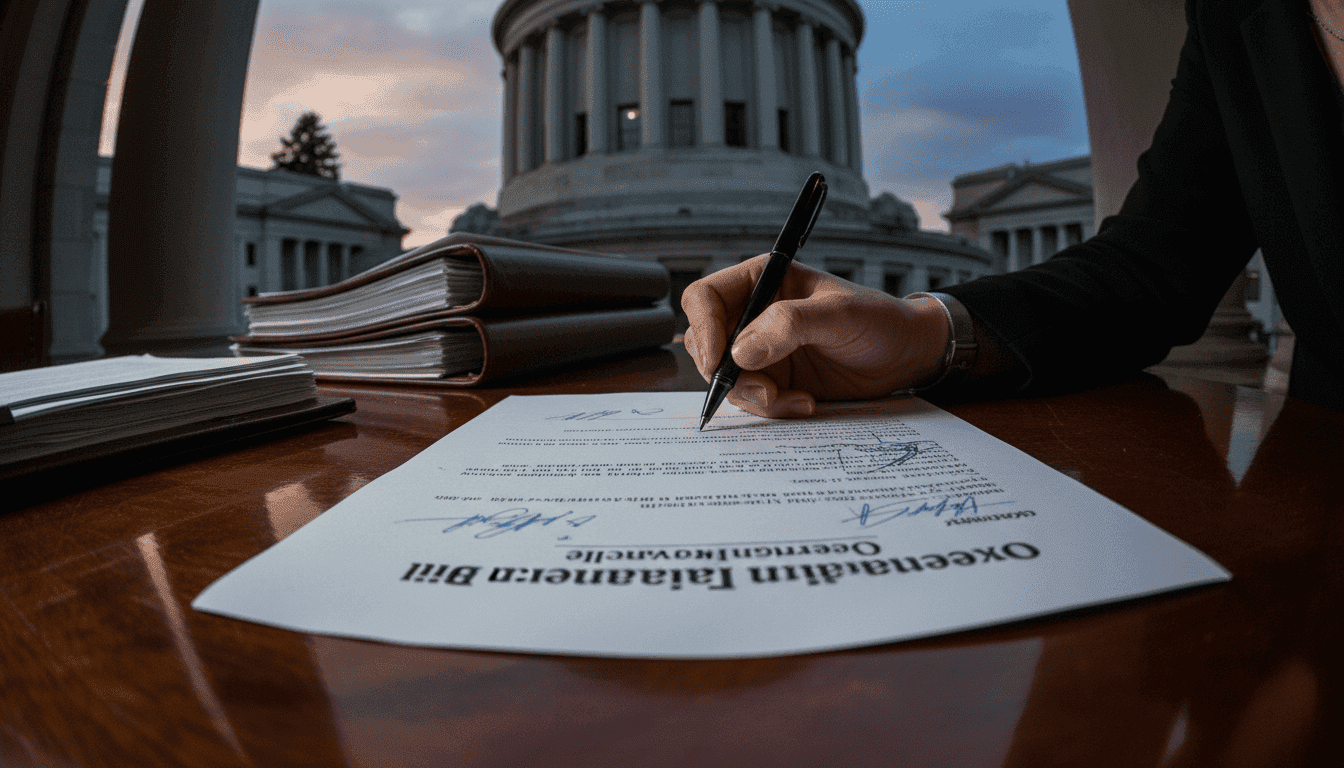
A landmark Oregon campaign finance bill has been signed into law by Governor Tina Kotek, dramatically reshaping the landscape of political funding in the state. The controversial legislation, enacted on Saturday, April 11, 2026, marks a significant moment for Oregon’s political system, introducing new regulations aimed at increasing transparency and potentially curbing the influence of large donors in state elections.
The Story: A New Era for Oregon Campaign Finance
Governor Tina Kotek’s signature on the Oregon campaign finance bill culminates years of debate and legislative effort to reform how political campaigns are funded across the state. While the specific details of the bill are extensive, its core objective is to introduce stricter limits on contributions and enhance disclosure requirements for political spending. This move is set to fundamentally alter fundraising strategies for candidates and political action committees (PACs) in upcoming election cycles.
The journey to this legislative milestone has been fraught with contention, reflecting deep divisions over the appropriate balance between free speech and the need to mitigate perceived corruption or undue influence in politics. Proponents argue that the bill will level the playing field, making elections more competitive and accessible to candidates without extensive donor networks. They contend that robust campaign finance regulations are essential for a healthy democracy, ensuring that the voices of ordinary citizens are not drowned out by well-funded special interests.
Conversely, critics have voiced concerns that the new rules could infringe upon First Amendment rights, particularly freedom of speech and association, by limiting individuals’ and organizations’ ability to support their chosen candidates and causes. There are also arguments that stricter limits could inadvertently empower incumbent politicians, who often benefit from name recognition and existing organizational structures, making it harder for challengers to raise the necessary funds to compete effectively. The specific thresholds for contributions and the mechanisms for enforcement are expected to be points of ongoing scrutiny and potential legal challenges.
Impact Analysis of Oregon Campaign Finance
The signing of the Oregon campaign finance bill is poised to have a profound impact on the state’s political and policy landscape. For candidates, the immediate challenge will be adapting fundraising strategies to comply with the new limits. This could lead to a greater emphasis on small-dollar donations and grassroots organizing, potentially broadening the base of political participation. Political parties and PACs will also need to re-evaluate their operational models, potentially shifting resources towards voter engagement and volunteer recruitment rather than solely relying on large contributions.
From a policy perspective, the changes could influence the legislative agenda. If candidates become less reliant on large corporate or union donations, they might be more responsive to the concerns of a wider array of constituents, potentially leading to a shift in priorities on issues ranging from environmental protection to economic development. The increased transparency requirements will also allow the public and media to more easily track the flow of money in politics, fostering greater accountability.
“This legislation represents a significant shift in Oregon’s political ecosystem, aiming to recalibrate the power dynamics between donors, candidates, and the electorate. Its long-term effects will undoubtedly be a subject of intense observation and analysis.”
The new law may also spur similar movements in other states grappling with campaign finance reform. Oregon has often been a bellwether for progressive policies, and its bold move to enact this Oregon campaign finance legislation could inspire other states to consider similar measures, especially those where public dissatisfaction with money in politics is high. This could contribute to a broader national conversation about the future of campaign finance regulations.
Context & Background: A History of Reform Efforts
Oregon has a long history of grappling with campaign finance issues, marked by various attempts to introduce limits and increase transparency. Unlike many states with long-standing caps on political contributions, Oregon has historically operated with relatively few restrictions, often leading to very large individual and corporate donations. This environment has fueled public and advocacy group calls for reform, citing concerns about special interests dominating the political process.
Previous efforts to introduce campaign finance limits have faced legal challenges, primarily on First Amendment grounds, and have often struggled to gain sufficient political momentum. The current bill’s passage reflects a culmination of sustained advocacy by various civic organizations and a shift in the political will within the state legislature and the Governor’s office. This renewed push for reform aligns with broader national trends where voters are increasingly demanding greater accountability and transparency from their elected officials and political systems. Recent polls have consistently shown strong public support for measures that limit the influence of money in politics, providing a mandate for legislative action.
What’s Next: Legal Challenges and Electoral Shifts
The immediate future for Oregon’s political landscape will likely involve legal challenges to the new Oregon campaign finance law. Opponents are expected to file lawsuits, arguing that the restrictions violate constitutional rights, particularly the right to free speech. These legal battles could shape the ultimate implementation and scope of the bill, potentially leading to amendments or judicial interpretations that modify its impact.
Beyond the courts, the practical implications will be seen in the upcoming 2026 election cycle and beyond. Candidates for state and local offices will need to adjust their fundraising strategies, potentially leading to more competitive primaries and general elections as the power of large donors diminishes. Political consultants and strategists will be developing new models for campaign funding and outreach, emphasizing grassroots engagement and digital fundraising. The efficacy of the new regulations in achieving their stated goals of reducing special interest influence and increasing voter participation will be closely watched. Furthermore, the Oregon Government Ethics Commission, or a similar oversight body, will be tasked with developing and enforcing the detailed rules and regulations stemming from this legislation, a process that itself could be subject to public debate and scrutiny. Read more about policy reforms here.
Key Takeaway: Redefining Political Engagement
The signing of the Oregon campaign finance bill by Governor Tina Kotek is more than just a legislative act; it is a declaration of intent to redefine political engagement in the state. By introducing significant new regulations on campaign funding, Oregon is embarking on an ambitious experiment to enhance democratic accountability and potentially rebalance the influence of money in its elections. While the full ramifications will unfold over time, this controversial yet landmark legislation sets a new precedent for how political campaigns are funded and how power is exercised in the Beaver State, with potential ripple effects across the nation.