Kerala Elections 2026 are poised to deliver a dramatic contest as all three major political fronts – the ruling Left Democratic Front (LDF), the Congress-led United Democratic Front (UDF), and the Bharatiya Janata Party-led National Democratic Alliance (NDA) – have centered their manifestos on the critical issues of welfare, youth unemployment, and infrastructure development. With voting set for Thursday, April 9, for all 140 assembly seats, the state is witnessing a high-stakes battle to determine its political future. The results, keenly awaited, will be declared on May 4, just weeks before the current Assembly’s tenure concludes on May 23.
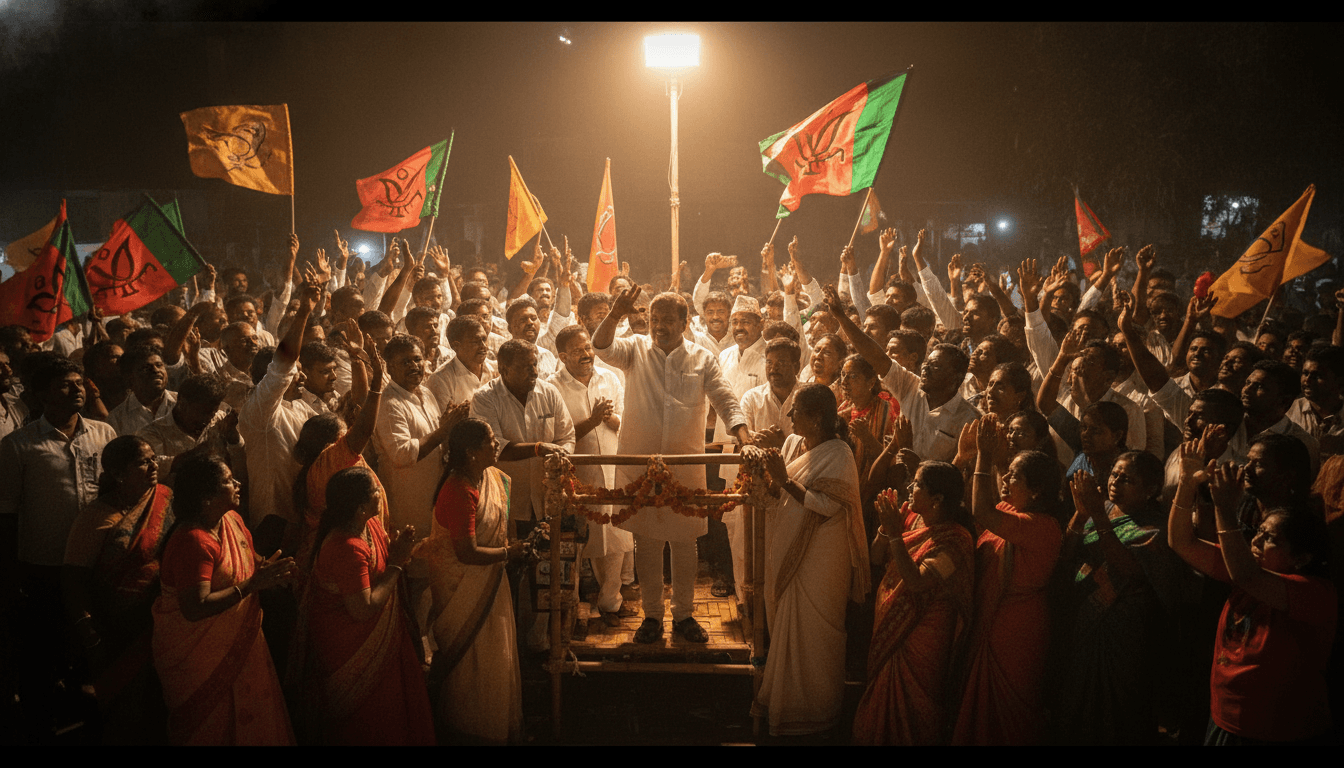
The primary electoral contest remains a traditional face-off between the LDF and the UDF, a pattern that has historically defined Kerala’s political landscape. However, the BJP is making a concerted effort to disrupt this bipolar dynamic, banking on key constituencies to establish a stronger foothold. Over 2.71 crore eligible voters, including 1.32 crore men, 1.39 crore women, 273 transgender persons, and more than 2.42 lakh overseas voters, will decide the fate of 883 candidates vying for the 140 seats. The campaign, which concluded at 6 PM on Tuesday, saw an energetic display of political fervor, with roadshows, rallies, and processions transforming town centers into vibrant arenas of party flags, drums, and impassioned slogans.
Key Battles Shaping Kerala Elections 2026
Several constituencies are witnessing particularly intense contests, highlighting the strategic importance and high stakes involved. In Dharmadam (Kannur), Chief Minister Pinarayi Vijayan (LDF) is seeking a third consecutive term, facing off against V.P. Abdul Rasheed (UDF) and K. Ranjith (NDA). Vijayan secured a dominant victory in 2021 with a margin of 50,123 votes.
Nemom (Thiruvananthapuram) is set for a tough triangular battle. Incumbent Minister V Sivankutty (LDF) is defending his seat against BJP State President Rajeev Chandrasekhar (NDA) and K.S. Sabarinadhan (UDF). Sivankutty reclaimed the seat for the Left in 2021 by a margin of 3,949 votes over the BJP.
Palakkad features a fierce triangular contest involving popular actor Ramesh Pisharody (UDF), S Pramila Devi (LDF), and Sobha Surendran (NDA). The 2021 election saw UDF’s Shafi Parambil narrowly defeat BJP’s E. Sreedharan by 3,859 votes. In Peravoor (Kannur), former Health Minister K.K. Shailaja “Teacher” (CPI-M) is challenging sitting MLA Sunny Joseph (UDF), who retained the seat by a slim margin of 3,172 votes in 2021. Meanwhile, in Kazhakkoottam (Thiruvananthapuram), incumbent MLA Kadakampally Surendran (LDF) is defending against T. Sarath Chandra Prasad (UDF) and former Union Minister V. Muraleedharan (NDA).
Leader of Opposition V.D. Satheesan (Congress/UDF) is defending his stronghold in Paravur (Ernakulam) against E.T. Taison Master (LDF) and A.B. Jayaprakash (NDA), having secured a dominant victory with a margin of 21,301 votes in 2021. Puthuppally (Kottayam) sees sitting MLA Chandy Oommen (UDF) aiming to retain his family’s long-held bastion against K.M. Radhakrishnan (LDF) and Raveendranath Vakathanam (NDA), following his record 37,719-vote victory in the 2023 by-election. Finally, in Manjeshwar, sitting MLA A.K.M. Ashraf (UDF/IUML) is defending his seat against K. Surendran (NDA) and K.R. Jayananda (LDF), after a razor-thin 745-vote victory over Surendran in 2021.
Campaign Strategies and Dominant Issues
The nearly month-long campaign saw prominent national figures descend on Kerala, including Prime Minister Narendra Modi and Home Minister Amit Shah for the NDA, and Congress leaders Rahul Gandhi and Priyanka Gandhi Vadra for the UDF. Chief Minister Pinarayi Vijayan spearheaded the campaign for the ruling LDF. Beyond traditional door-to-door canvassing and public meetings, parties increasingly leveraged digital platforms, employing influencers and podcasts to connect with younger voters, indicating an evolution in state election strategies.
The campaign landscape was rife with contentious issues. The Congress attempted to paint a picture of an alleged understanding between the BJP and the CPI(M), while also accusing the LDF of links with the Social Democratic Party of India (SDPI). Allegations of corruption and governance failures were central to the UDF’s attacks on the state government.
The LDF vehemently rejected these claims, instead focusing on its robust development record, highlighting infrastructure projects and welfare schemes, and contrasting them with what it termed the shortcomings of previous Congress-led administrations. The CPI(M) also targeted the Congress over delays in constructing houses for victims of the 2024 Wayanad landslide and questioned the utilization of rehabilitation funds. The Congress, in turn, pointed to defections of several CPI(M) leaders, alleging internal divisions within the Left and accusing Chief Minister Vijayan of autocratic governance.
“All three major fronts—LDF, UDF, and NDA—have centered their manifestos on welfare, youth unemployment, and infrastructure,” underscoring the universal appeal and critical importance of these issues to the Kerala electorate.
The emotive Sabarimala temple row re-emerged as a significant campaign issue, especially after the Supreme Court sought the state’s stance on women’s entry. The BJP capitalized on this, promising a CBI investigation into the Sabarimala gold loss case and guaranteed action within a fixed timeframe if elected. The party also pledged to make an AIIMS hospital operational in the state within two years.
The outcome of the Kerala Elections 2026 will not only determine the state’s leadership but also serve as a crucial indicator of shifting political dynamics and voter priorities in a region traditionally known for its strong regional parties and distinct political culture. The focus on core economic and social issues like youth unemployment, welfare provisions, and infrastructure development reflects the pressing concerns of the electorate, while the re-emergence of cultural and religious issues like the Sabarimala temple controversy adds another layer of complexity to this pivotal election.
As Kerala prepares to vote, the intricate dance between established political powerhouses and an aspiring third front highlights a maturing democratic landscape. The results will undoubtedly offer profound insights into the aspirations of its citizens and the future direction of governance in the state.