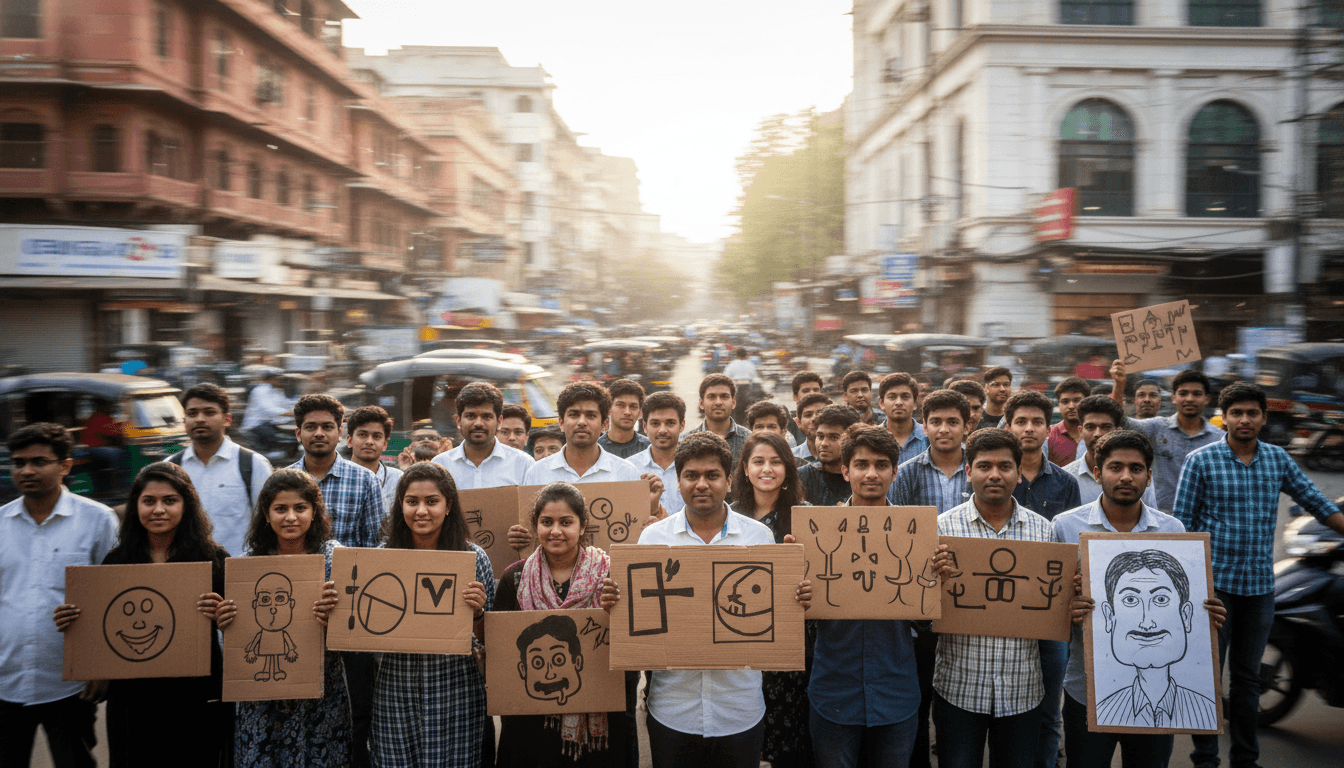
A mock political party for India’s young ‘cockroaches’ held its first protest in New Delhi on Sunday, June 7, 2026, signaling a nascent, albeit unconventional, form of political engagement among a demographic often marginalized in traditional Indian politics. This inaugural demonstration by a group identifying with a pejorative term used to dismiss youth concerns highlights a growing frustration and a creative, if provocative, approach to demanding recognition from the established political order.
The protest, occurring in the heart of the Indian capital, marks a significant moment for this nascent movement. While the ‘cockroaches’ moniker is self-applied, it carries a sharp irony, reclaiming a term of derision to represent a collective identity of the nation’s youth who feel overlooked and undervalued. The demonstration in New Delhi draws attention to the unique challenges faced by India’s younger population, including economic anxieties, limited opportunities, and a perceived lack of voice in policy-making. This mock party’s emergence suggests a deeper undercurrent of discontent that traditional political parties may be failing to address.
Impact Analysis of India Youth ‘Cockroaches’
The emergence of the ‘cockroaches’ party, despite its mock status, carries significant implications for India’s broader political landscape. It represents a novel form of political activism that could inspire similar movements or force established parties to reconsider their outreach strategies to younger voters. The use of satire and self-deprecation to form a political identity is a potent tool for drawing media attention and sparking public discourse, especially in a politically charged environment like India. This unconventional approach to political participation could reshape how youth engagement is perceived and acted upon by the government and opposition alike.
For policymakers, the protest serves as a stark reminder of the demographic shifts and the evolving nature of political expression. Ignoring such movements, even those deemed ‘mock,’ could prove detrimental in the long run, as they often articulate genuine grievances that resonate widely among specific segments of the population. The Financial Standard has previously covered related politics & policy articles on youth unemployment and political disengagement in developing economies, indicating this trend is not isolated to India.
Context & Background: A New Wave of Activism
India’s political history is rich with protests and social movements, but the ‘cockroaches’ party introduces a new dimension through its deliberate adoption of a derogatory label. This mirrors a global trend where marginalized groups reclaim pejorative terms to build solidarity and challenge societal norms. The choice of New Delhi as the protest venue amplifies its symbolic weight, placing the demands of these young ‘cockroaches’ directly at the doorstep of power. Previous youth movements in India have often focused on specific issues like education or corruption, but this party’s broader, identity-based approach signals a potential shift towards more existential political concerns among the youth.
“The self-identification as ‘cockroaches’ is a powerful statement, turning a dismissive epithet into a banner of unity and defiance for India’s young generation.”
This development could also be seen in the context of increasing digital activism, where unconventional political expressions find fertile ground and rapid dissemination. While the specific demands of the ‘cockroaches’ party were not detailed in the initial report, their very existence and public demonstration underscore a perceived vacuum in representation for India’s youth.
What’s Next for India Youth ‘Cockroaches’
The future trajectory of the ‘cockroaches’ party remains to be seen. Its inaugural protest could be a one-off symbolic act or the beginning of a sustained, albeit non-traditional, political force. Key questions include whether the movement will formalize, articulate a specific policy agenda, or expand its reach beyond New Delhi. The reaction from established political parties will also be crucial; how they acknowledge or dismiss this protest could influence its growth and impact. Further demonstrations, attempts to register as a formal entity, or collaborations with other youth organizations could be on the horizon as the India youth ‘cockroaches’ seek to amplify their voice.
Key Takeaway: The Unconventional Voice of Discontent
The first protest by the mock political party for India’s young ‘cockroaches’ in New Delhi is more than just a quirky news item; it is a significant indicator of evolving political participation and deep-seated frustrations among India’s youth. By embracing a derogatory label, these young individuals are not only challenging traditional political norms but also demanding a serious reckoning with their place in the nation’s future. This unconventional movement highlights the imperative for policymakers to genuinely engage with the younger demographic, understanding that even mock parties can articulate real and pressing concerns that resonate across the country and have long-term implications for democratic stability and social cohesion.