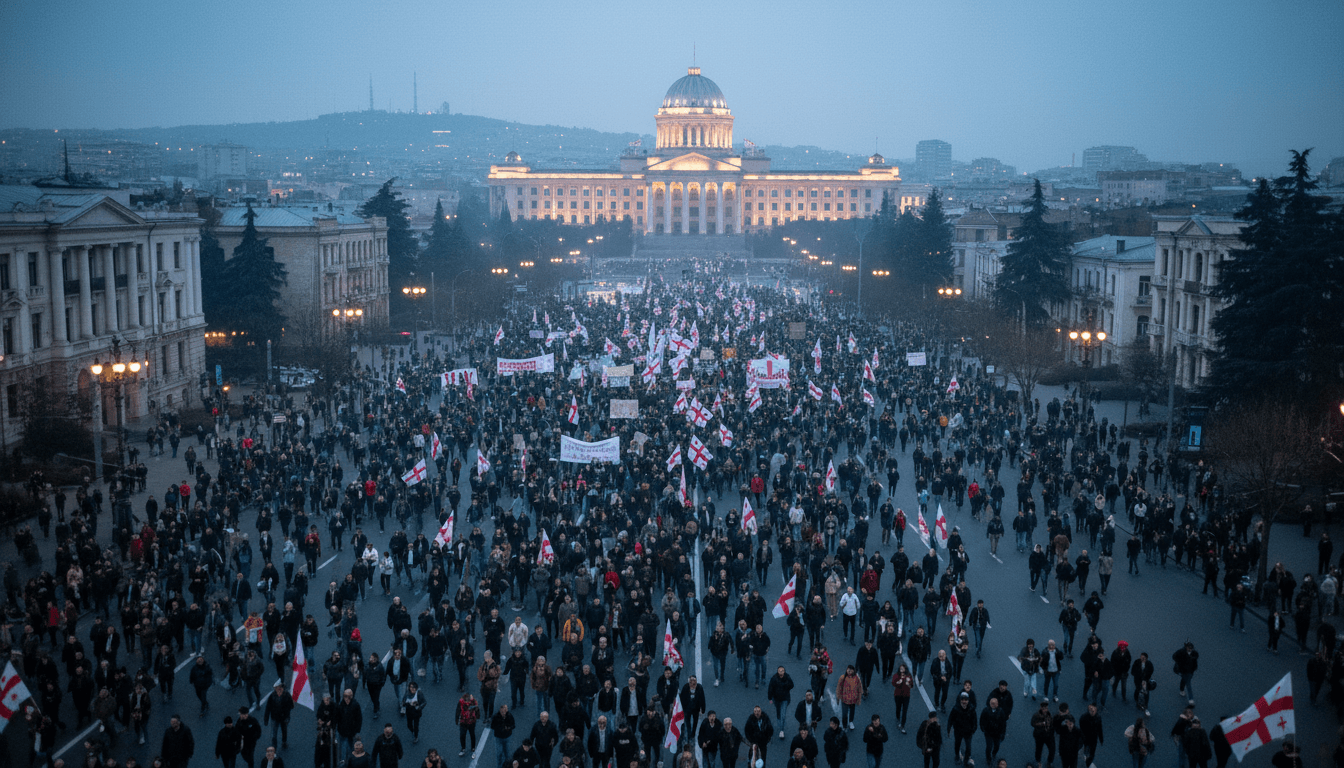
Dramatic Georgian protests marking 500 days of continuous rallies culminated in an Easter march to Parliament on Sunday, April 12, 2026, signaling sustained public discontent with the nation’s political trajectory. This significant milestone underscores the enduring commitment of civil society groups and ordinary citizens to their demands, maintaining pressure on the government amidst a period of considerable geopolitical flux for Georgia.
The Easter march to Parliament saw thousands gather, echoing sentiments that have resonated across the country for over a year and a half. The demonstrators, comprising a broad cross-section of Georgian society, converged on the legislative building in Tbilisi, utilizing the symbolic holiday to amplify their message. Their presence on such a significant date highlights the deep-seated nature of their grievances and their determination to keep their concerns at the forefront of the national conversation. The Kyiv Post reported on this sustained display of public will, noting the longevity and resilience of the movement.
Impact Analysis
The sustained Georgian protests marking 500 days of continuous demonstrations have profound implications for the country’s political landscape and its aspirations for closer integration with Western institutions. The sheer duration of these rallies indicates a deep-seated and widespread dissatisfaction that cannot be easily dismissed by the ruling establishment. This persistent public pressure could force the government to reconsider certain policy stances or risk further erosion of its legitimacy both domestically and internationally. For a nation navigating complex geopolitical currents, such prolonged internal dissent can complicate diplomatic efforts and investment prospects. The continued visibility of these protests on the international stage, particularly through outlets like the Kyiv Post, keeps Georgia’s internal political dynamics under scrutiny, influencing perceptions among key allies and potential investors. Read more on regional political stability.
The symbolic power of an Easter march to Parliament, occurring on a day of national reflection and community, amplifies the message of the protesters. It transforms a religious observance into a powerful civic statement, illustrating how deeply interwoven political grievances have become with the fabric of daily life for many Georgians. The government’s response, or lack thereof, to such a sustained and symbolically potent movement will be closely watched. A failure to address the underlying causes of the Georgian protests could lead to further political instability, potentially impacting economic reforms and the country’s strategic alignment. Conversely, any genuine engagement could offer a path towards de-escalation and national reconciliation, albeit a challenging one given the entrenched positions.
Context & Background
Georgia has a recent history marked by significant public demonstrations, often at critical junctures in its political development. These past movements have frequently centered on issues of democratic governance, electoral integrity, and the country’s geopolitical orientation, particularly its relationship with both Russia and the European Union. The current wave of Georgian protests, now stretching to 500 days, is a testament to the enduring nature of these core concerns among a segment of the population. This extended period of unrest follows various legislative attempts and policy decisions that many citizens view as undermining democratic principles or diverting the country from its declared pro-Western course. The memory of past revolutions and large-scale civic actions looms large, providing a historical precedent for sustained public engagement.
“The longevity of these demonstrations is a critical indicator of public sentiment, reflecting a deep-seated commitment to democratic values that transcends daily political maneuvering.”
The geopolitical context is also crucial. Georgia’s aspirations for EU membership and NATO integration are central to its foreign policy, yet these ambitions are often intertwined with domestic political stability and the perception of its democratic health. The ongoing war in Ukraine and the broader regional security landscape further heighten the stakes for Georgia, making internal cohesion and consistent adherence to democratic norms even more vital. The fact that the Kyiv Post reported on the 500-day milestone underscores the regional significance of Georgia’s political struggles, especially for nations within the broader Eastern European and Black Sea region that share similar geopolitical challenges and aspirations.
What’s Next
The immediate future for Georgia will likely see continued vigilance from both the protesters and international observers. With 500 days of rallies now marked, the movement has demonstrated remarkable staying power, suggesting that its demands are unlikely to dissipate without meaningful concessions or a significant shift in government policy. Upcoming legislative sessions and political debates will be crucial battlegrounds where the government’s resolve will be tested against the sustained public pressure. The manner in which the authorities engage with, or choose to ignore, the demands of the Georgian protests will define the political atmosphere for months to come. Potential scenarios include further escalation of demonstrations, government attempts at dialogue, or even snap elections if the political deadlock becomes untenable. Explore global democracy trends.
Internationally, Georgia’s partners, particularly the European Union and the United States, will be closely monitoring developments. The trajectory of Georgia’s democratic reforms and its commitment to human rights are key factors in its relationships with these entities. Any perceived backsliding could impact financial aid, trade agreements, and the broader integration process. The protesters’ ability to maintain momentum and broad public support will be critical in shaping these outcomes. The coming months will undoubtedly be a defining period for Georgia, determining whether the sustained public outcry leads to substantial political change or entrenches existing divisions.
Key Takeaway
The marking of 500 days of sustained Georgian protests with an Easter march to Parliament signifies not just the endurance of a protest movement, but a deep and persistent fault line within Georgian politics. This prolonged period of public dissent highlights fundamental disagreements over the country’s democratic direction and its geopolitical alignment. The sheer longevity and symbolic timing of these rallies underscore a powerful and enduring commitment from a significant portion of the populace to their vision for Georgia’s future. The government faces a critical challenge in addressing these deeply rooted grievances, as continued inaction risks further political polarization and potential international repercussions, making the resolution of this ongoing societal tension paramount for the nation’s stability and its aspirations on the global stage.