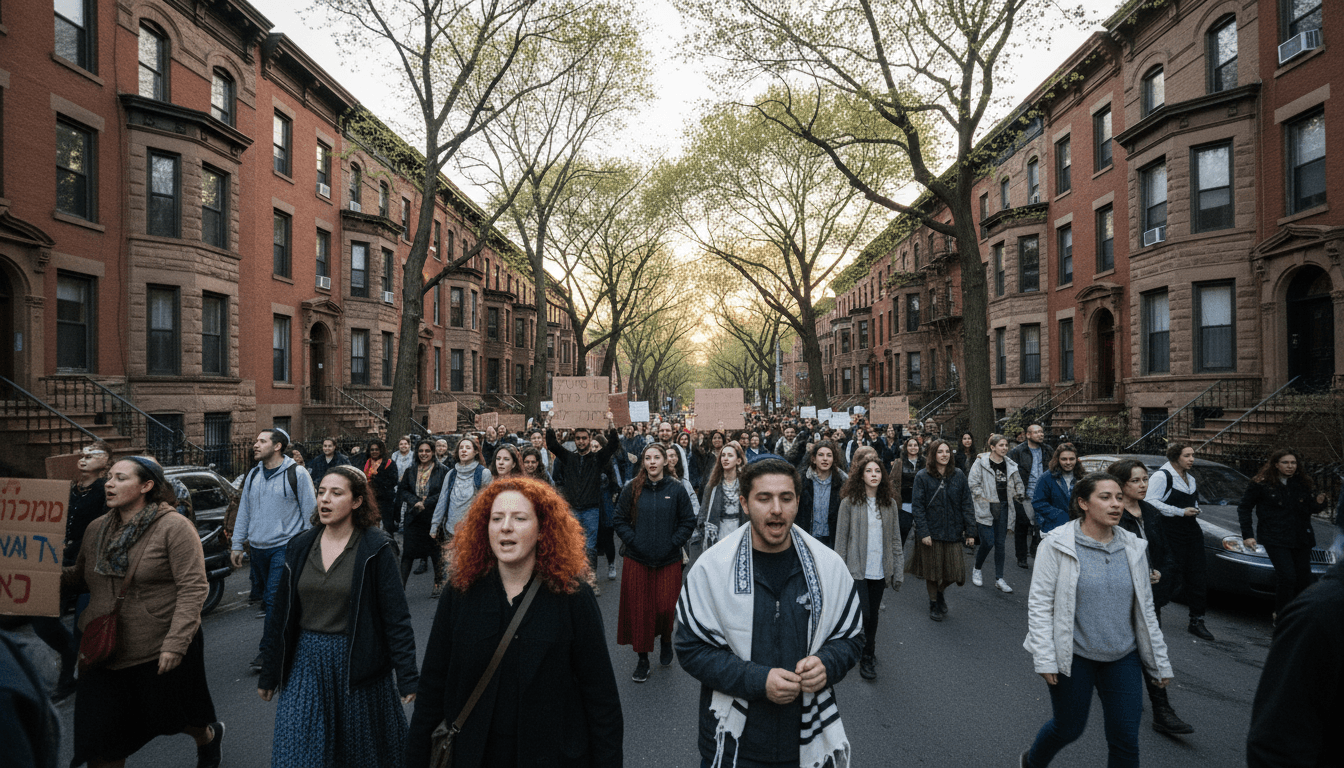
Anti-Zionist protesters marched through a NYC Jewish neighborhood on Tuesday, May 12, 2026, chanting for intifada, an event that has ignited significant debate and concern over public demonstrations and community relations. The demonstration, which saw participants traverse a traditionally Jewish area of New York City, has drawn sharp condemnation from various political and community leaders, raising questions about the boundaries of protest and the potential for incitement.
The protest involved a significant number of individuals who vocalized calls for ‘intifada’ as they moved through the streets. While specific details regarding the exact route and the number of participants were not immediately available beyond the initial reporting, the core message and location of the demonstration have become the focal point of a broader discussion on free speech versus hate speech, particularly in sensitive community contexts. The chanting for intifada, a term historically associated with Palestinian uprisings against Israel, is perceived by many as a call for violence, especially when directed at a Jewish community.
Impact Analysis
The incident carries substantial implications for the broader politics and policy landscape, particularly concerning urban governance, public safety, and inter-community relations. Local authorities in New York City are likely to face scrutiny over their handling of the demonstration, including permit processes and the deployment of law enforcement. This event could prompt a reevaluation of policies governing protests in residential areas, especially those with distinct ethnic or religious demographics. Furthermore, it exacerbates existing tensions within a city known for its diverse population, potentially leading to increased polarization and distrust among different groups. The incident also highlights the challenges faced by policymakers in balancing constitutional rights to protest with the imperative to protect communities from intimidation and potential incitement to violence. This incident will undoubtedly fuel discussions around the definition of antisemitism and how it manifests in public discourse. Related politics & policy articles often delve into similar challenges.
“The chanting for intifada in a Jewish neighborhood crosses a line from legitimate protest to a deeply unsettling act of intimidation, demanding a robust policy response from city officials.”
The incident is not isolated, but rather fits into a pattern of increasing public demonstrations related to the Israeli-Palestinian conflict that have, at times, spilled over into expressions perceived as threatening by Jewish communities globally. This particular march through a NYC Jewish neighborhood on May 12, 2026, adds another layer to this complex issue, bringing the geopolitical conflict directly to the doorsteps of a specific community within a major Western city. Previous events have seen similar tensions arise, forcing municipalities to grapple with balancing civil liberties against public order and safety.
What’s Next for Anti-Zionist Protesters
In the immediate future, we can anticipate further public statements from community leaders, politicians, and civil rights organizations. There may be calls for investigations into the protest, particularly concerning any potential incitement or threats. City officials might face pressure to implement new guidelines or enforcement measures for future demonstrations to prevent similar occurrences. The incident could also galvanize counter-protests or solidarity rallies, further intensifying the public discourse. Legal challenges related to free speech and public order could also emerge, setting precedents for how such events are managed in the future. The actions of these anti-Zionist protesters could lead to a re-evaluation of security protocols for Jewish institutions and neighborhoods.
The broader implications extend to national and international discussions on antisemitism, free speech, and the Israeli-Palestinian conflict. The incident serves as a stark reminder of how global conflicts can manifest locally, impacting the lives and sense of security of specific communities. The response from both government and civil society will be critical in shaping the narrative and determining the path forward for managing similar tensions in diverse urban environments. The actions of the anti-Zionist protesters have created a significant flashpoint.
Key Takeaway
This event underscores the persistent challenge of navigating complex geopolitical issues on a local level, particularly in diverse urban centers. It highlights the delicate balance between protecting freedom of expression and ensuring the safety and security of all communities, especially when demonstrations are perceived as directly targeting specific groups. The incident involving anti-Zionist protesters marching through a Jewish neighborhood in New York City is a critical moment that will undoubtedly influence future policy decisions regarding public protests and inter-community relations, demanding careful consideration and thoughtful leadership from all stakeholders. Our politics & policy coverage will continue to monitor developments.