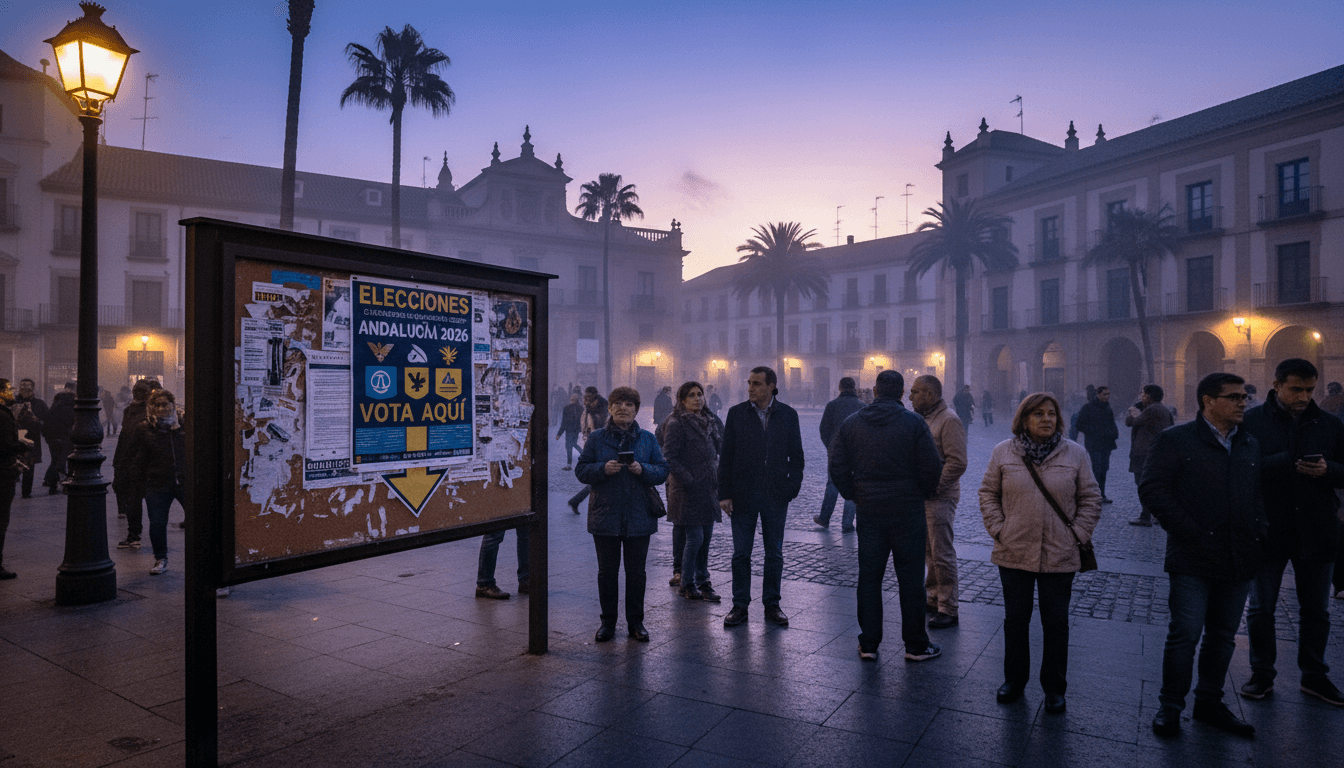
The Andalusia elections 2026 campaign has concluded, marked by intense political debate focused heavily on healthcare, the intricacies of potential post-election pacts, and several incidents that progressively hardened the tone between competing parties. As the region prepares to cast its votes, the two-week electoral period saw a relentless exchange of programmatic proposals and sharp criticisms, reflecting the high stakes for the future governance of Andalusia.
From the outset, public healthcare emerged as a central battleground. The state of the healthcare system, persistent waiting lists, the efficiency of care management, and the broader model for public services dominated much of the political discourse. Parties engaged not only in outlining their solutions but also in trading reproaches concerning current management, budgetary allocations, and the overall political balance affecting the region’s health provisions. This consistent focus underscores the profound public concern over healthcare accessibility and quality across Andalusia.
The Andalusia Elections 2026: Pacts and Hardened Tone
Beyond the immediate policy debates, a significant portion of the campaign revolved around the post-election landscape, particularly the formation of government. Discussions frequently shifted from individual party platforms to the intricate dance of possible agreements, ‘red lines’ that parties would not cross, and various coalition combinations. This emphasis meant that many political interventions were less about standalone proposals and more about strategically positioning parties for future negotiations, either by conditioning potential alliances or by preemptively ruling out certain partnerships. This forward-looking focus on governance scenarios added a layer of strategic complexity to the campaign, influencing how each party presented its vision for Andalusia.
The campaign’s trajectory was also significantly altered by unforeseen events. The tragic death of two civil guards during an operation against a narcolancha forcefully injected the critical issues of drug trafficking, operational resources for law enforcement, and the institutional response into the electoral debate. This incident not only broadened the scope of discussion but also intensified political pressure on a subject already fraught with public concern and sensitivity, demanding immediate and robust responses from all political contenders.
“The campaign’s shift from policy proposals to the harsh realities of public safety and political maneuvering reflects a deeply engaged and often confrontational electoral environment in Andalusia.”
The final stretch saw further escalation with the controversy surrounding the Adamuz accident. The mention of this tragedy within the political debate sparked widespread criticism, with many arguing that such a sensitive incident should not be exploited for electoral gain. This episode not only reopened discussions about the institutional handling of the accident but also brought a matter of immense public grief back into the political spotlight, reinforcing the perception of a particularly rough and emotionally charged conclusion to the campaign. The blend of planned policy discussions and reactive responses to critical events defined the dynamic nature of the Andalusia elections 2026.
Context and Broader Implications
The intensity of this campaign in Andalusia reflects broader trends in Spanish regional politics, where public services, particularly healthcare, often become touchstones for government performance and voter satisfaction. The focus on pacts also highlights the increasingly fragmented political landscape, where outright majorities are rare, and coalition-building is essential. This necessitates a strategic campaign approach that considers not just winning votes but also positioning for post-election negotiations. The hardening of the tone, exacerbated by tragic events, suggests a growing polarization that could have lasting implications for political discourse and governance in the region. Related politics & policy articles often show similar patterns in other regional elections, where local concerns intertwine with national political narratives.
What’s Next for Andalusia
As voters head to the polls, the immediate future of Andalusia hinges on the outcome of these elections and the subsequent ability of parties to form a stable government. The emphasis on healthcare during the Andalusia elections 2026 campaign means that the incoming administration, regardless of its composition, will face immense pressure to address existing challenges within the public health system. Similarly, the discussions around security and institutional responses to drug trafficking will likely translate into demands for concrete policy actions. The political climate suggests that any post-election government will operate under intense scrutiny, with every agreement and policy decision analyzed through the lens of a contentious campaign.
The conclusion of the Andalusia elections 2026 campaign marks a critical juncture for the region, underscoring how vital issues like healthcare and public safety can shape electoral battles, while the complexities of coalition politics increasingly dictate the path to governance. The hardened tone and the prominence of unforeseen events indicate a political environment where adaptability and resilience will be key for any party seeking to lead Andalusia forward.