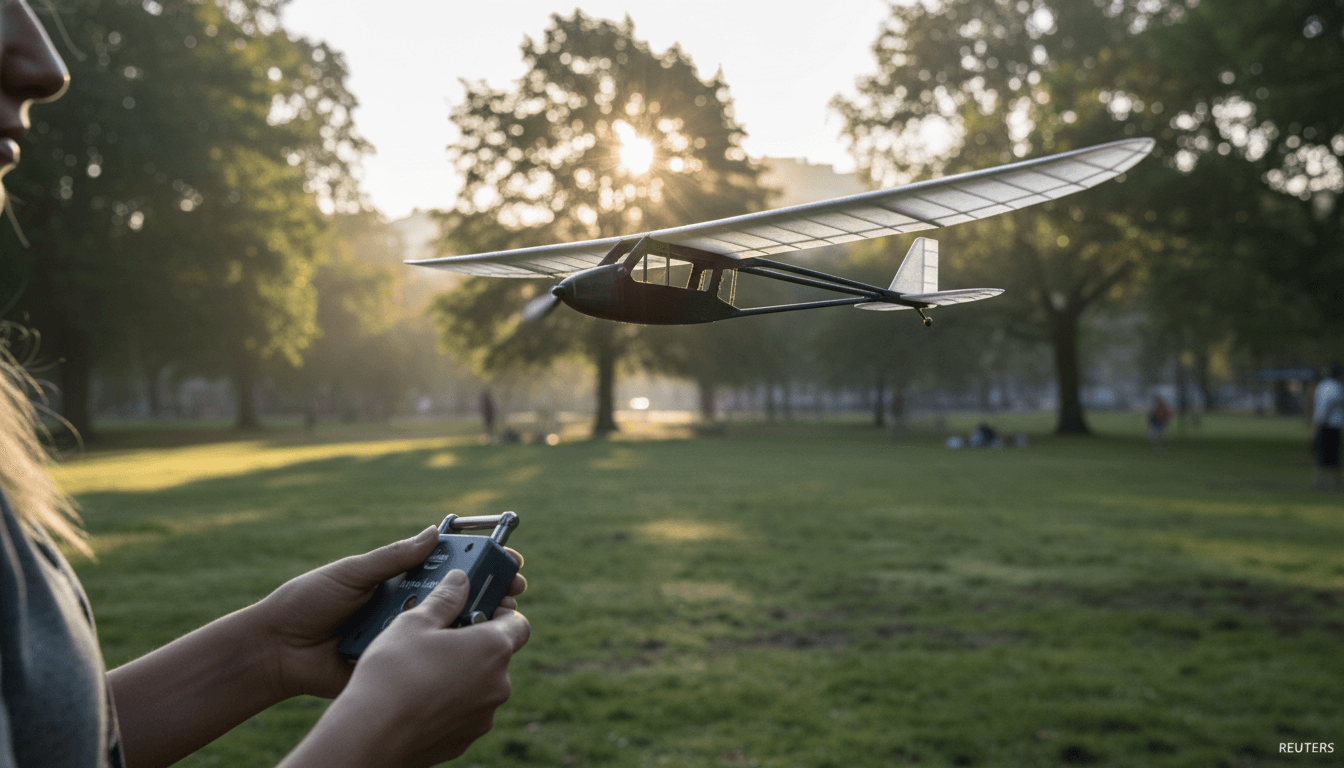
Supercapacitor plane takes flight, signaling a potential shift in model aircraft technology and hobbyist innovation. Tom Stanton, a renowned ‘prolific hacker’ and model aircraft enthusiast, has once again pushed the boundaries, developing an electric wind-up, free-flight model airplane powered by supercapacitors. This groundbreaking project, detailed in an April 18, 2026, Hackaday article, builds upon his earlier 2023 success of converting a commercial remote-control (R/C) toy to supercapacitor power.
Stanton’s latest endeavor aimed for a flight duration surpassing winding time, mirroring traditional rubber-band powered models. This ambitious goal necessitated a smaller, lighter aircraft. Eschewing conventional balsa wood and tissue, the plane’s structure is innovatively crafted from 3D-printed plastic. A significant advancement in his design is the direct printing of wings and control surfaces onto tissue paper, streamlining the construction process by eliminating a separate bonding step. These components are initially printed flat, then meticulously shaped into a single-surface airfoil using heat and precise bending techniques.
Supercapacitor Plane Takes Flight
The aircraft is propelled by a single 10 F (Farad) supercapacitor and a micro motor. Stanton’s research revealed a notable decrease in supercapacitor energy density below 10 F, a critical factor influencing his component selection. Powering this system is a hand-crank generator, ingeniously repurposed from his 2023 build. This efficient setup achieves an impressive 45 seconds of flight time from a mere 4 seconds of cranking, showcasing the remarkable energy storage and release capabilities of supercapacitors.
“Supercapacitors offer several advantages over traditional batteries for model aircraft, including robustness, easily variable power levels, safety, good power-to-weight ratios, and the elimination of complex timer requirements often associated with lithium polymer batteries.”
Beyond rapid charging, supercapacitors present a compelling alternative to conventional batteries in model aviation. Their inherent robustness, easily adjustable power delivery, and enhanced safety features make them ideal for hobbyist applications. They also boast favorable power-to-weight ratios and negate the need for intricate timer systems typically required by lithium polymer batteries. While a supercapacitor power system might be marginally heavier than a rubber motor, its strategic placement in the nose can reduce the necessity for additional nose weight, potentially contributing to a lighter overall aircraft. Furthermore, the total cost for the airborne supercapacitor system is less than $20, making it an accessible and relatively inexpensive option for enthusiasts looking to explore cutting-edge propulsion.
Innovations in Model Aircraft Design
The design choices made by Stanton highlight a forward-thinking approach to model aircraft construction. The use of 3D-printed plastic for the airframe not only reduces weight but also offers greater design flexibility and repeatability. The direct printing of wings onto tissue paper is a testament to ingenious problem-solving, simplifying assembly and potentially lowering manufacturing costs for similar projects. These innovations demonstrate how advanced manufacturing techniques can be integrated into hobbyist projects, leading to more efficient and higher-performing models. For more insights into industrial advancements, explore our related Industries news.
The Future of Free-Flight Models
Stanton’s work with the supercapacitor plane takes flight as a beacon for the future of free-flight models. His project not only showcases the practical application of supercapacitor technology but also inspires a new generation of hackers and hobbyists to experiment with sustainable and efficient power sources. The implications extend beyond just longer flight times; they point towards more durable, safer, and user-friendly model aircraft that could broaden the appeal of this classic hobby.
The successful development of this electric wind-up, free-flight model powered by supercapacitors marks a significant milestone. It underscores the ongoing innovation within the hobbyist community and the practical application of advanced energy storage solutions, promising a future of more dynamic and accessible model aircraft for enthusiasts worldwide.