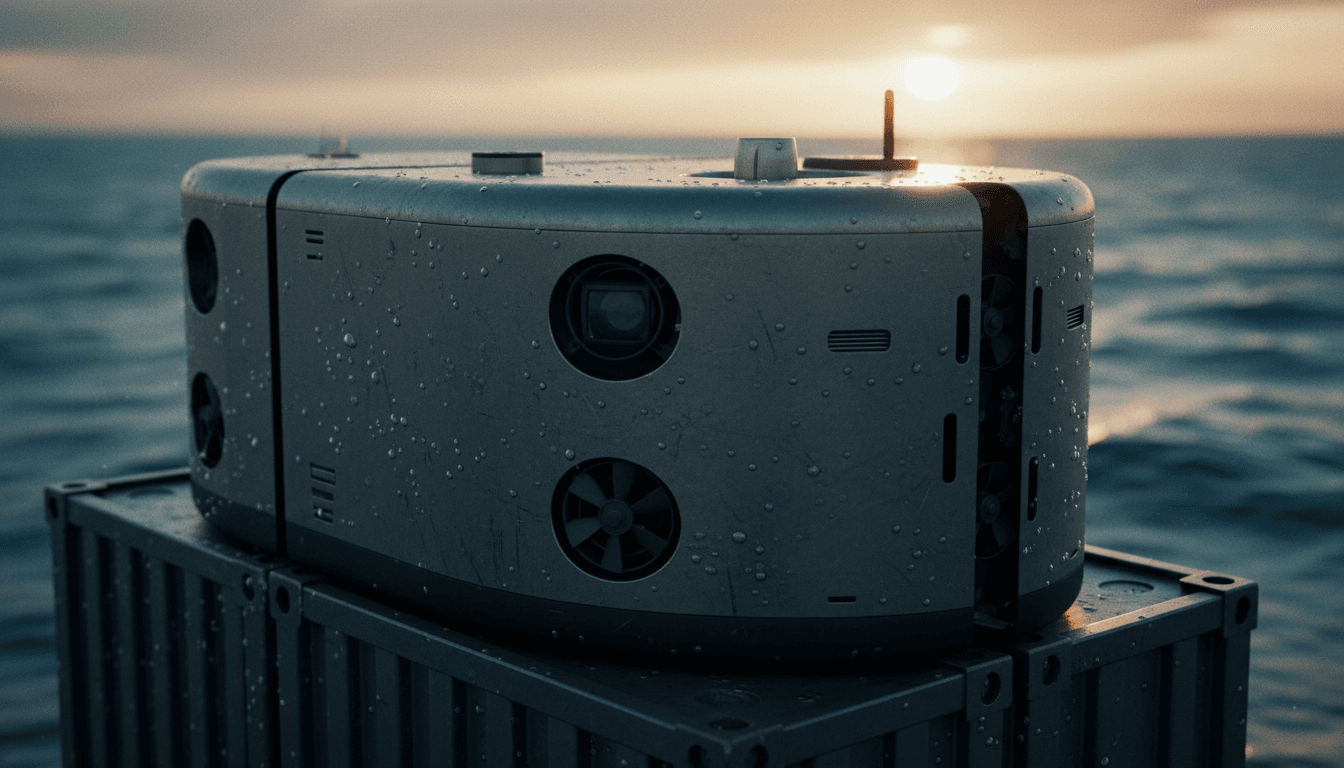
Seafloor submersibles are poised to revolutionize deep-sea science and resource exploration, with a significant mission currently underway between Australia and South America. The US National Oceanic and Atmospheric Administration (NOAA) research vessel Rainier is embarking on a month-long expedition to map over 8,000 square nautical miles of the Pacific seafloor, specifically targeting critical mineral deposits. This ambitious project, starting this week, isn’t relying solely on traditional methods; it’s leveraging innovative, inexpensive autonomous submersibles to enhance its capabilities.
The Rise of Autonomous Seafloor Submersibles
The deployment of these advanced, low-cost autonomous underwater vehicles (AUVs) marks a pivotal shift in how deep-sea exploration is conducted. Traditionally, such missions have been prohibitively expensive and logistically complex, often requiring large research vessels and remotely operated vehicles (ROVs) tethered to the surface. The new generation of seafloor submersibles offers a more agile and cost-effective solution, capable of operating independently for extended periods and covering vast areas of the ocean floor. This increased accessibility is expected to accelerate both scientific discovery and the identification of valuable mineral resources.
The Rainier’s mission exemplifies this shift, incorporating these autonomous units to survey areas previously difficult or impossible to reach efficiently. These robotic explorers can dive to extreme depths, collect high-resolution data, and identify potential mineral-rich zones with unprecedented precision. The implications for industries reliant on critical minerals, such as electronics and renewable energy, are substantial, potentially easing supply chain pressures and fostering new economic opportunities.
“The ability to deploy numerous, affordable submersibles transforms our capacity to understand and responsibly manage the deep ocean’s vast resources.”
Unlocking Deep-Sea Mineral Potential
The search for critical mineral deposits, including rare earth elements, cobalt, and nickel, is intensifying as global demand soars. Land-based reserves are finite and often concentrated in politically sensitive regions, driving a renewed focus on the ocean’s depths. The Pacific seafloor, in particular, is believed to harbor significant concentrations of polymetallic nodules and hydrothermal vents rich in these valuable materials. The use of advanced seafloor submersibles makes the systematic mapping and assessment of these deposits far more feasible.
While the economic potential is immense, the environmental considerations are equally critical. Deep-sea mining remains a contentious issue, with concerns about its impact on fragile marine ecosystems. However, proponents argue that a better understanding of these environments, facilitated by detailed surveys from submersibles, is essential for developing responsible and sustainable extraction practices, should they proceed. The data gathered from missions like NOAA’s will be crucial in informing future policy and regulatory frameworks for deep-sea resource management.
Advancing Oceanographic Research
Beyond mining, these inexpensive seafloor submersibles are proving invaluable for pure scientific research. They enable oceanographers to study deep-sea ecosystems, geological processes, and climate change impacts with greater frequency and detail. The data collected can provide insights into biodiversity, ocean currents, and the long-term health of our planet’s largest habitat. This confluence of scientific exploration and resource assessment highlights the multifaceted benefits of this emerging technology, opening new frontiers in our understanding of the deep ocean. For more insights into emerging technologies shaping global industries, explore our related Industries news.
The ongoing NOAA mission underscores a transformative moment for deep-sea exploration. The integration of advanced, cost-effective autonomous submersibles is set to dramatically expand our knowledge of the ocean floor, from its geological composition to its biological diversity. This surge in data collection will not only inform the responsible pursuit of critical minerals but also deepen our overall scientific understanding of the planet’s largest and least-explored frontier, promising a future of unprecedented discovery and resource insight.