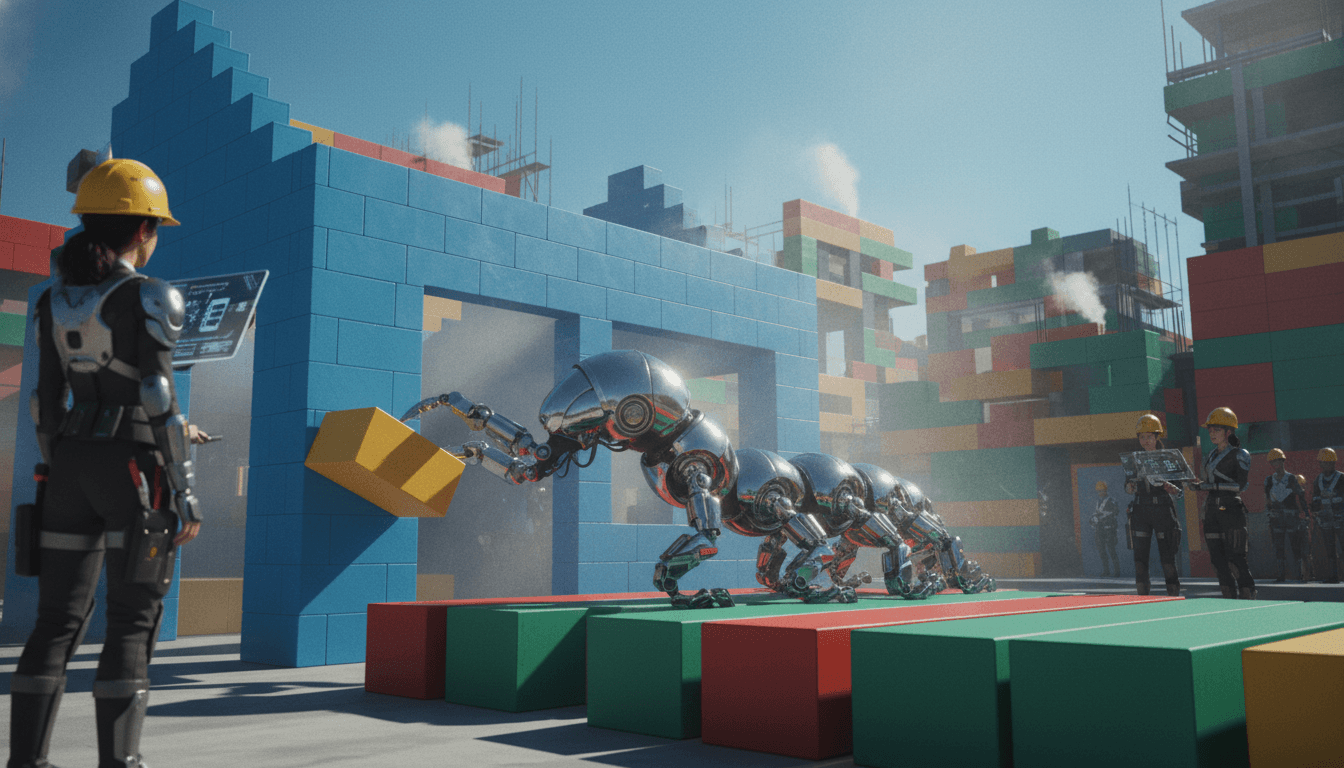
An innovative MIT robot inchworm is poised to revolutionize construction, potentially building your next house from giant, LEGO-like bricks. While the immediate future of homebuilding may not see these ‘voxel’ structures dominating the market, groundbreaking research from Miana Smith at MIT unveils an open-source inchworm robot designed to autonomously assemble large-scale structures, offering a fascinating glimpse into the future of automated construction.
Smith’s paper details the MILAbot, a 5-degree-of-freedom robot with actuators on both ends, allowing it to move and build without a traditional base. This ‘inchworm’ motion involves the robot anchoring itself to one part of a structure, grabbing a new brick, and then anchoring to that new brick to continue the assembly process. A compelling demo video showcases the robot’s fluid and efficient movement, bringing the concept to life.
The Innovative ‘Voxel’ Construction Method
The building blocks in question are not conventional concrete bricks, but rather engineered space-frame blocks designed for easy assembly. While these initial ‘voxels’ would create a drafty home, requiring a finishing step like spray foam for insulation, the technique represents a novel framing approach. This method stands in contrast to the much-hyped 3D-printed concrete houses, which have faced challenges, including rapid obsolescence and even demolition, as seen in Iowa’s first 3D-printed house.
Research indicates that structures built from voxels—whether plywood, PLA, or metal—boast less embodied energy than any concrete alternative, with 3D-printed concrete performing worst by this metric. While traditional balloon-frame stick-building still holds the lead in terms of embodied energy, the potential for robotic automation to significantly reduce labor costs presents a compelling long-term advantage. Currently, conventional methods remain more cost-effective, but the trajectory of automation suggests a shift is inevitable. This innovative approach presents a significant related Industries news development in sustainable and efficient construction.
“The MILAbot’s ability to autonomously assemble structures from modular voxels represents a significant leap towards reducing both the environmental impact and labor costs associated with traditional construction methods.”
Future Outlook for Automated Homebuilding
While the prospect of a robot inchworm building your next house from giant LEGO-like bricks might seem distant, the research by Miana Smith and her team at MIT is a testament to the ongoing innovation in the construction sector. This exploration into modular, robot-assisted building techniques highlights a move towards more sustainable and potentially more affordable housing solutions, challenging the status quo of conventional construction practices.
The shift towards automated assembly and engineered materials offers a glimpse into a future where homes are built with greater efficiency and a reduced environmental footprint. As technology advances, the economic viability of these robotic construction methods is set to gain momentum, potentially transforming the housing market and offering new possibilities for rapid, sustainable development.