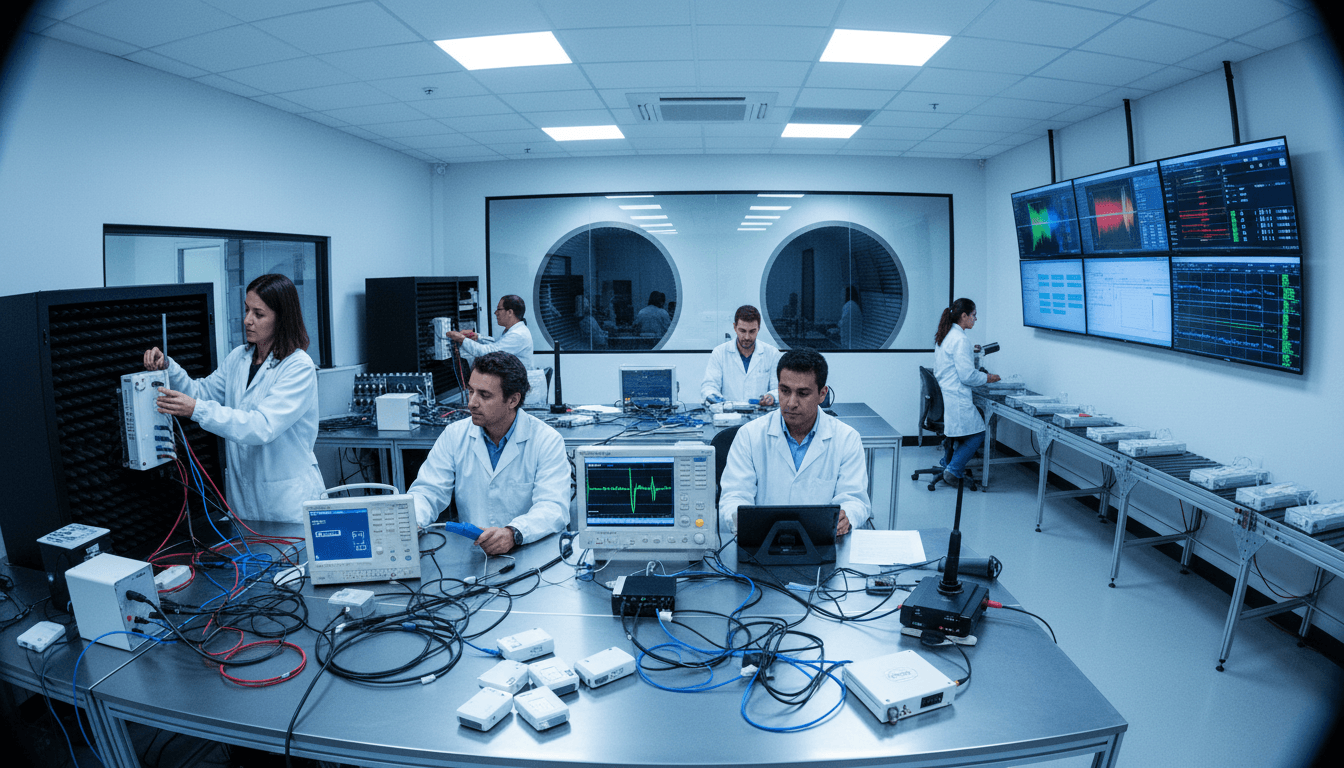
RF coexistence testing emerges as a critical safeguard for the integrity and efficiency of shared spectrum environments, as highlighted by IEEE Spectrum on May 14, 2026. In an increasingly crowded wireless world, where diverse devices and systems vie for limited radio frequency real estate, ensuring seamless operation without detrimental interference is paramount for industries ranging from telecommunications to healthcare and automotive.
The proliferation of wireless technologies—from 5G and Wi-Fi 6E to IoT devices and radar systems—has led to an unprecedented demand for spectrum. This intense competition for frequency bands creates a complex challenge: how can multiple, often disparate, wireless systems operate reliably in close proximity without degrading each other’s performance? The answer lies in rigorous RF coexistence testing, a specialized discipline focused on identifying and mitigating potential interference issues before they impact real-world deployments.
The Growing Imperative for Robust RF Coexistence Testing
The financial implications of spectrum interference are substantial. Downtime, compromised data, and diminished operational efficiency can translate into significant revenue losses, reputational damage, and even safety hazards. For instance, in industrial IoT settings, a momentary loss of connectivity due to interference could halt production lines, while in critical medical applications, it could endanger patients. As regulatory bodies worldwide continue to open up new bands for shared access, the onus falls on developers and manufacturers to prove their devices can coexist harmoniously.
“Ensuring devices operate flawlessly in shared spectrum is no longer an option, but a fundamental requirement for market entry and sustained performance in a hyper-connected world.”
This necessity drives the adoption of advanced testing methodologies. These methods go beyond basic regulatory compliance, simulating real-world scenarios where multiple wireless protocols and devices interact. This includes evaluating interference from adjacent channels, in-band emissions, spurious emissions, and desensitization effects, all of which can severely impact a device’s intended function. The goal is to proactively identify and address vulnerabilities, ensuring that new products contribute to, rather than detract from, the overall reliability of the wireless ecosystem.
Navigating Complex Shared Spectrum Environments
Shared spectrum environments, by their very nature, introduce variables that traditional isolated testing cannot capture. Consider a modern smart factory floor, where Wi-Fi-enabled robots, Bluetooth sensors, private 5G networks, and RFID trackers all operate simultaneously. A failure in one system due to interference from another could cascade through the entire operation. This complexity demands a holistic approach to related Industries news, encompassing a deep understanding of RF physics, protocol interactions, and potential mitigation strategies.
Moreover, the dynamic nature of spectrum sharing, where devices may adapt their power levels or frequencies, adds another layer of complexity. Testing must account for these adaptive behaviors, ensuring that coexistence mechanisms, such as Listen-Before-Talk (LBT) or Dynamic Frequency Selection (DFS), function as intended and do not inadvertently cause new interference problems. Financial Standard’s analysis indicates that companies investing early in comprehensive RF coexistence testing stand to gain a significant competitive advantage, reducing costly post-deployment issues and accelerating time to market.
Strategic Investment in Wireless Reliability
The investment in sophisticated RF coexistence testing equipment and expertise is a strategic move for any company operating in the wireless domain. It’s an investment in product reliability, customer satisfaction, and long-term market viability. As the global digital transformation accelerates, the demand for seamless, interference-free wireless communication will only intensify. Companies that prioritize robust testing protocols will be better positioned to innovate and thrive in this challenging yet opportunity-rich landscape.
Ultimately, comprehensive RF coexistence testing is not just about meeting technical specifications; it’s about safeguarding the future of wireless connectivity and the vast economic value it unlocks across all industries. By ensuring devices can operate harmoniously in shared spectrum, businesses protect their investments and contribute to a more robust and reliable digital infrastructure.