Power system design is undergoing a significant transformation, with advanced simulation techniques emerging as critical tools to overcome the inherent limitations of traditional measurement approaches. While laboratory or in-field measurements have long been considered the gold standard for certain aspects of power system design, their constraints in terms of time, cost, and feasibility are increasingly apparent. Simulation offers a powerful alternative, dramatically accelerating the design process, substantially reducing associated costs, and enabling the assessment of scenarios that are often impractical or impossible to measure directly. This article will delve into two compelling examples from the power system industry, illustrating how simulation is reshaping the future of infrastructure development.
The Limitations of Traditional Measurement in Power System Design
For decades, engineers have relied on direct measurements to validate power system components, from high-voltage transmission lines to intricate substation equipment. While indispensable for empirical data, these methods present numerous challenges. Conducting extensive field tests for new transmission line designs, for instance, can be prohibitively expensive and time-consuming, often requiring specialized equipment and the interruption of service. Moreover, assessing extreme operating conditions or rare fault scenarios through physical measurement is frequently unfeasible, leaving potential vulnerabilities unaddressed until a real-world incident occurs.
“Simulation capabilities are not just augmenting traditional measurements; they are fundamentally redefining the boundaries of what’s possible in power system design and validation.”
The complexity of modern power grids, incorporating renewable energy sources and smart grid technologies, further exacerbates these limitations. Intermittent generation, dynamic load changes, and the integration of distributed energy resources introduce variables that are difficult to capture comprehensively through static or limited measurement campaigns. This is where simulation steps in, offering a controlled, repeatable, and scalable environment for analysis.
Accelerating HVDC Submarine Cable Development
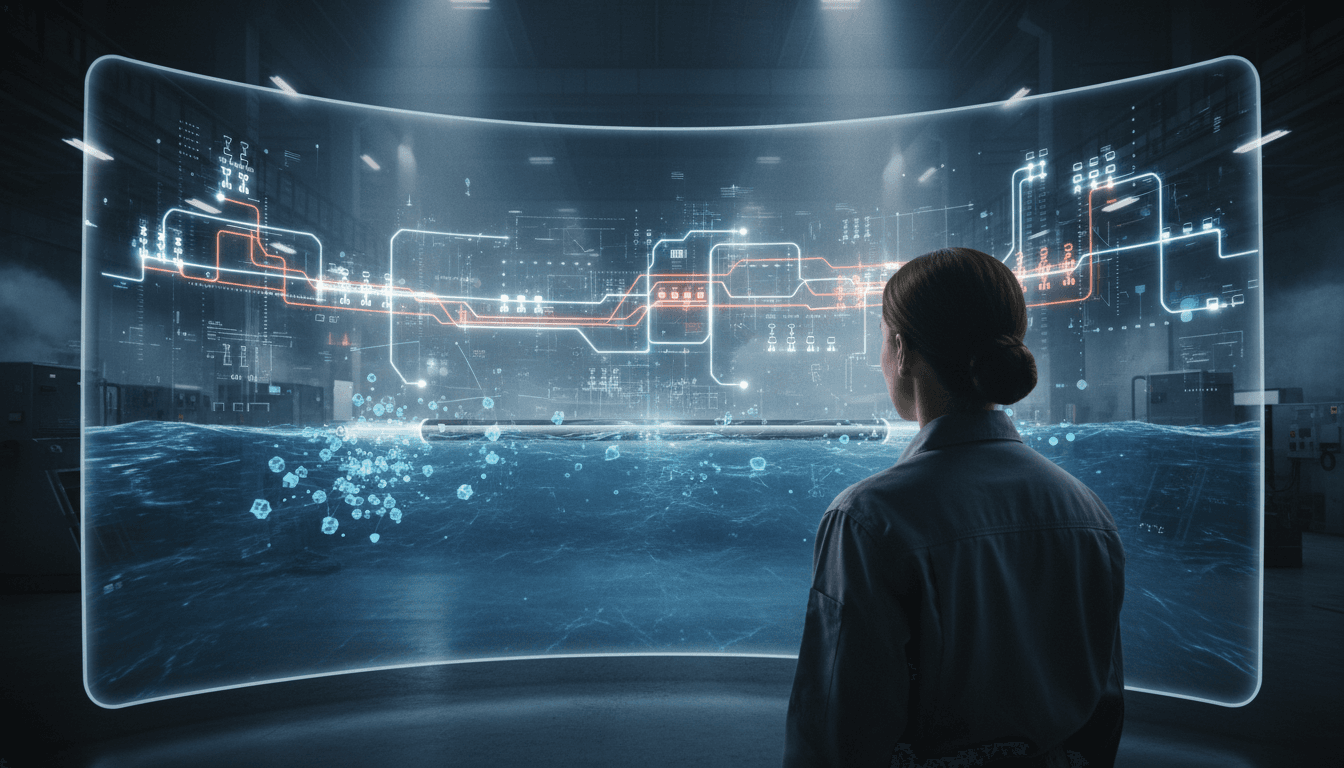
One prime example of simulation’s impact is in the development of HVDC (High Voltage Direct Current) submarine cables. These critical components are vital for transmitting large amounts of power over long distances, often connecting offshore wind farms to mainland grids or linking national power systems. The electromagnetic fields (EM fields) generated by these cables are a significant concern, requiring meticulous analysis to ensure environmental compliance and minimize potential impacts on marine life. Measuring these EM fields in situ, particularly in deep-sea environments, is incredibly complex and expensive. Simulation, however, allows engineers to model various cable configurations, burial depths, and operating currents, predicting EM field distribution with high accuracy and at a fraction of the cost and time of physical measurements. This predictive capability significantly speeds up the design iteration cycle, allowing for rapid optimization and validation of cable designs before costly manufacturing and installation.
Optimizing Corona Performance in Transmission Hardware
Another area where simulation proves invaluable is in assessing the corona performance of transmission hardware. Corona discharge, an electrical discharge caused by the ionization of air around conductors, leads to power losses, audible noise, and radio interference. Accurately predicting and mitigating corona effects is crucial for the efficiency and reliability of high-voltage transmission lines. While laboratory tests can evaluate individual components, simulating the corona performance of an entire transmission line, under varying weather conditions and complex geometric arrangements, is a task best handled by advanced computational models. These simulations can identify potential hot spots, optimize conductor bundling, and inform the selection of insulation materials, leading to more robust and efficient related Industries news infrastructure. The precision offered by these tools enhances the overall power system design process.
The Future of Power System Design
The integration of sophisticated simulation tools is not merely a convenience; it is becoming a necessity for the advancement of the power system industry. From reducing design costs and accelerating time-to-market for new technologies to enabling the assessment of previously unmeasurable scenarios, simulation provides an unparalleled advantage. As grids become smarter and more interconnected, the ability to model complex interactions and predict performance under diverse conditions will be paramount. This shift towards simulation-driven development ensures that future power infrastructure is not only robust and efficient but also adaptable to the evolving demands of a sustainable energy landscape, fundamentally reshaping how we approach power system design.