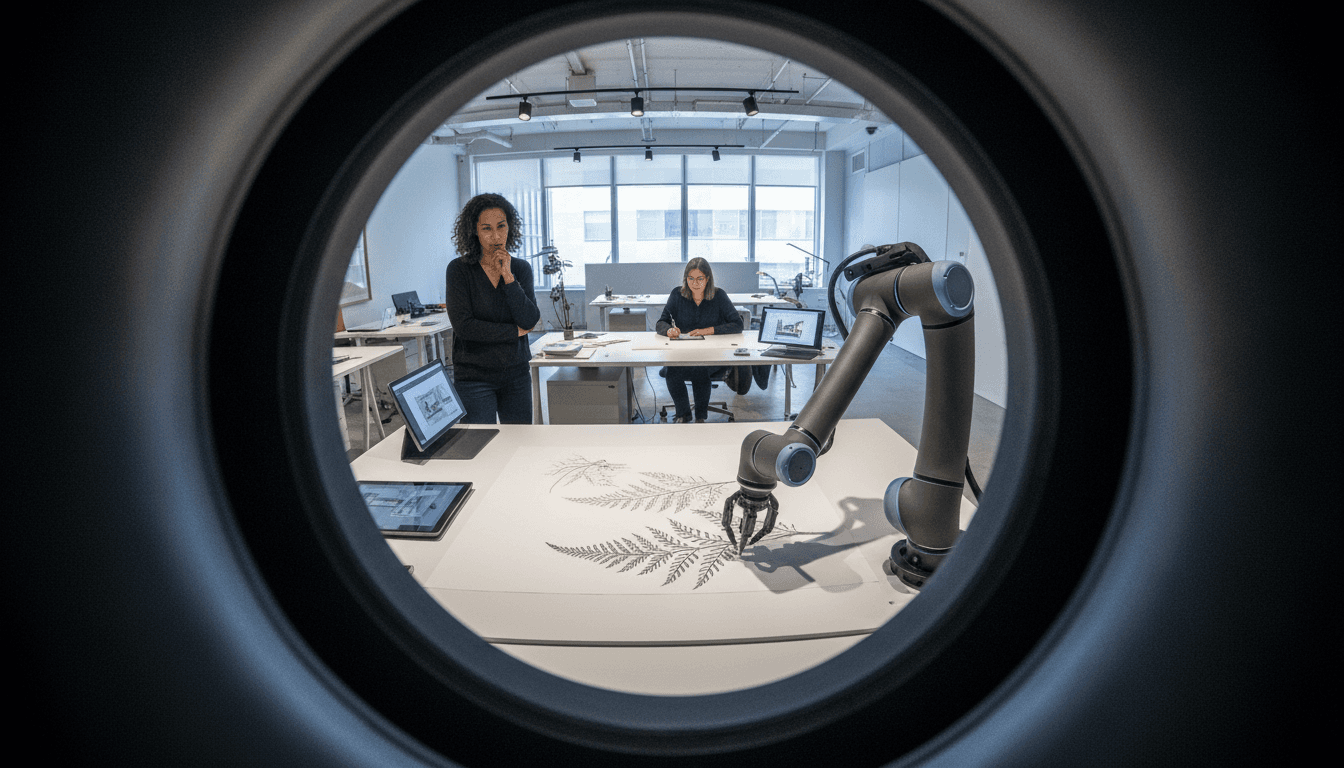
penPal Robotic Drawing Assistant, a revolutionary device from Hackaday, promises to reshape creative industries by introducing a new dimension of artistic collaboration between humans and machines. Announced on Saturday, April 25, 2026, this innovative technology taps into the concept of emergent properties, demonstrating how complex behaviors can arise from simpler interactions, much like a murmuration of starlings or the intricate patterns of weather.
The Emergence of Collaborative Creativity
The core philosophy behind the penPal Robotic Drawing Assistant lies in its ability to facilitate emergent properties within the creative process. Just as a single bird’s flight doesn’t predict the mesmerizing dance of a flock, or a few air molecules can’t forecast a storm, the individual strokes of the penPal combine with human input to produce unexpected and complex artistic outcomes. This co-creative model challenges traditional notions of authorship and opens up new avenues for artistic expression and exploration.
This development is particularly pertinent for various sectors within the related Industries news landscape, from graphic design and animation to product prototyping and fine art. The device’s ability to interpret and respond to human gestures and preliminary sketches means it’s not merely an automation tool, but a partner in the ideation phase, offering suggestions and refinements that might not have been conceived otherwise. This signifies a shift from simple automation to intelligent assistance, where technology augments human intuition rather than replacing it.
“The penPal isn’t just a drawing machine; it’s a catalyst for unforeseen creative synergies, pushing the boundaries of what’s possible when human imagination meets machine precision.”
Technological Leaps in Artistic Automation
The technological underpinnings of the penPal Robotic Drawing Assistant are as fascinating as its artistic implications. It leverages advanced AI and machine learning algorithms to understand artistic intent, interpret visual cues, and execute precise, nuanced strokes. This level of sophistication allows for a seamless integration into existing creative workflows, providing artists, designers, and engineers with a powerful new instrument for bringing their visions to life. The system’s learning capabilities mean that over time, it can adapt to individual artistic styles and preferences, further personalizing the collaborative experience.
Impact on Industrial Design and Beyond
Beyond fine art, the implications for industrial design and rapid prototyping are immense. Imagine designers being able to quickly iterate on complex product sketches, with the penPal offering real-time feedback and variations. This accelerates the design cycle, reduces manual effort, and fosters a more experimental approach to product development. The integration of such a sophisticated robotic assistant could significantly boost productivity and innovation across a multitude of industries.
The advent of the penPal Robotic Drawing Assistant marks a significant milestone in the convergence of AI, robotics, and creative industries. It demonstrates how advanced technology can serve not just as a tool for efficiency, but as a genuine partner in the creative endeavor, unlocking new potentials and redefining the very nature of artistic production. This innovation promises to inspire a new generation of creators and fundamentally alter how art and design are conceived and executed.