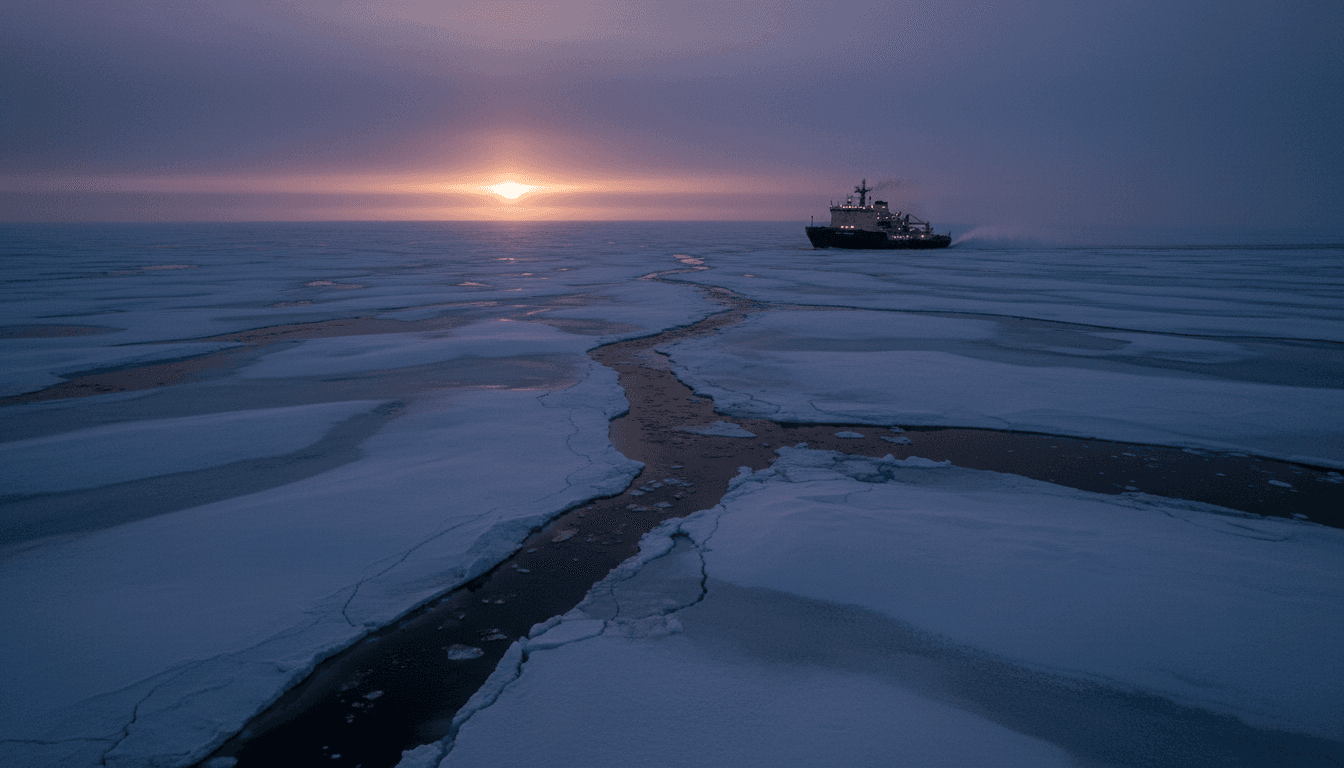
New clues about the North Pole’s past are emerging, thanks to advancements in Arctic exploration. In the past, even with an icebreaker and during peak melt season, getting to the North Pole wasn’t a sure bet. It took favorable winds to crack the frozen ocean surface, and ships had to fight through ice that had grown many meters thick over several winters. In the summer of 2025, though, Jochen Knies, a marine geologist from the Geological Survey of Norway, led an expedition aboard the German icebreaker RV Polarstern, aiming to retrieve sediment cores that could unlock critical environmental data. This mission signals a new era in understanding the Arctic’s historical climate patterns.
The Shifting Arctic Landscape
The Arctic is undergoing unprecedented changes, with ice melt accelerating at an alarming rate. This transformation, while concerning for global climate, paradoxically opens new opportunities for scientific research. Areas previously impenetrable are now becoming accessible, allowing scientists to gather data that was once out of reach. The summer of 2025’s conditions, for instance, were markedly different from historical norms, making such ambitious expeditions feasible. These changes offer a unique window into the geological and climatic history of the region.
Unearthing New Clues About the North Pole’s Past
Knies’s expedition focused on collecting sediment cores from the seabed. These cores act as natural archives, preserving layers of material deposited over millennia. By analyzing these layers, scientists can reconstruct past ocean currents, temperatures, and ice cover. Each layer tells a story about the environment at a specific point in time, providing invaluable new clues about the North Pole’s past. This granular data is crucial for refining climate models and predicting future Arctic changes.
“The sediment cores from the North Pole are like a deep-time diary, recording every major environmental shift for millions of years.”
Implications for Future Climate Predictions
Understanding the historical variability of the Arctic climate is essential for predicting its future trajectory and the broader global impact. The data gathered from expeditions like Knies’s will help researchers distinguish between natural climate cycles and human-induced changes. This distinction is critical for policymakers and industries worldwide, impacting everything from shipping routes to resource management. For more insights into how these scientific advancements affect global industries, explore our related Industries news.
The ability to access and study the North Pole’s seabed marks a significant milestone in climate science. These new clues about the North Pole’s past will undoubtedly reshape our understanding of Earth’s climate history, providing foundational data for addressing the challenges of a rapidly changing world.