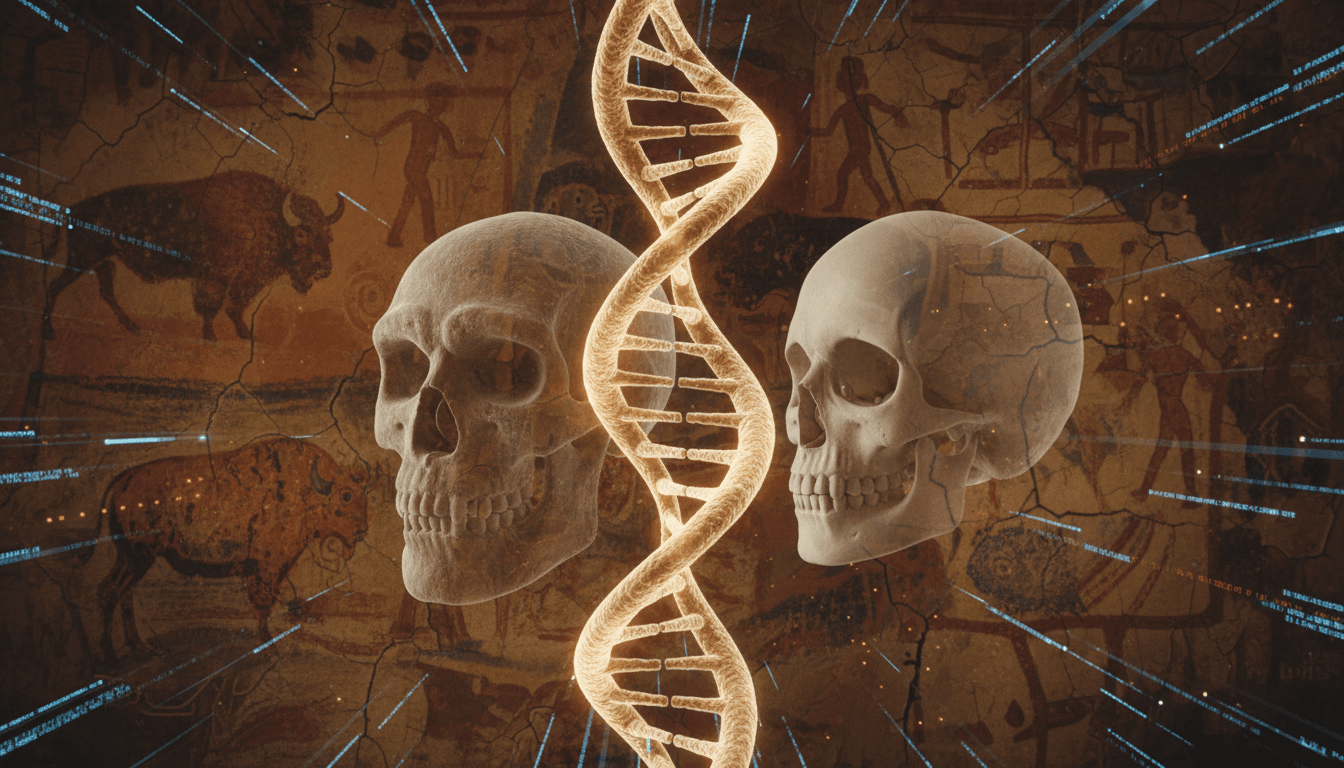
The myth of inner Neanderthal genes is a pervasive idea, suggesting that many of us carry a significant genetic legacy from our ancient cousins. You’ve probably heard some version of this idea before: that around 45,000 years ago, when Homo sapiens first arrived in Europe, they met members of a cousin species—the broad-browed, heavier-set Neanderthals—and, well, one thing led to another, which is why some people now carry traces of their DNA. This narrative often implies that certain modern human traits, from resilience to physical build, can be attributed directly to this ancient interbreeding. However, recent scientific understanding challenges the simplicity of this popular belief, urging us to look beyond the superficial interpretation of our genetic past.
Unpacking Our Ancestral Genetic Tapestry
While it is true that modern humans of non-African descent possess a small percentage of Neanderthal DNA, the notion that this translates to an ‘inner Neanderthal’ influencing our everyday lives or specific characteristics is largely an oversimplification. The genetic material inherited from Neanderthals is sparsely distributed and often doesn’t code for significant, observable traits. Instead, it represents a complex mosaic of genetic snippets, many of which are neutral or have been diluted over tens of thousands of years through natural selection and genetic drift. Understanding this intricate tapestry requires moving beyond anecdotal explanations and delving into the nuances of ancient genomics.
“The enduring narrative of ‘inner Neanderthal’ traits often overlooks the vast evolutionary journey of Homo sapiens post-interbreeding, where beneficial adaptations continued to emerge and detrimental ones were deselected.”
The Myth of Inner Neanderthal Genes
The persistent idea of inner Neanderthal genes often manifests in popular culture, where specific behaviors or physical attributes are playfully, or sometimes seriously, attributed to this ancient lineage. From a perceived grittiness to a particular bone structure, the ‘Neanderthal’ label is applied with a broad brush. However, scientific analysis suggests that the genetic contribution is far more subtle than commonly imagined. For instance, some Neanderthal genes have been linked to aspects of our immune system or skin pigmentation, but these are often complex interactions rather than direct, singular influences. Attributing broad personality traits or significant physical differences to these minor genetic contributions misrepresents the intricate process of human evolution and the diverse genetic heritage of modern populations. For more insights into how scientific understanding shapes our perception of human origins, explore our related Industries news.
Beyond the Simplistic Narrative
Moving beyond the simplistic narrative of inner Neanderthal genes allows for a richer appreciation of human evolution. Our genetic makeup is the result of millions of years of adaptation, migration, and interaction, not just a singular event of interbreeding 45,000 years ago. While the encounter with Neanderthals was a significant moment, it was one among many in the long and winding road of human development. Focusing too heavily on this single aspect can detract from the broader story of human ingenuity, adaptability, and the vast genetic diversity that defines our species today. It’s crucial to embrace a more nuanced understanding that acknowledges the complexity of our past without resorting to overly romanticized or misinformed interpretations.
In conclusion, while the presence of Neanderthal DNA in many modern humans is an undeniable scientific fact, the concept of an ‘inner Neanderthal’ significantly impacting our daily lives or defining our characteristics is largely a myth. Our understanding of human genetics continues to evolve, revealing a far more intricate and fascinating story than simplistic narratives often suggest. It’s time to retire the idea that we carry substantial inner Neanderthal genes and instead appreciate the full spectrum of our complex evolutionary heritage.