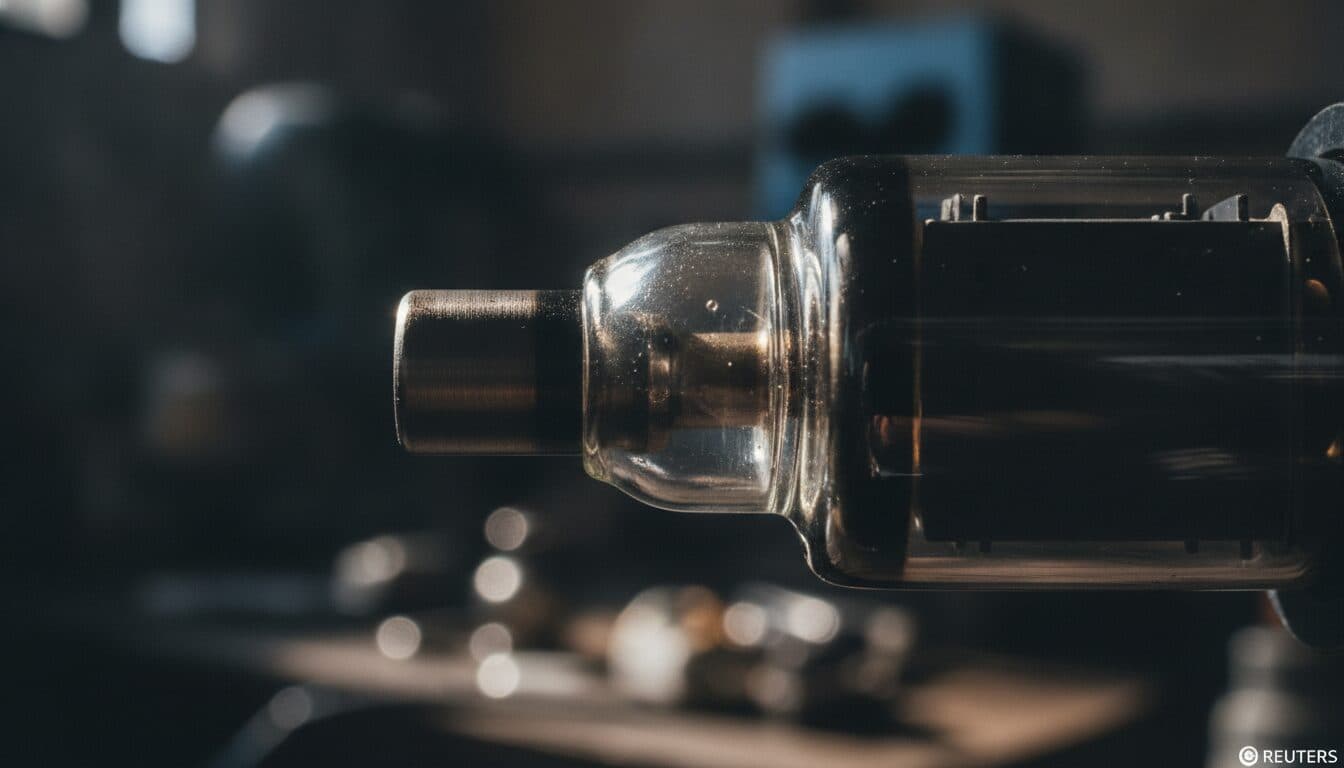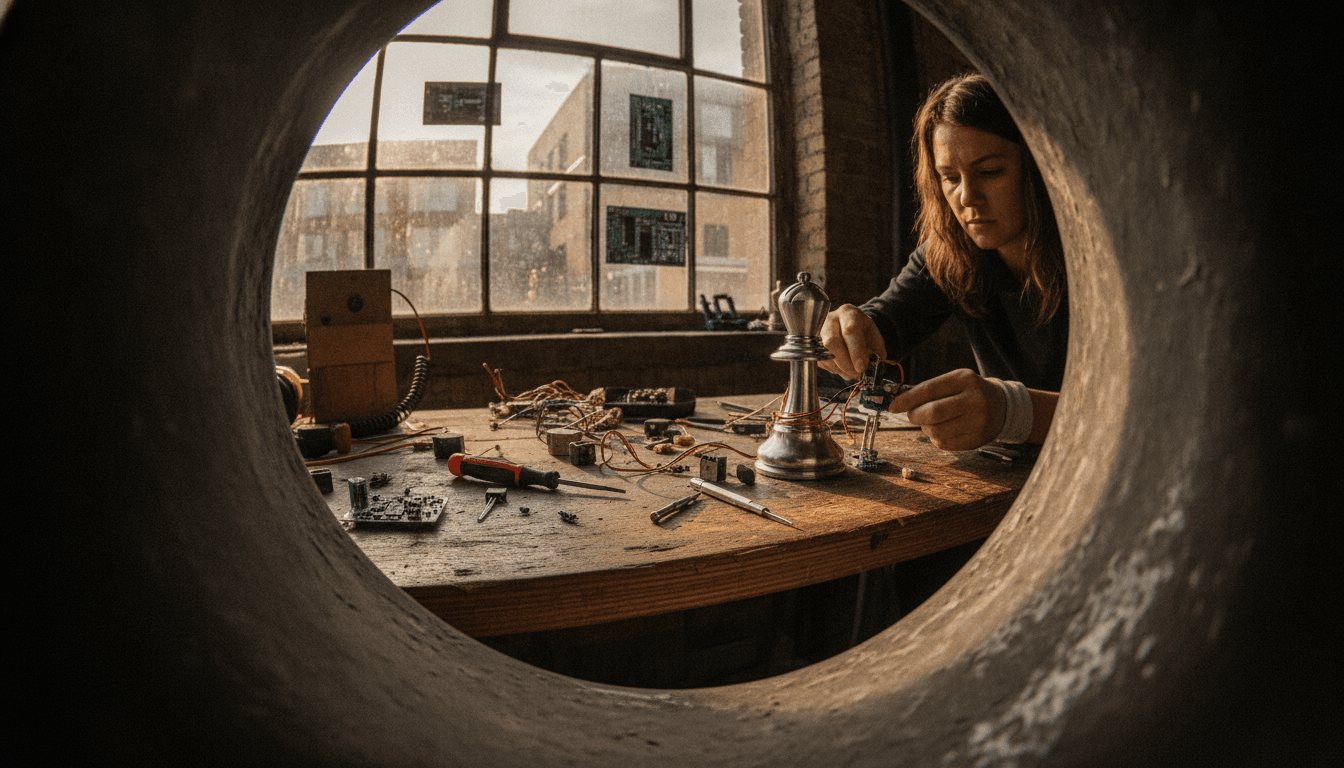
A high-vacuum controller, crucial for advanced scientific instrumentation, has been meticulously developed by independent inventor Chris Doble as the foundational step towards building his own scanning electron microscope (SEM). This ambitious project, documented and open-sourced, showcases significant innovation in precision engineering and control systems, marking a notable achievement for the DIY scientific community.
Doble’s journey began with the fundamental requirement of an ultra-low pressure environment for his eventual electron microscope. He engineered a two-stage vacuum system: initially, a rotary-vane roughing pump reduces atmospheric pressure to approximately 10-3 millibar. This is followed by a turbomolecular high-vacuum pump, capable of reaching an impressive 10-7 millibar. A critical anti-suckback valve protects the delicate turbomolecular pump from sudden pressure changes. While effective, the individual interfaces for the turbomolecular pump and pressure sensor presented a challenge, prompting Doble to seek a unified control solution.
Integrating Complex Vacuum System Components
To consolidate control and streamline operations, Chris Doble designed a custom controller leveraging the versatile Raspberry Pi Pico 2, with firmware expertly written in Rust. The pressure gauge, communicating via RS-232, was interfaced with the Pico’s UART pins using an RS-232 level shifter and a null modem. The turbomolecular pump, which utilizes an RS-485 interface, necessitated a specialized converter circuit and appropriate level-shifting resistors. The entire assembly is housed within a custom-designed PCB and a 3D-printed case, providing a single USB interface to a host computer. Initial tests of this high-vacuum controller demonstrated remarkable success, achieving a pressure of 10-6 millibar within the vacuum chamber, with pressure still slowly declining.
“The integration of disparate vacuum components into a single, intuitive controller marks a significant leap for DIY scientific instrument construction, offering a blueprint for future innovators.”
This endeavor by Chris Doble stands as a testament to the power of open-source development and individual ingenuity in pushing the boundaries of what’s possible outside traditional institutional labs. The project not only delivers a functional high-vacuum controller but also provides a comprehensive, documented resource for others looking to embark on similar complex scientific builds. The unification of control over such critical components simplifies operation and enhances the precision required for a functional scanning electron microscope.
Advancing DIY Scientific Instrumentation
Doble’s work resonates with a growing trend of advanced DIY scientific projects, where hobbyists and independent researchers are tackling challenges previously exclusive to well-funded laboratories. His open-source approach, detailing the hardware and firmware, offers invaluable insights for anyone interested in vacuum technology, microcontrollers, and the intricacies of building high-precision instruments. This project serves as a compelling example of how accessible technology, combined with dedicated effort, can lead to the creation of sophisticated tools for scientific exploration. For those interested in broader advancements, you can find related related Industries news on our platform.
The successful development of this high-vacuum controller brings Doble significantly closer to realizing his ultimate goal: a fully operational scanning electron microscope. The ability to achieve and maintain ultra-high vacuum is paramount for electron microscopy, preventing electron scattering and ensuring clear, high-resolution imaging. This foundational achievement not only validates his engineering prowess but also inspires a new generation of makers and scientists to pursue ambitious, self-driven research and development.