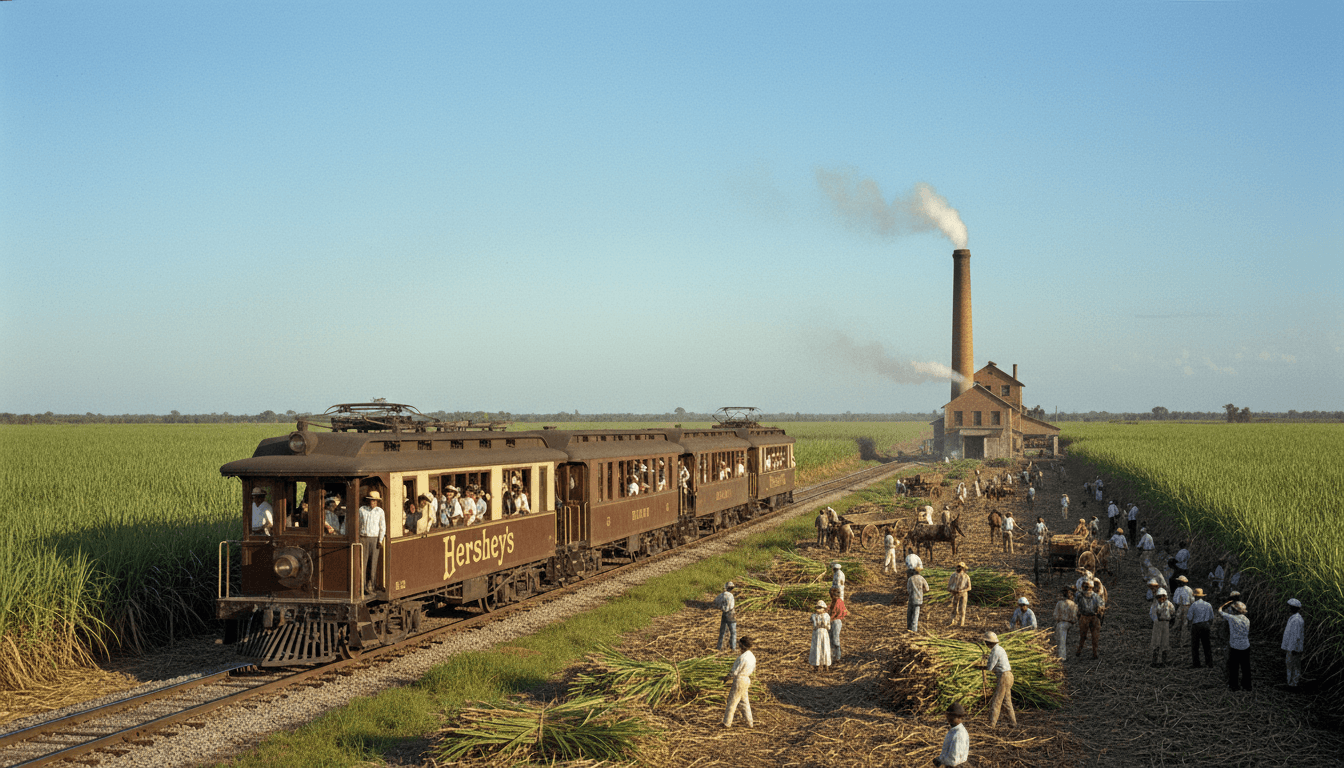
Hershey’s Railway Transforms Cuban Sugar Transport, an ambitious project by Milton S. Hershey, emerged as a strategic answer to the sugar shortages plaguing the Hershey Chocolate Co. during World War I. By this period, Hershey had solidified its position as a chocolate industry behemoth, perfecting the automation and mass production of iconic treats like Hershey’s Milk Chocolate Bar and the ubiquitous Hershey’s Kiss. To sustain its vast customer base, a consistent and reliable supply of sugar was paramount. Furthermore, the railway offered a crucial bypass around the dominant American Sugar Refining Company, granting Hershey greater control over its supply chain.
The Strategic Imperative: Securing Sugar Supply
Milton Hershey’s vision extended far beyond mere chocolate production. Recognizing the vulnerability of relying on external suppliers, especially during global conflicts, he invested heavily in sugar plantations in Cuba. However, acquiring the land was only half the battle; transporting the harvested sugarcane efficiently to his processing plants was the next logistical hurdle. The existing infrastructure in Cuba was insufficient for the scale Hershey envisioned, prompting the bold decision to construct a private electric railway system.
This related Industries news showcases a profound understanding of vertical integration, a business strategy that allowed Hershey to control every step from raw material to finished product. The railway was not merely a transport mechanism; it was an integral part of a self-sustaining ecosystem designed to ensure uninterrupted production of his beloved confections. This move not only stabilized his supply but also gave him a competitive edge in a volatile market.
Hershey’s Railway Transforms Cuban Sugar Transport
The construction of the Hershey Electric Railway, as it became known, was a monumental undertaking. It spanned miles across the Cuban landscape, connecting sugar cane fields, processing mills, and port facilities. This electrification was particularly forward-thinking for its time, demonstrating Hershey’s commitment to modern and efficient operations. The railway not only served Hershey’s industrial needs but also facilitated the movement of people and goods, inadvertently contributing to the development of local communities.
“Milton Hershey’s Cuban railway project was a masterclass in supply chain resilience, demonstrating how a chocolatier could navigate global disruptions through strategic infrastructure investment.”
The foresight of investing in such a comprehensive infrastructure project highlights Hershey’s entrepreneurial spirit and his unwavering focus on long-term stability. The ability to control sugar production and transport from source to factory gave Hershey Chocolate Co. an unparalleled advantage, ensuring that the sweet taste of success continued to flow, even amidst the chaos of a world at war. This bold move solidified his company’s position as a leader and innovator in the food industry.
A Legacy Beyond Chocolate
While the primary purpose of the railway was industrial, its impact reverberated much wider. It created jobs, stimulated local economies, and represented a significant foreign investment in Cuba. The railway became a symbol of American industrial ingenuity applied abroad, a testament to how business acumen could transcend national borders and specific industries. The story of Hershey’s Railway Transforms Cuban Sugar Transport serves as a powerful reminder that sometimes, the most innovative solutions come from unexpected places, driven by necessity and a clear vision for the future.