GB Boy clone speeds fix has emerged as a partial solution for owners of the popular Nintendo Game Boy clone experiencing excessively fast gameplay. While the market is flooded with varying quality Nintendo hardware clones, a few, like the GB Boy by Gangfeng, stand out for their ability to play original cartridges, promising an experience akin to the classic Game Boy Pocket. However, even these more promising clones often present unexpected technical glitches. In a recent video, Sharopolis tackles a common complaint: games running at an accelerated pace, rendering them almost unplayable.
This particular issue has plagued many GB Boy units, causing them to sit unused in drawers for years after being purchased from platforms like AliExpress. The frustration stems from the unit’s inability to deliver a smooth, enjoyable gaming experience, a core expectation for any retro gaming enthusiast. The problem’s prevalence across various GB Boy variants suggests a systemic manufacturing oversight rather than isolated defects.
Dissecting the Speed Anomaly
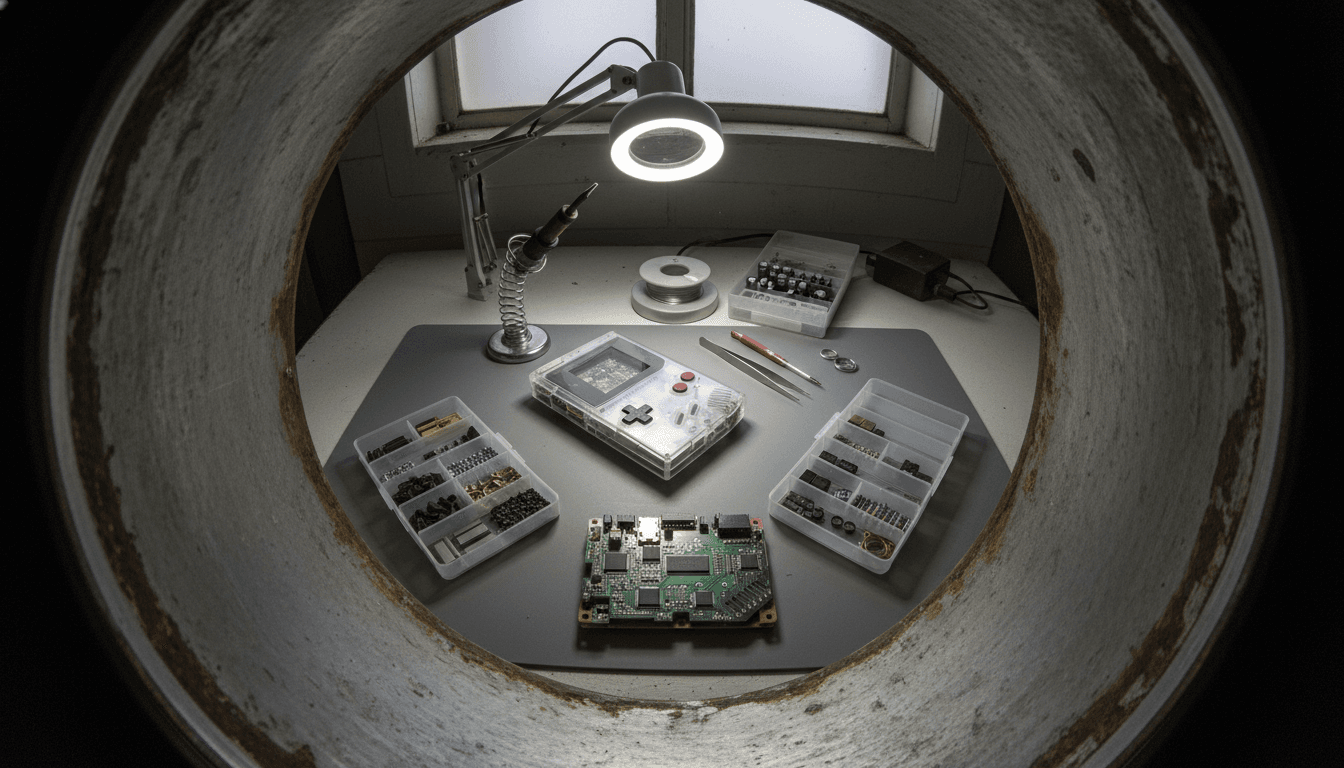
Upon opening the GB Boy, the internal PCB reveals a `KF2001` chip, serving as the main processor, flanked by two memory chips. The crucial component identified as `X1`, an oscillator, is rated at 5 MHz. A direct comparison with the original Game Boy Pocket’s internal workings shows a significant discrepancy; the authentic Nintendo hardware uses an oscillator running at 4.1943 MHz. This difference in clock speed is the primary culprit behind the accelerated gameplay, pushing the clone system beyond its intended operational parameters.
“The core issue lies in a fundamental component mismatch, highlighting a common pitfall in budget clone hardware: seemingly minor component choices can dramatically impact user experience and system stability.”
Sharopolis’s video details the straightforward process of replacing the incorrect 5 MHz oscillator with one calibrated to the proper 4.1943 MHz. Given the economics of component procurement, this often means acquiring a reel of 100 replacement oscillators – a testament to the dedication of hobbyist fixers. The initial results were promising: games now run at their correct, intended speed, restoring much of the original Game Boy Pocket’s feel. However, this GB Boy clone speeds fix introduced a new challenge: display flicker.
The Ripple Effect of Component Compromises
The emergence of display flicker post-oscillator replacement underscores a deeper issue inherent in many clone systems. While the `KF2001` IC appears to be a capable processor, the surrounding components often prove to be either mismatched or of substandard quality. Community suggestions indicate that replacing the cheap capacitors on the GB Boy’s board could alleviate the flickering. This highlights a recurring theme in the world of cloned electronics: manufacturers often cut corners on peripheral components, undermining the potential of otherwise decent core hardware.
This ongoing battle against technical imperfections showcases the delicate balance between cost-effective production and functional reliability. For consumers, what seems like a minor saving can lead to significant frustration and the need for DIY repairs. The journey from a too-fast clone to a playable device often involves a series of component swaps, each revealing another layer of compromise in the original design. This situation resonates across related Industries news where cost-cutting impacts product longevity.
Ultimately, while a partial GB Boy clone speeds fix has been achieved, the saga of the GB Boy serves as a potent reminder for consumers and manufacturers alike. The allure of a seemingly authentic experience at a lower price often comes with hidden technical debts, demanding either consumer patience for DIY solutions or a more discerning eye for quality control in the clone hardware industry.